


DTF printing (Direct To Film) is an innovative, high-quality textile printing technique that allows a printed design on PET film to be transferred directly onto all types of textiles. Known for its versatility, print quality, and durability, DTF has become an essential solution for professional textile customization.
With this process, you can print logos, text, illustrations, or photos in high definition on both light and dark textiles, including cotton, polyester, and blended fabrics. DTF printing delivers a fine, flexible, and durable finish, suitable for both small batches and larger production runs.
At Tissus Print, a specialist in textile printing in France, we put our expertise and DTF equipment at your service to offer custom DTF films, printed on demand, with no minimum order quantity and using OEKO-TEX STANDARD 100 certified inks. In this article, discover everything you need to know about DTF printing, its advantages, applications, and how it works.
Discover all our DTF printing products: packages, sheets, labels, and DTF by the meter.
Discover DTF printing
What is a DTF machine?
DTF (Direct To Film) is a digital textile printing technology that prints a design onto a transparent transfer film, known as PET film, before transferring it onto the textile. This method offers great creative freedom and high-quality results on a wide range of materials.
The process begins by printing the design onto PET film in mirror mode. Textile inks are applied in several layers: the colors are printed first, followed by a layer of white ink to ensure excellent opacity, even on dark textiles.
While the ink is still wet, a hot-melt adhesive powder is evenly applied to the printed design. This powder plays an essential role: it allows the design to bond permanently to the textile while maintaining flexibility and stretch.
The film then undergoes a heating phase, generally between 160 and 170°C. Under the effect of heat, the adhesive powder melts and bonds with the ink, forming an adhesive film ready for transfer. Once cooled, the film becomes stable and easy to peel.
This textile heat-transfer sticker can then be applied to the textile of your choice using a heat press, ensuring a fine, durable, and resistant print.
At Tissus Print, we offer printing of your logos, patterns, drawings, or photos on high-quality PET film. Our custom DTF films are printed in France on demand, providing a reliable, professional, and high-performance textile customization solution.
Order your DTF film by the meter, printed in France, to easily customize your textiles.
Customize my DTF film by the meter
What are the advantages of DTF?
DTF is a revolutionary and eco-friendly textile printing technique that delivers high-quality results on a wide range of materials. This direct printing system offers many advantages over screen printing or traditional heat-transfer vinyl.
DTF: The multi-surface printing machine
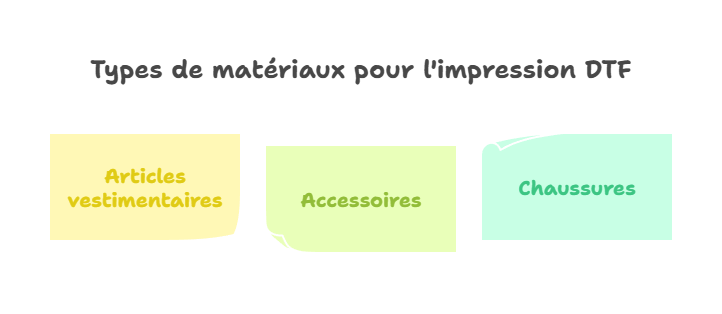 multi-surface DTF printing
Direct To Film printing allows you to print on all types of materials, whether light or dark. It can be used on clothing such as T-shirts, sweatshirts, tank tops, and jeans; accessories such as caps, scarves, bags, and tote bags; and even shoes!
DTF printing technology works on natural materials such as cotton as well as synthetic materials such as polyester.
This textile printing machine offers great versatility. With 8 printheads, Tissus Print's DTF printers are ideal for scaling up your brand, printing your logo, offering branded gifts to your customers, or developing your brand image.
CUSTOMIZE MY HEAT-TRANSFER FILM
DTF: An eco-friendly machine
DTF is an eco-friendly textile printing machine. It does not use water, produces no waste, and has low energy consumption.
In addition, the ink used for heat-transfer printing is OEKO-TEX certified.
Finally, on-demand DTF printing eliminates the need for inventory and helps reduce waste.
It is a technical innovation that is both eco-friendly and environmentally responsible!
DTF: High-quality printing
Film printing delivers premium quality. It produces vibrant colors and high-resolution results without cracking. The ink used is stretchable, which prevents the print from cracking when the garment is stretched. DTF printing is highly durable and resistant to both washing and everyday wear. In addition, the print is thinner and lighter than flex, making DTF printing an excellent textile marking solution!
Choose the DTF format that best suits your needs: sheets, labels, by the meter, or packages.
View all DTF formats
DTF vs. other textile printing techniques
DTF printing stands out for its versatility and quality, but it is not the only textile printing technique available. Here is a clear comparison between DTF and the main methods used in professional textile printing.
DTF vs. screen printing
Screen printing is a traditional printing technique that is widely used for large production runs.
Advantages of screen printing:
- Cost-effective for very large quantities,
- Excellent long-term durability,
- Bold colors in solid areas.
Limitations of screen printing:
- Less suitable for small runs,
- Long and costly setup (screens, registration),
- Less flexible for complex or multicolor designs.
In contrast, DTF requires no screens and allows you to print single pieces or small batches, with detailed and multicolor designs while maintaining excellent wash resistance.
DTF vs. heat-transfer vinyl
Heat-transfer vinyl involves cutting a colored film and then heat-pressing it onto the textile.
Advantages of heat-transfer vinyl:
- Good opacity,
- Good durability,
- Simple technique for basic text or logos.
Limitations of heat-transfer vinyl:
- Thicker and more rigid finish,
- Not well suited to gradients, photos, or fine details,
- Less pleasant feel to the touch.
DTF provides a thinner, softer, and lighter finish while accurately reproducing complex designs such as photos, illustrations, and gradients without a cardboard-like feel.
DTF vs. DTG (Direct To Garment)
DTG is a direct-to-textile printing technique mainly used on light-colored cotton.
Advantages of DTG:
- Very soft feel,
- Good quality on light-colored cotton,
- Direct printing without a transfer.
Limitations of DTG:
- Variable results on dark textiles,
- Limited compatibility with certain materials (polyester, blends),
- Less durable over time depending on use.
DTF allows you to print on all types of textiles, light or dark, cotton or polyester, with excellent wash resistance and highly consistent results.
Quickly compare the options to choose the most cost-effective method for your needs.
View the full comparison
What are the best uses for DTF printing?
Thanks to its versatility and quality, DTF printing is suitable for many professional and personal applications. This technique adapts perfectly to textile customization needs, regardless of the material or quantity.
Clothing brands and textile designers
DTF printing is ideal for ready-to-wear brands, independent designers, and emerging labels. It allows short or medium runs without minimum order requirements while ensuring a premium and durable finish. It is an ideal solution for testing collections, launching limited editions, or quickly updating designs.
Textile workshops and printing professionals
Textile printing workshops use DTF to expand their offering or meet specific requests. DTF film can be used to customize textiles already in stock, increasing flexibility and reducing production times without requiring a major investment in equipment.
Businesses, associations, and events
DTF is particularly well suited to customizing event textiles: T-shirts, sweatshirts, tote bags, caps, or workwear. It offers excellent durability, even with intensive use, and allows logos, slogans, or multicolor designs to be printed with precision.
Personalized gifts and small batches
For personalized gifts, DTF makes it possible to create unique textiles or very small quantities (printing with no minimum order quantity). Photos, names, messages, or illustrations are reproduced accurately for a high-quality and durable result.
What is the DTF printing process?
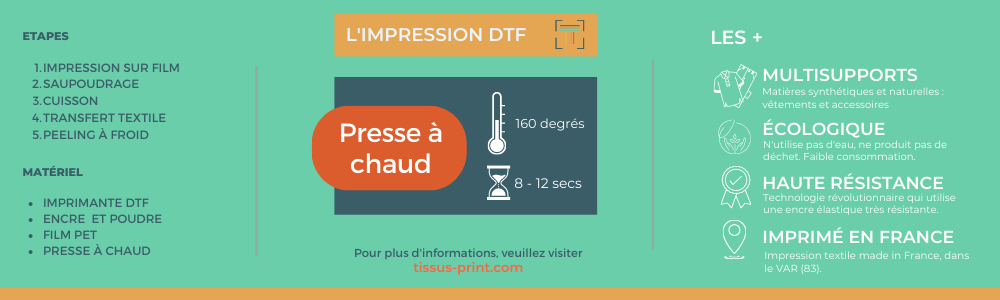 DTF printing process
DTF film printing involves 5 main steps using a printing machine and a heat press.
Step 1: Printing on film
When your file reaches our printing software, it is sent directly to the film printer. Our DTF machine then prints your file onto transparent PET film in mirror mode. The colored inks are applied first, followed by white ink to complete the print.
Step 2: Powder application
Once printing is complete, the film continues through the powder application stage. This hot-melt powder is evenly deposited onto the still-wet ink.
This powder provides the ink with greater durability and elasticity.
Step 3: Powder curing
Once the powder has been applied, the film continues through a high-temperature oven. The powder then gels under the heat. This process provides the ink with excellent durability and elasticity for a high-quality finished result.
Step 4: DTF textile transfer
Once the film has been printed, the strip is cut and placed onto the textile, which has been positioned beforehand on the heat press. The heat press is then closed for approximately 15 to 20 seconds at a temperature of 160 to 170 degrees to cure the ink onto the textile.
Step 5: Hot peeling
Once the DTF transfer has been completed, hot peeling is performed immediately to gently remove the DTF film from the textile.
Follow our simple guide to apply your DTF film correctly and without mistakes.
View the application guide
How do you order DTF film?
At Tissus Print, we offer several solutions for ordering your DTF printing, to meet the needs of all types of customers: textile professionals, brands, workshops, or individuals. Depending on your needs and level of graphic preparation, you can choose the method that best suits you.
1. Order DTF film by the linear meter
DTF film by the meter is the ideal solution if you want to optimize your costs and freely customize your designs: the price is €16 excl. VAT/M, with decreasing rates available from 5M.
You already have a print-ready file
All you need to do is:
- upload one or more files (logos, designs, text),
- select the desired number of meters,
- confirm your order.
Our teams take care of printing on PET film, ready to be transferred onto your textiles.
You want to create your own sheet
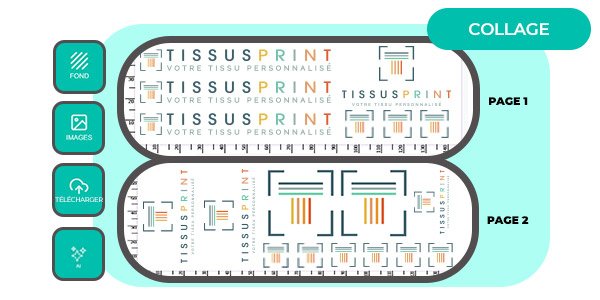
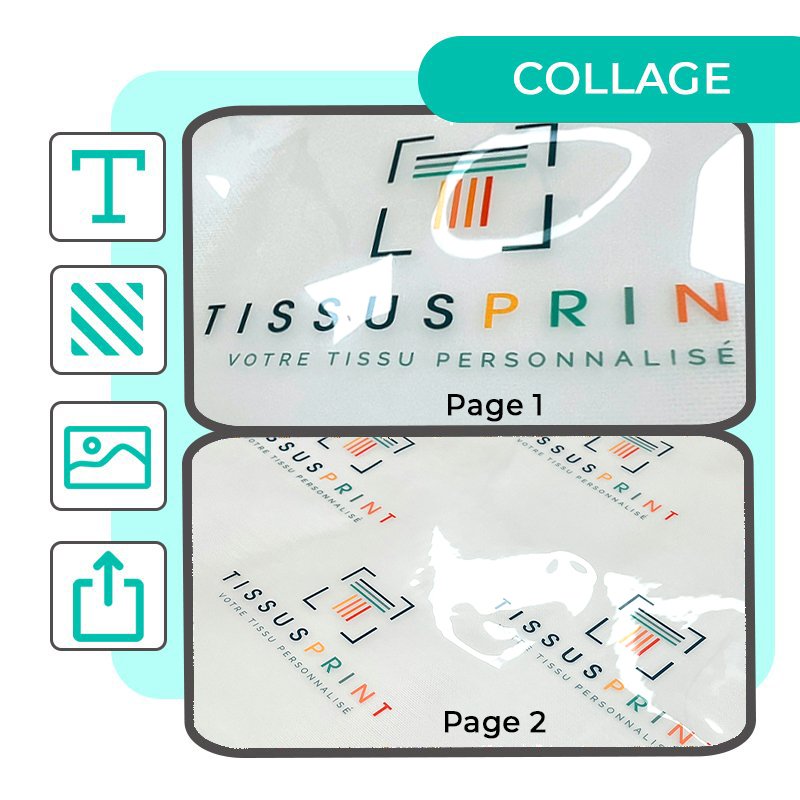
With our patchwork layout tool, you can create a custom DTF sheet without any particular graphic design skills. This tool is ideal for:
- uploading your images or logos,
- freely positioning your designs on the sheet,
- adding text, graphic elements, or icons,
- using our built-in image library.
A simple and fast solution for optimizing every meter of film and reducing waste.
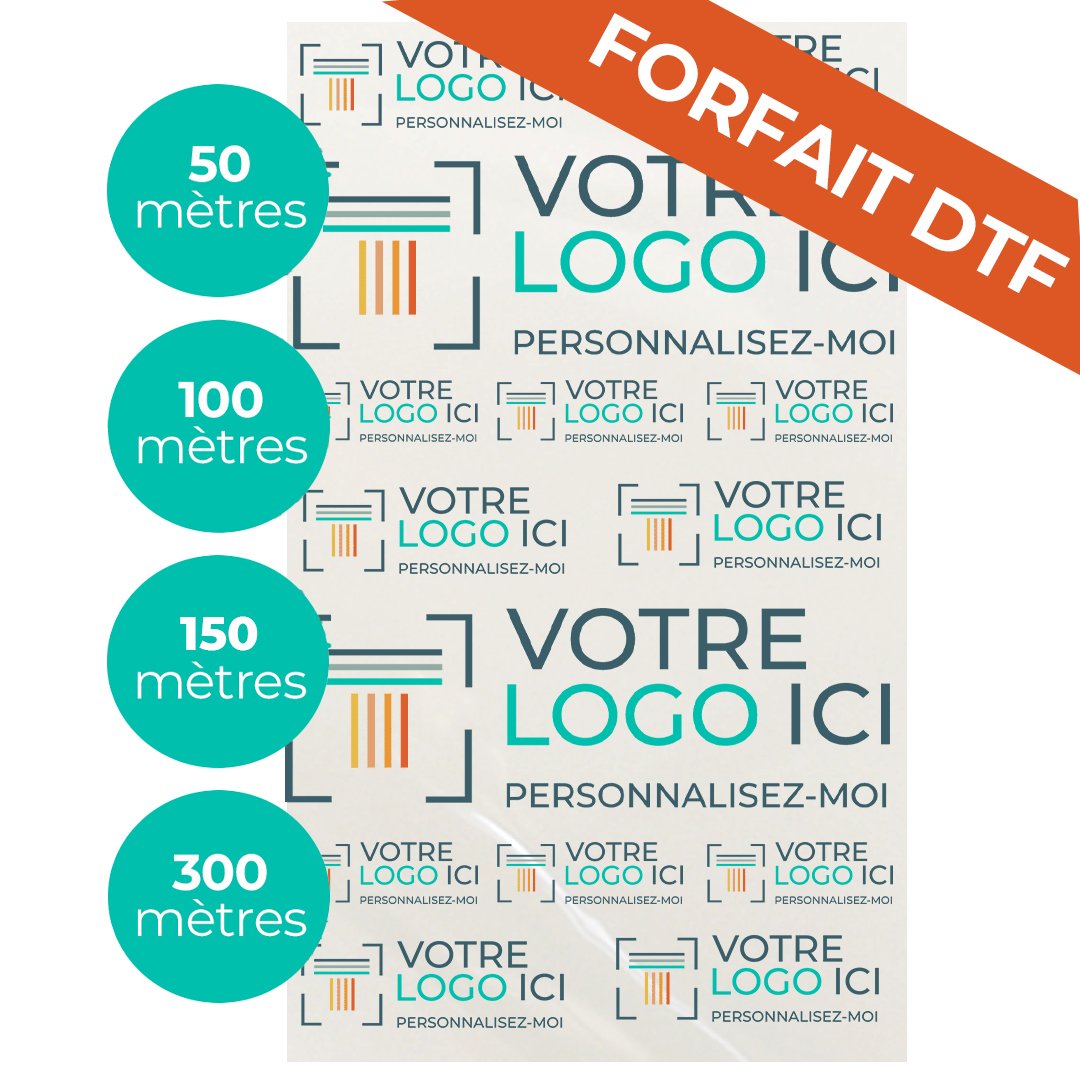
2. Order a prepaid DTF package
DTF packages are designed for professionals with regular printing needs.
The principle is simple:
- you purchase a prepaid package (for example: 50 meters),
- you pay only once,
- you then place DTF film orders as often as needed.
Each order automatically deducts the meters used from your package until it is fully used. No additional payment is required as long as the package has not been completely used.
An ideal solution for saving time, managing your budget, and simplifying your order management.
3. Order custom DTF labels
DTF labels are perfectly suited for the inside or outside marking of garments: sizes, brand logos, textile information, or branding.
They offer:
- a fine and discreet finish,
- excellent wash resistance,
- compatibility with all types of textiles.
This is the ideal solution for clothing brands looking to strengthen their visual identity.
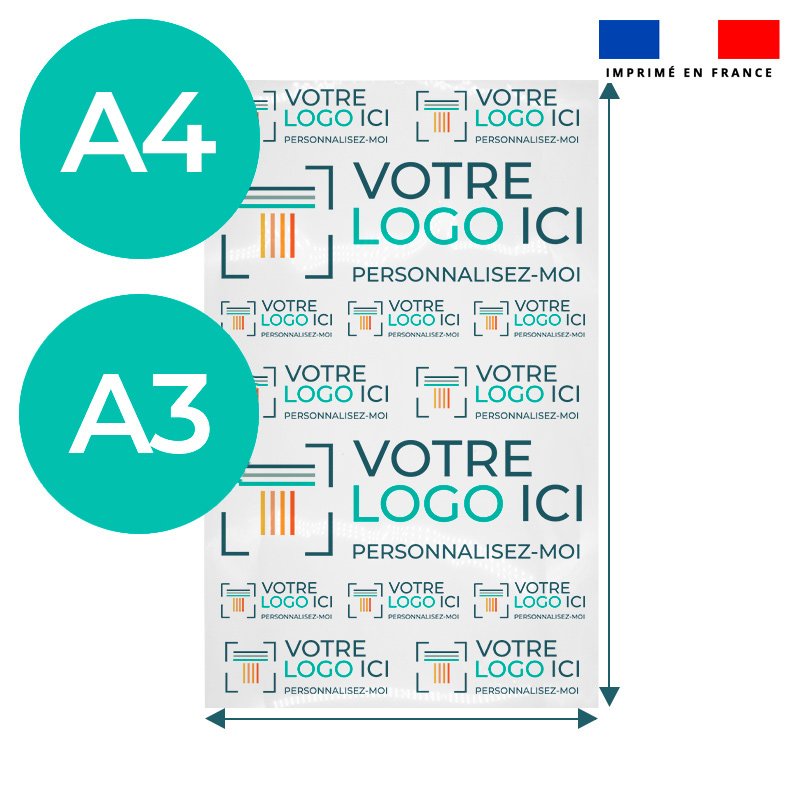
4. Order A3 or A4 DTF sheets
A3 or A4 DTF sheets are recommended for occasional needs or small batches. This format allows you to:
- group several designs on a single sheet,
- test designs,
- produce quickly without ordering by the meter.
A practical, cost-effective, and fast solution for small quantities.
A DTF solution for every need
Whether you have a ready-to-print file, a project to assemble, regular orders, or occasional needs, Tissus Print supports you with a DTF solution adapted to your needs, printed in France, with no minimum order quantity and professional-quality results.
Go directly to our DTF products and start customizing in just a few clicks.
Order my DTF printing
Conclusion
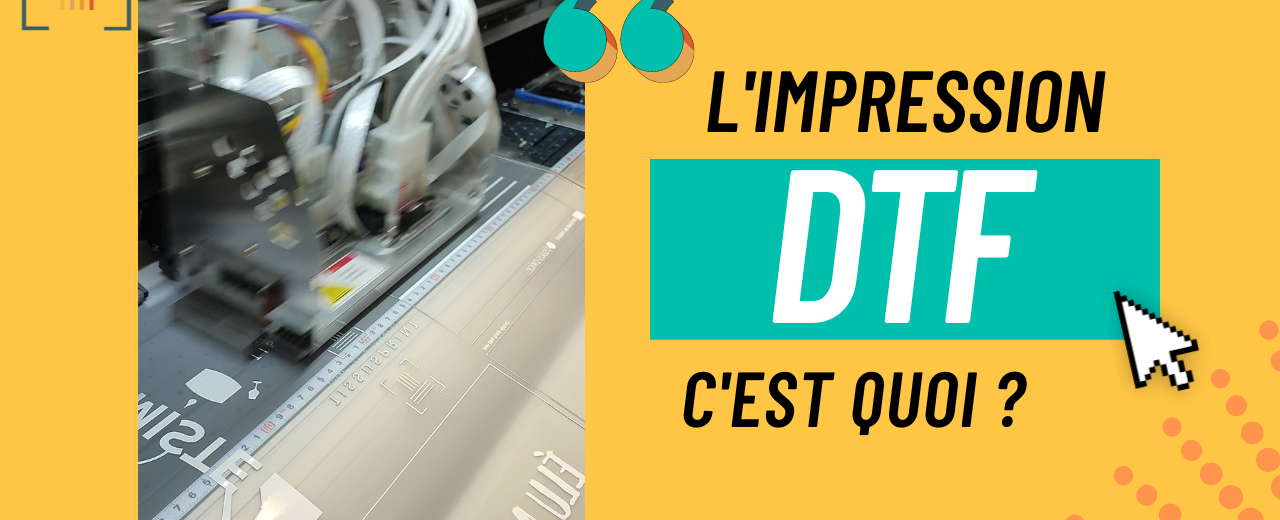
DTF printing at Tissus Print is transforming textile customization by offering exceptional-quality heat-transfer stickers. This innovative, eco-friendly, and cost-effective technique adapts to a wide variety of textiles, delivering vibrant colors and exceptional durability. The versatility of DTF makes it suitable for both clothing and accessories, meeting the diverse needs of professionals and individuals. Thanks to a carefully orchestrated five-step process, we guarantee excellent results with every print. Tissus Print offers custom DTF film at competitive prices, making it easy to customize existing textiles. Discover this revolution in our behind-the-scenes YouTube video and dive into the limitless world of textile customization with DTF printing.
FAQ - Everything you need to know about DTF printing
How long does a DTF print last?
A properly applied DTF print offers excellent durability. It generally withstands 30 to 40 washes while maintaining its colors and adhesion, provided that the care instructions are followed.
Is DTF printing machine-washable?
Yes, DTF is known for its high wash resistance. The heat-transfer print bonds permanently to the textile and does not crack when the garment is properly cared for (wash at 30°C, inside out).
Can DTF be printed on all textiles?
DTF printing is compatible with a wide variety of materials: cotton, polyester, cotton/polyester blends, and light or dark textiles. It is one of the most versatile techniques on the market.
Does DTF have a thick finish?
No. Unlike heat-transfer vinyl, DTF printing provides a thin, flexible, and lightweight finish. The print remains pleasant to the touch while being durable and stretchable.
Can you iron a textile printed with DTF?
Yes, but it is recommended to iron the garment inside out and avoid direct contact between the iron and the print to preserve the quality of the marking.
What is the difference between DTF film and flex?
DTF film allows complex, multicolor, or photographic designs to be printed with a thin and flexible finish. Flex, on the other hand, is thicker and limited to simple shapes and solid colors.


0 commentaires