


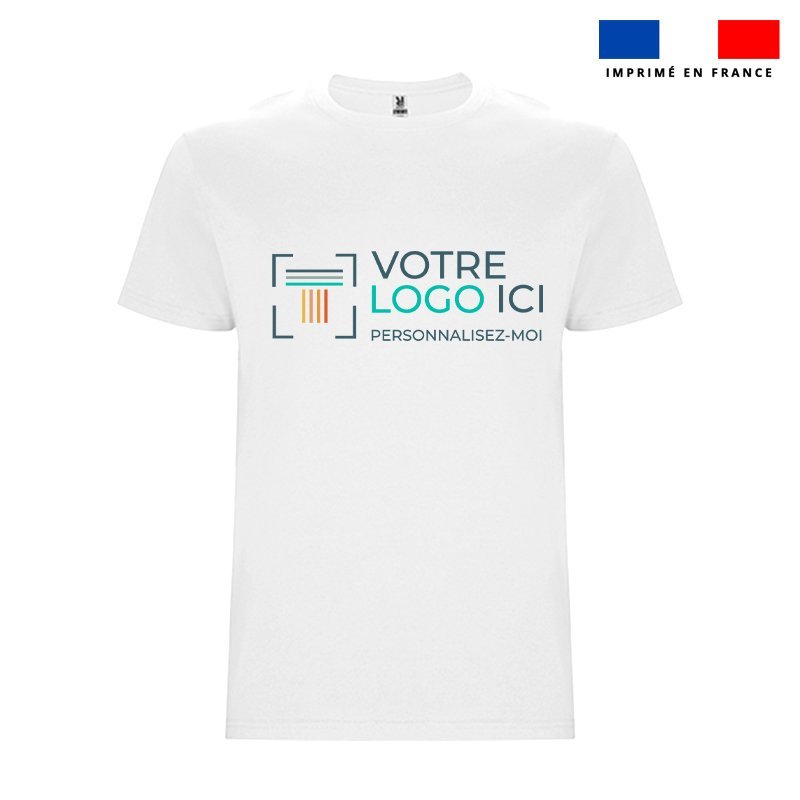

To create a customized uniform for your team, you need to identify your employee's needs, select clothing suited to their activity, and define a consistent personalization that reflects your company's image. Quantities, budget, sizes, and uniform replacement should also be anticipated from the very first order.
A well-designed uniform is much more than a logo printed on a T-shirt. It must be comfortable to wear, remain legible after repeated washing, and adapt as your business evolves. This is the difference between a uniform employees simply have to wear and a genuine team wardrobe.
The subject concerns a significant proportion of the workforce: according to an article published in 2016 by Le Hub de La Poste, 30% of employees in France were already wearing workwear. This figure is a historical reference illustrating the scale of the phenomenon, well before the current growth of textile personalization.
At Tissus Print, customized clothing, DTF transfers and printed fabrics are manufactured in France, near Toulon, in the Var region. Drawing on this textile printing expertise, discover how to build a professional wardrobe suited to your teams, your budget and the requirements of your industry.
Contents
- Why should a customized uniform be designed as a team wardrobe?
- Step 1: how can you identify your actual needs before ordering?
- Step 2: which workwear should you choose depending on your activity?
- Step 3: how can you create a consistent visual identity for the whole team?
- Step 4: customized clothing, DTF transfers or made-to-order manufacturing: which solution should you choose?
- Step 5: how many workwear garments should you plan for each employee?
- Step 6: how can you control your budget without compromising your company's image?
- Step 7: which files should you prepare for professional branding?
- Step 8: how should you maintain and replace your team's uniforms?
- Which customized uniform should you choose for your industry?
- Which mistakes should you avoid before creating customized uniforms?
- Tissus Print expert advice: plan your reorders from the very first order
- Conclusion: a uniform designed for your team, not just for your logo
- FAQ: creating customized uniforms for your company
Why should a customized uniform be designed as a team wardrobe?
A successful customized uniform should be designed as a complete wardrobe rather than as a single item imposed on everyone. This approach makes it possible to maintain a strong visual identity while adapting each outfit to the job, the season and the desired level of visibility. Everyone's comfort is preserved while the company's image remains consistent.
How can you strengthen your brand image without imposing unsuitable clothing?
A company should be recognizable at first glance. To achieve this, visual codes must remain consistent across all garments: the same colors, the same logo and the same branding positions. However, all employees do not necessarily need to wear exactly the same item.
Consistency comes from the brand guidelines, not from strict uniformity. In a restaurant, servers may wear a customized company polo shirt, chefs a branded apron and the dining-room manager a more formal outfit. Despite these differences, the same visual identity is maintained and immediately recognizable to customers.

How can you adapt the uniform to the job, the season and the desired visibility?
An effective professional wardrobe is organized around several complementary outfits. A daily outfit is provided for routine work, a winter outfit for colder months, and a specific outfit for events. One garment may also be reserved for outdoor work, while a particular textile can be assigned to customer-facing roles.
With this organization, a consistent professional image can be achieved without compromising each employee's comfort. This is precisely what distinguishes a customized professional uniform that is actually worn from a uniform abandoned at the back of a locker.
Step 1: how can you identify your actual needs before ordering?
Before placing any order for customized company clothing, the actual requirements of each position should be identified. This step prevents unnecessary purchases, improves employee acceptance of the uniforms and provides the textile printer with a clear set of specifications. A few well-chosen questions are enough to define the entire project.
Which questions should you ask to avoid unnecessary purchases?
The working environment directly determines the choice of textiles. The following questions should be addressed beforehand:
- In what environment will the uniforms be worn on a daily basis?
- Do employees work indoors, outdoors, or in both environments?
- Do the garments need to withstand friction or frequent washing?
- Are employees in direct contact with customers?
- Is a high degree of freedom of movement required for certain tasks?
- Do different jobs need to be visually distinguished within the team?
- Are there hygiene, safety or presentation requirements that must be met?
- Do seasonal variations need to be anticipated from the first order?
Why involve employees in choosing the uniforms?
Uniform adoption is significantly better when teams are consulted before the order is placed. Fit issues can be identified earlier, comfort requirements can be better understood and differences in body shape can be taken into account. Unsuitable orders that are expensive to correct can therefore be limited.
A concrete example illustrates this well. A maintenance company initially plans to provide the same polo shirt for all its technicians. After consulting the team, a breathable T-shirt is preferred for summer interventions and a zip-up sweatshirt is selected for winter. The budget remains the same, but the garments are actually worn.
What should a basic specification document contain before requesting a quote?
A simple specification document considerably speeds up the process of obtaining an accurate quote. It should include the number of employees, the jobs concerned, the desired garments, the required sizes and the textile colors. The artwork to be printed, branding positions, quantities per reference, desired delivery date and any need for made-to-order manufacturing should also be included.
Step 2: which workwear should you choose depending on your activity?
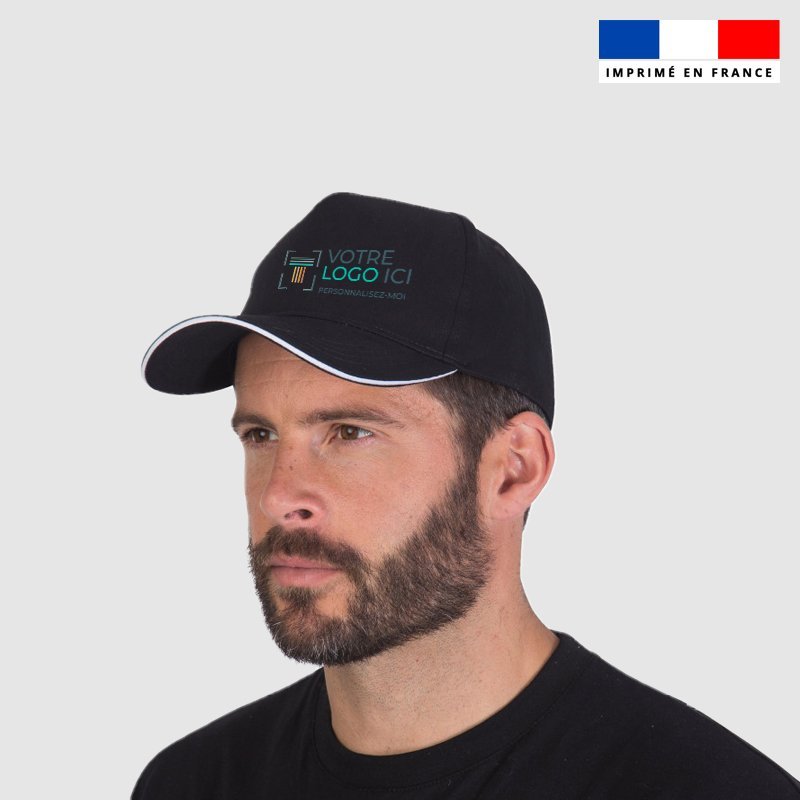
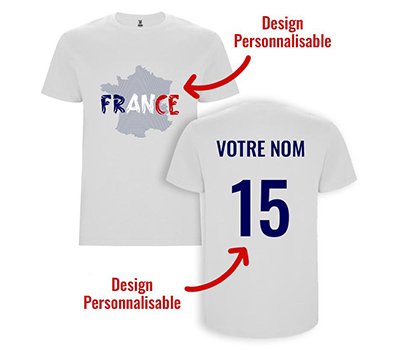
The right workwear is clothing that employees will actually wear: a T-shirt for events and tradespeople, a polo shirt for reception and hospitality, a sweatshirt for logistics and outdoor work, and an apron for food-related professions. The material—cotton, polyester or a blend—and the fabric weight should then be selected according to working conditions.
T-shirt, polo shirt, sweatshirt or apron: which garment will actually be worn?
Each type of garment meets a specific professional need. The following table summarizes the main options:
| Garment type | Recommended professional use | Main advantage | Point to watch |
|---|---|---|---|
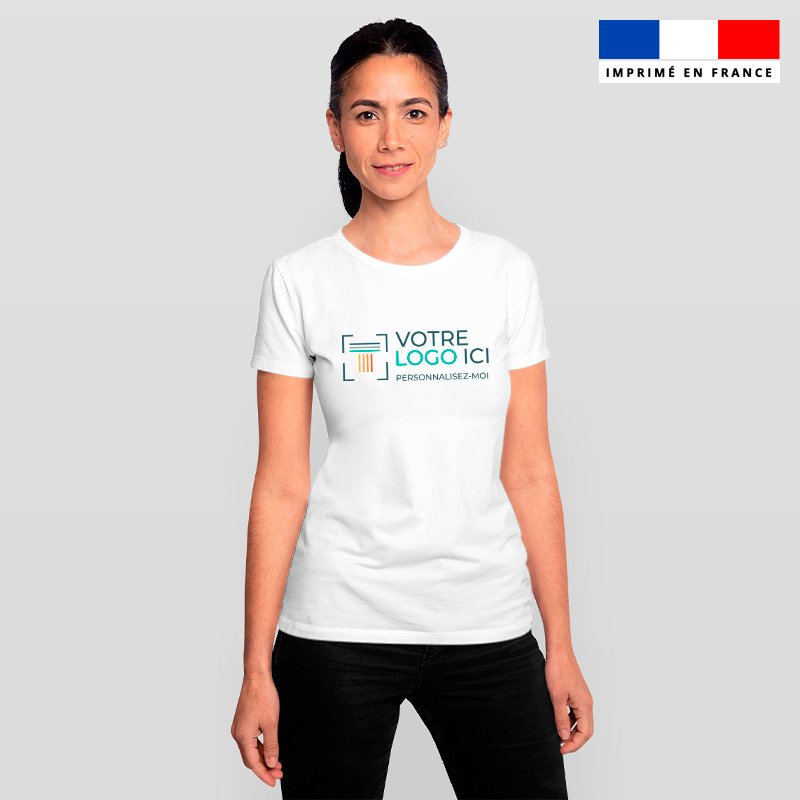
| Customized T-shirt | Events, retail, tradespeople, seasonal teams | Comfort, versatility and visibility | Choose a cut and material suited to the frequency of wear. |
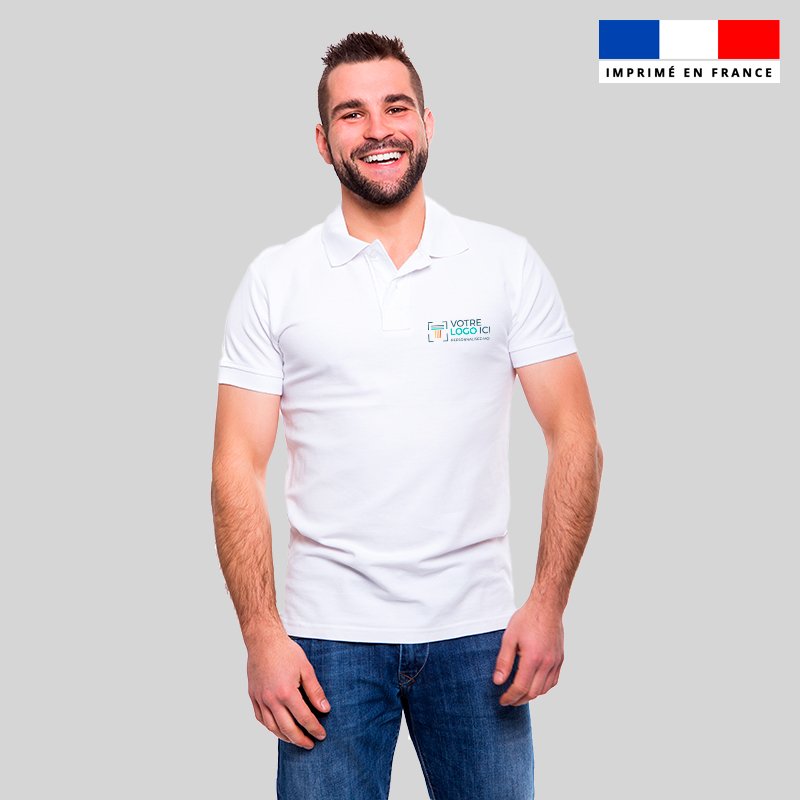
| Customized company polo shirt | Reception, hospitality, real estate, public authorities | Professional appearance and polished image | Check the fit, collar comfort and logo legibility. |
| Customized sweatshirt | Logistics, workshops, outdoor interventions | Warmth and visibility across several seasons | Avoid placing artwork over a zipper or pocket. |
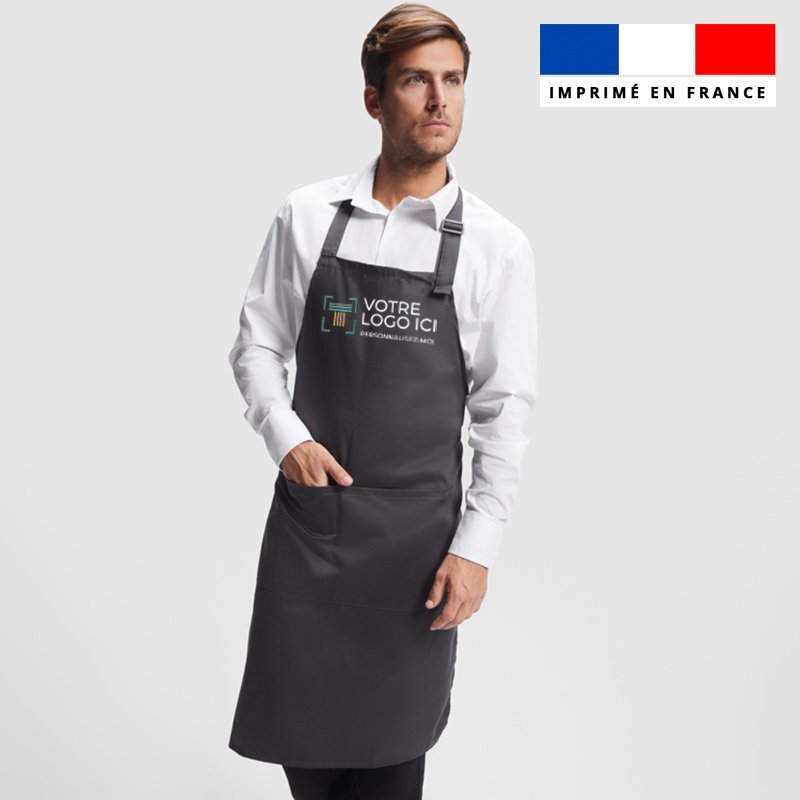
| Customized apron | Restaurants, bakeries, florists, tradespeople | Protection and immediate identification | Choose a branding position suited to the tasks involved. |
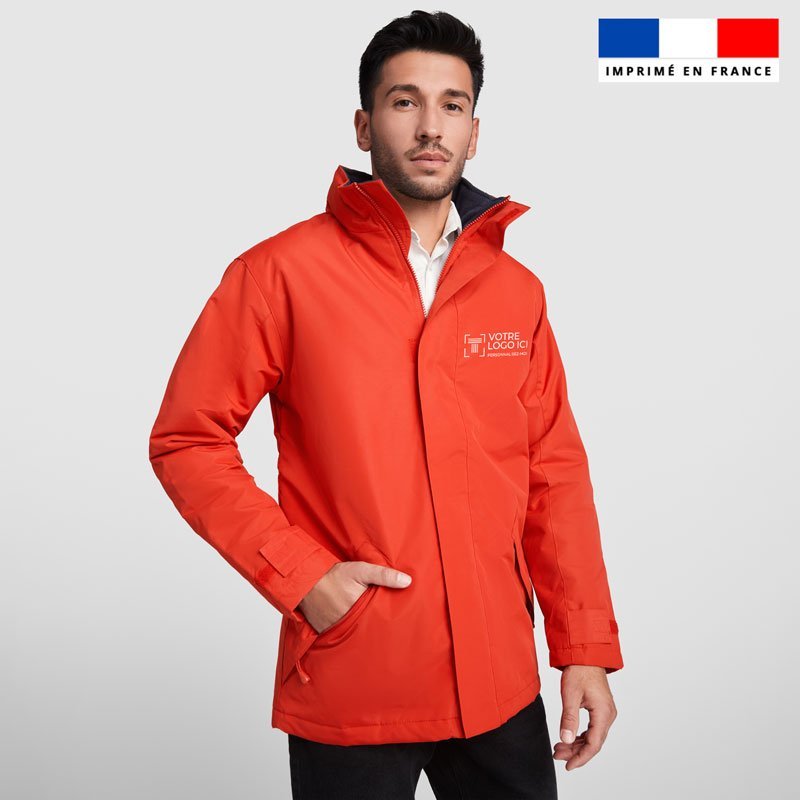
| Customized jacket | Maintenance, construction sites, deliveries, outdoor work | Visibility and protection against outdoor conditions | Check compatibility between the material and the planned branding method. |
| Customized textile accessory | Trade shows, events, customer reception | Additional visual communication | Maintain graphic consistency with the main garments. |
| Made-to-order textile | Specific projects, brand concepts, special requirements | Creation adapted to the desired dimensions and uses | Plan for prior project approval and appropriate lead times. |

Cotton, polyester or a blend: which material should you choose for your working conditions?
The material affects comfort, care requirements and garment lifespan. Cotton is appreciated for its softness and breathability, making it a suitable choice for outfits worn throughout the day. Polyester is preferred for certain technical applications, particularly when quick drying or durability is required.
Blended fabrics combining cotton and polyester often provide a balanced compromise between comfort and durability. Fabric weight, expressed in grams per square meter, affects the garment's drape, durability and suitability for the season. A lighter weight is suitable for summer, while a heavier weight is better suited to winter.
One important point should be remembered: washing frequency and conditions must always be considered before making the final choice. Resistance to a specific washing temperature should never be assumed without checking the characteristics of both the textile and the chosen branding method.
Step 3: how can you create a consistent visual identity for the whole team?
A consistent visual identity is based on three decisions: clothing colors that reflect the brand guidelines, a logo with sufficient contrast to remain legible, and branding positions selected according to the desired visibility. Departments can then be distinguished by color or by a job title, without multiplying the number of visuals.
How can you choose professional colors without losing legibility?
Brand colors should be reflected in the textiles, but the contrast between the logo and the garment remains the decisive factor. A dark blue logo will be difficult to read on a navy polo shirt. In this case, a white or light version of the artwork can be used to maintain immediate identification.
The visual identity should therefore be adapted for both light and dark textiles. A monochrome version of the logo may sometimes be preferable to the original color version: it ensures legibility across all supports and simplifies production regardless of the textile printing technique chosen.
Where should you place your logo on professional clothing?
The branding position should be selected according to the desired benefit. The following table summarizes the recommended uses:
| Position | Desired benefit | Recommended use |
|---|---|---|
| Left chest | Discreet and professional identification | Polos, T-shirts, sweatshirts, reception outfits. |
| Back | Visibility from a distance | Outdoor interventions, construction sites, events. |
| Chest | Immediately visible logo or message | Retail, reception, hospitality. |
| Sleeve | Additional branding | Secondary logo, department, partner or pictogram. |
| Apron | Identification in front of customers | Food-related professions, tradespeople, florists. |
How can you distinguish departments without multiplying the number of visuals?
Several options make it possible to differentiate teams while keeping a single logo. The same artwork can be applied to garments in different colors, an individual first name can be printed on identical textiles, or the job title can be displayed underneath the logo. Back branding can also be reserved for employees who work on the move.
In an events company, technicians can therefore wear black T-shirts, managers navy polo shirts and reception staff white garments. The identical logo on every piece guarantees visual unity while making each team immediately recognizable.
Step 4: customized clothing, DTF transfers or made-to-order manufacturing: which solution should you choose?
Three professional textile branding solutions can be combined: ready-to-wear customized clothing for companies wishing to outsource the entire production process, DTF transfers for professionals equipped with a heat press who want to customize their own textiles, and made-to-order manufacturing for projects that cannot be fulfilled with a standard garment.
When should you order ready-to-wear customized clothing?
Ready-to-wear customized clothing is suitable for companies that want to outsource the entire personalization process. The textiles are delivered already branded, providing a significant time saving when organizing the uniforms. Support can be provided when choosing the garments, printing techniques and branding positions.
A real estate agency is a good example: customized polo shirts with a logo on the left chest are ordered for all its advisers. No equipment is required, and the garments are ready to distribute directly to the teams. Discover our professional textile branding solutions to equip your company.
When should you order DTF transfers to customize your own textiles?
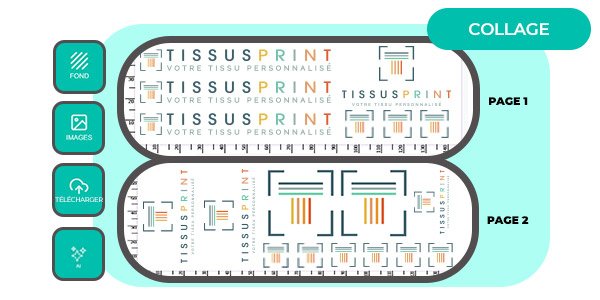
DTF, or Direct To Film, is a digitally printed transfer that is applied to textiles using a heat press. This solution is suitable when a company already owns its garments, when a professional has a heat press, or when several different supports need to be customized with the same logo.
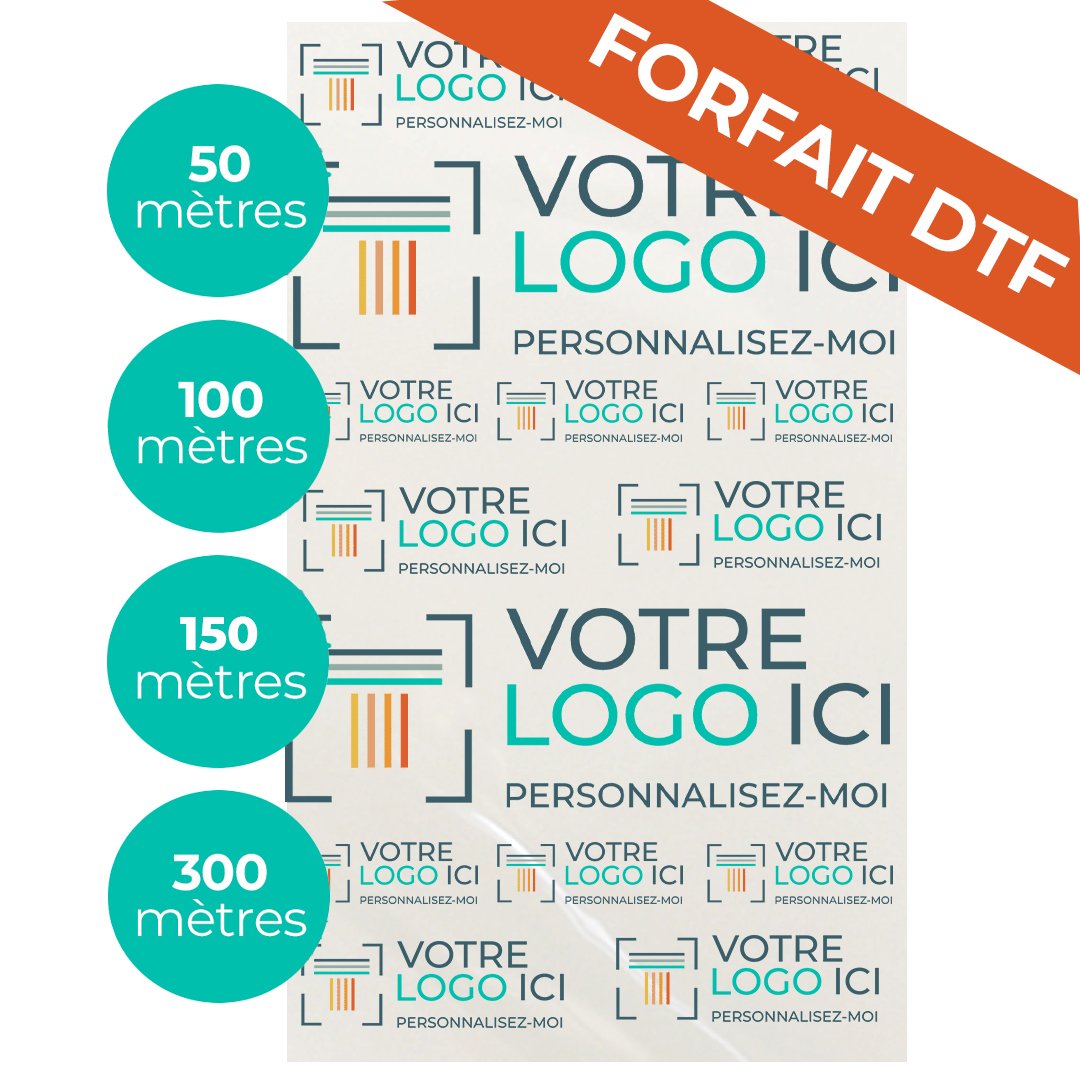
Customized DTF transfers can also be used to group different logo formats within the same order, according to the options offered by Tissus Print. Regular reorders can therefore be prepared in advance without requiring a completely new production process for every new hire.
An automotive workshop provides a concrete example: T-shirts, sweatshirts and work jackets are already in stock. Logos in different sizes are ordered as DTF transfers and applied as needed. To find out more, see our guide on how to optimize a DTF sheet with multiple logos and reduce your costs.
When should you have a specific textile project produced to order?
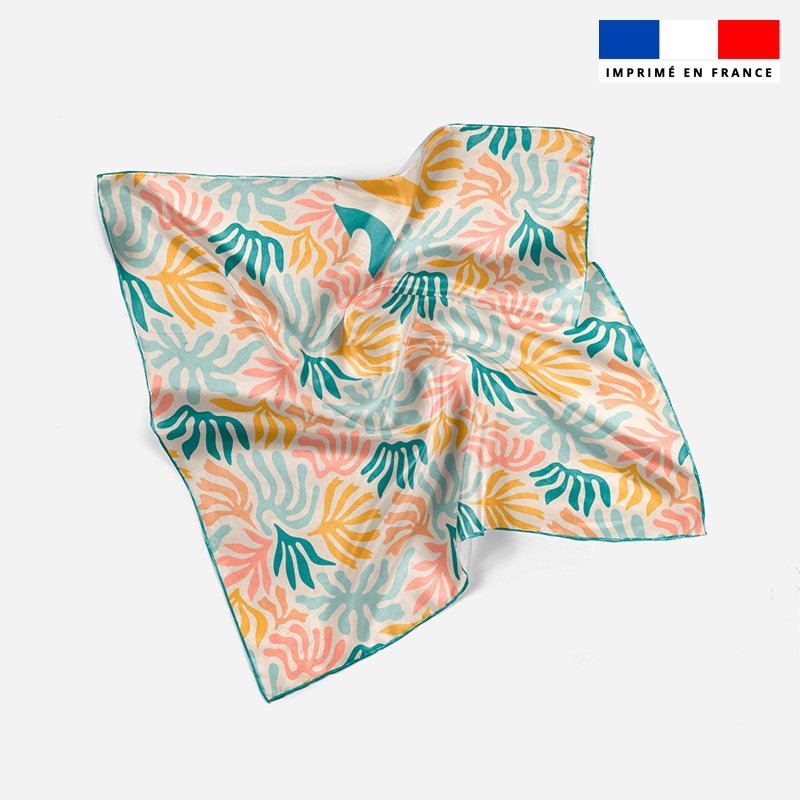
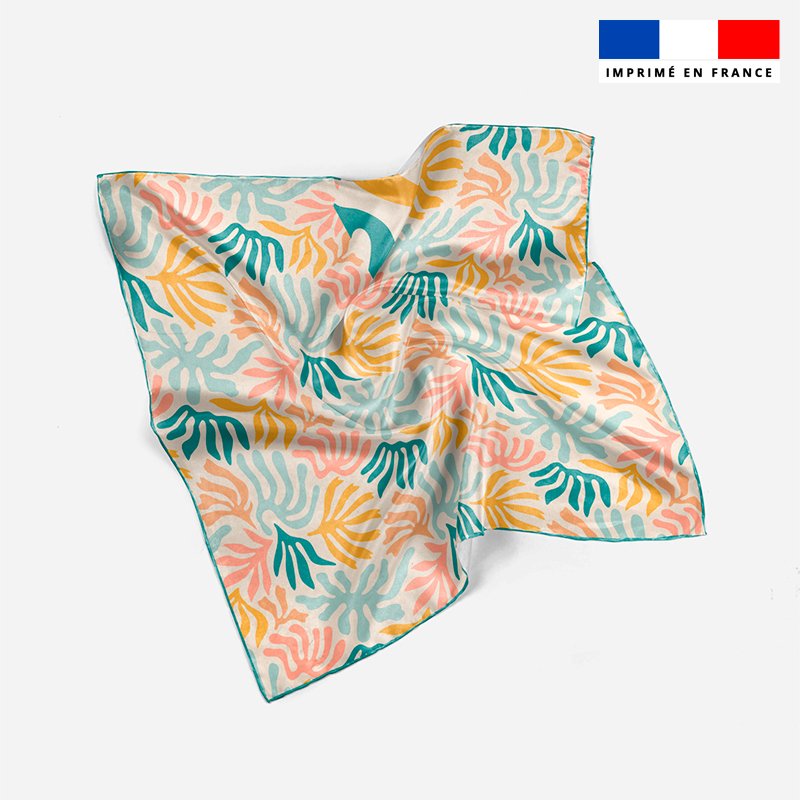
Some requirements cannot be met with a standard garment available on the market. Meter-printed fabric can then be used for a specific creation, customized accessories can be matched to the company's identity, and support with manufacturing can be offered.
A hotel, for example, may want textile accessories matching its visual identity for reception, events or specific roles. A printed fabric project, using sublimation or direct digital printing depending on the material, together with manufacturing, can then be considered on the basis of a quote.
How should you compare the different solutions before deciding?
| Solution | For which professional? | Main advantage | Limitation to anticipate |
|---|---|---|---|
| Ready-to-wear customized clothing | Company looking for a simple solution | Garments ready to use immediately | The project depends on the available models and supports. |
| Customized DTF transfer | Professional equipped for application | Flexibility for customizing existing garments | A heat press and suitable application conditions are required. |
| Customized fabric by the meter | Brand, designer, agency or specific project | Freedom in creating patterns | A manufacturing step must be planned. |
| Made-to-order manufacturing | Company with a specific textile requirement | Project studied according to the stated requirements | Technical validation, quotation and specific lead times must be anticipated. |
Step 5: how many workwear garments should you plan for each employee?
The forecast quantity can be calculated using a simple formula: number of employees × number of garments per person + safety stock. The number of garments per person depends on working days, washing frequency, level of soiling, seasons and staff turnover. A provision of three T-shirts, two polo shirts and one sweatshirt is a common reference point.
How can you determine the number of garments according to frequency of wear?
The allocation should be based on the actual pace of the activity. The number of working days per week determines the minimum number of garments required between washes. The level of soiling associated with the job, washing frequency and seasonal variations then adjust this figure.
Any job-specific obligations, particularly hygiene requirements, as well as staff turnover should also be included in the calculation. Finally, a safety stock of a few garments in each size helps cover unexpected replacements without requiring an urgent order.
What allocation should you plan for a team of 10 people?
The following example illustrates a typical allocation for a team of ten employees:
| Garment | Indicative allocation per person | Quantity for 10 people |
|---|---|---|
| Customized T-shirts | 3 | 30 |
| Customized polo shirts | 2 | 20 |
| Customized sweatshirts | 1 | 10 |
| Spare garments | Depending on sizes and needs | To be defined |
This example is indicative and does not replace an estimate based on your company's actual activity.
How can you anticipate sizes, new hires and replacements?
Sizes should be collected before ordering, using the size guides for the selected textiles. Cuts suitable for different body shapes should be planned, and a few spare garments should be kept in the most common sizes.
The logo files and exact textile references should also be archived from the first order. With this organization, a new employee can be equipped more easily through a simple additional order, without having to reconsider the entire wardrobe.
Step 6: how can you control your budget without compromising your company's image?
The budget for a customized uniform can be controlled by focusing on three areas: identifying the factors that genuinely influence the price, considering cost of use rather than purchase price, and organizing customization to limit unnecessary references. A slightly more expensive but durable garment often costs less per use.
What really influences the price of a customized uniform?
Several factors determine the final cost of the project. The type of garment, material and fabric weight form the basis of the price. The number of pieces ordered, the number of customized positions and the size of the artwork then affect the price.
Individual personalization, such as first names, the level of preparation required for graphic files, any use of made-to-order manufacturing and reorder requirements complete the list. Each of these elements can be decided in advance to adjust the budget without compromising the final result.
Why should you compare purchase cost and cost of use?
Cost of use provides a more accurate view than purchase price alone. The formula is simple: estimated cost of use = total cost of the outfit ÷ estimated number of uses. A €15 garment worn 30 times represents an indicative cost of €0.50 per use, while a €24 garment worn 80 times costs around €0.30 per use.
These figures are purely illustrative and do not correspond to Tissus Print's pricing structure. They nevertheless show that a higher-quality textile, with an appropriate fabric weight and durable branding, can be the most economical option over the medium term.
How can you reduce costs through better-organized personalization?
Several practical measures can optimize an order. The number of unnecessary references should be limited, the needs of several departments grouped together, and the same logo used across different textiles. Quantities should be anticipated to avoid urgent orders, and last-minute corrections avoided through careful approval.
When appropriate, several logos can be grouped into the same DTF transfer order. A cleaning company provides a good example: a left-chest logo for polo shirts, a back print for sweatshirts and first names for managers are grouped together from the outset. The order is easier to prepare and the overall cost is better controlled.
Step 7: which files should you prepare for professional branding?
Professional branding requires a sharp, correctly sized logo with sufficient contrast against the textile. The file should be approved before production, using a checklist covering spelling, sizes, positions, quantities and colors. For major projects, a first sample garment can help secure the final result.
How can you provide a sharp, legible and correctly sized logo?
The quality of the graphic file directly affects the result of textile printing. The final dimensions of the branding should be defined, contrast with the textile checked and the legibility of small text verified. Background management, whether transparent or not, and compliance with the brand guidelines should also be confirmed.
The artwork should finally be adapted to the different garments in the wardrobe: a logo designed for the back of a sweatshirt cannot necessarily be used unchanged on the left chest of a polo shirt. The required file format should be confirmed according to the solution ordered and Tissus Print's recommendations. If your file cannot be used directly, our graphic design service can prepare or modify your logo.
What should be approved before production begins?
A validation checklist prevents almost all costly errors:
- The final logo has been approved in its definitive version.
- The spelling of first names and job titles has been checked.
- Garment sizes have been confirmed by employees.
- Branding positions have been defined for each item.
- Quantities have been checked reference by reference.
- Textile colors have been approved.
- The desired delivery date has been specified.
- The approval process has been confirmed with the workshop.
Why test a first garment when the project justifies it?
A sample garment helps secure large orders. The logo result can be checked under real conditions, legibility against the chosen color can be assessed and garment comfort evaluated by an employee. The size of the artwork can still be adjusted before full production begins.
This limits the risk before placing a larger order. The possibilities for samples, prototypes or test orders should be presented according to the conditions actually offered by the workshop at the time of the project.
Step 8: how should you maintain and replace your team's uniforms?
The lifespan of a customized uniform can be extended by following the textile label and the instructions specific to the branding: appropriate washing, turning the garment inside out when recommended, and avoiding ironing directly over the printed area. Replacement is then simplified by keeping the exact references of the textiles, logo and branding positions.
How can you extend the lifespan of customized clothing?
A few simple habits are enough to preserve the uniforms. The instructions on the textile label should be followed, along with the recommendations provided for the branding. The garment should be turned inside out before washing when recommended, and direct ironing over a printed area should be avoided.
Washing conditions should also be adapted to the material, whether cotton, polyester or a blend. The condition of the garments worn most frequently should be monitored so they can be replaced before they negatively affect the team's image.
How can you set up a simple reorder system for growing teams?
A smooth reorder process relies on information kept from the first order: the exact garment reference, selected color, ordered sizes and final logo. Branding dimensions, selected positions and the initial quantity breakdown complete this reference file.
With this information archived, each new order becomes a simple repeat order. New employees can be equipped quickly with garments that are exactly identical to those worn by the rest of the team.
How can you adapt uniforms to seasonal and business changes?
The wardrobe evolves with the company. Sweatshirts can be added for winter, T-shirts renewed before the summer season, and specific textiles created for a trade show. Additional garments can be ordered for new employees, and the logo can be adapted for a new branch or department.
Which customized uniform should you choose for your industry?
Each industry requires a different wardrobe: polo shirt and apron in hospitality, T-shirt and back-branded sweatshirt for tradespeople, polo shirt with first name in retail, large back branding for events, and function-specific outfits in hotels. The following examples are directly inspired by the real-world uses of Tissus Print's professional customers.
Restaurant: what practical, visible and consistent outfit should you choose?
A frequently selected combination is a polo shirt or T-shirt for servers, a customized apron for service and a sweatshirt for outdoor terrace teams. The logo is placed on the left chest or on the apron, facing the customer.
The benefit is immediate: employees can be identified at a glance without restricting their movements during service.
Tradesperson or construction company: how can you be identified on site?
On site, visibility is a priority. A customized T-shirt for everyday work, a sweatshirt with a back print and a jacket suited to interventions provide a solid foundation. The logo is printed in a large format, potentially accompanied by the company's contact details.
One essential point must be observed: when a garment constitutes personal protective equipment or is subject to a specific standard, personalization must never compromise its properties or compliance. Prior verification with the supplier or manufacturer is essential before any branding.
Retail: how can you project a welcoming and professional image?
In a store, uniforms facilitate customer interaction. A customized polo shirt, a seasonal T-shirt, a printed first name or job title, and colors consistent with the store's identity create an effective wardrobe. Customers can more easily identify the people available to assist them.
Events team: how can you increase visibility and simplify organization?
At an event, visibility from a distance is the priority. Identical-color T-shirts, large back branding and team identification by color allow smooth organization. Additional logos can be added depending on the event or partners.
The benefit: employees can be identified quickly, even in a very busy environment.
Hospitality: how can you differentiate the textile identity according to each role?
Hotels bring together very different professions under one overall image. A customized polo shirt can be assigned to reception, an apron to breakfast service and comfortable clothing to technical teams. Textile accessories can be produced to order depending on the establishment's project.
A consistent appearance can therefore be maintained despite the diversity of roles, from the reception lobby to the upper floors.
Which mistakes should you avoid before creating customized uniforms?
Seven recurring mistakes compromise most uniform projects: choosing based on price alone, using a logo that is poorly sized or lacks contrast, imposing a single outfit on different professions, forgetting unusual sizes, failing to anticipate new hires, providing inadequately prepared graphic files and overlooking the constraints of technical clothing. Each can be avoided with simple preparation.
Why shouldn't you choose clothing based solely on price?
The risk is well known: uncomfortable garments that need to be replaced quickly can generate greater costs over the medium term. Cost of use, presented above, remains the best indicator when choosing between two textiles.
What are the risks of a logo that is too large, too small or lacks contrast?
Poorly sized branding directly harms the brand. The company is less easily identified, and the result appears less professional, even when the garments themselves are high quality.
Why shouldn't you impose the same outfit on different professions?
A single garment for the entire team may seem simpler, but some employees may then end up with clothing unsuitable for their tasks or working environment. A wardrobe adapted by profession, as presented in the first part of this guide, addresses this problem directly.
What happens if unusual sizes are forgotten?
Some employees end up with uncomfortable or unflattering clothing. Size guides should be consulted in advance, and cuts suitable for different body shapes planned from the first order.
Why should you anticipate new hires from the first order?
Without anticipation, several versions of the same uniform may end up coexisting as new employees join the company. Archiving textile references and logo files guarantees strictly identical reorders.
What are the risks of ordering without a properly prepared graphic file?
A blurry logo, an unwanted background or illegible details can compromise the final result regardless of the quality of the printing. File preparation is a full-fledged stage of the project.
Why do technical or safety garments require specific verification?
Personalization may be incompatible with certain requirements of the support or with a certification. For personal protective equipment or standardized garments, compliance must always be verified before any branding.
Tissus Print expert advice: plan your reorder from the very first order
The most cost-effective advice for a uniform project can be summed up in one sentence: prepare your second order when placing your first one. This is the approach followed by the Tissus Print workshop team, which supports professionals from a wide range of industries every day.
“A successful uniform should not only be appreciated when it is received. It must be easy to wear, properly maintained and reproducible when a new employee joins the team. At Tissus Print, we recommend defining textile references, colors, branding sizes and logo positions from the outset. This organization helps maintain a consistent identity and simplifies future orders.” — The Tissus Print team
This approach is based on concrete advantages: printing carried out in France, near Toulon, in the Var region, support adapted to professionals, and customized textile branding solutions. DTF transfers are available for professionals who want to manage their own application, while printed fabric by the meter and made-to-order manufacturing meet specific project requirements. Constant attention is paid to graphic consistency and the practical constraints of each profession.
Conclusion: create a uniform designed for your team, not just for your logo
Creating a customized uniform for your team requires more than simply choosing garments. Uses, professions, seasons, sizes, branding positions and uniform replacement must all be considered from the outset.
By organizing your project as a genuine professional wardrobe, you obtain garments that are more consistent, more comfortable to wear and easier to manage over time. Your brand image benefits, and so do your teams.
At Tissus Print, your project can be studied according to your needs: ready-to-wear customized clothing, DTF transfers to apply to your own textiles, printed fabric by the meter or specific made-to-order manufacturing. Printing is carried out in France, near Toulon, in the Var region.
Would you like to create customized uniforms for your team? Discover our customizable textiles or contact Tissus Print for a quote tailored to your activity, quantities and deadlines.
FAQ: creating customized uniforms for your company
How can you create a customized uniform for a small team?
For a small team, a simple wardrobe is recommended: one or two garments per job, a single logo adapted across all textiles and sizes confirmed before ordering. Garment references and the logo file should be kept to make additional orders easier when new employees join.
Which garment should you choose to customize your employees' workwear?
The garment should be chosen according to the activity: T-shirt for events and tradespeople, polo shirt for reception and hospitality, sweatshirt for logistics and outdoor work, and apron for food-related professions. Comfort, material and washing frequency should be considered before price.
How do you choose between a customized polo shirt, T-shirt and sweatshirt?
The polo shirt is preferred when the image needs to remain polished in front of customers. The T-shirt is chosen for its comfort and everyday versatility. The sweatshirt complements the wardrobe during colder seasons and outdoor interventions. These three garments can be combined with the same logo.
How many workwear garments should you plan for each employee?
A common allocation includes three T-shirts, two polo shirts and one sweatshirt per employee, adjusted according to working days, washing frequency and the level of soiling associated with the job. A safety stock of a few garments per size is recommended to cover unexpected replacements.
Can already-purchased clothing be customized?
Yes, already-purchased garments can be customized using DTF transfers. The transfer is ordered already printed and then applied to existing textiles using a heat press. Compatibility between the garment material and application conditions should be checked before application.
Which technique should you choose to print a company logo?
DTF transfers are suitable for most professional garments made from cotton, polyester or blends, providing detailed results and accurate colors. For custom-created fabric, digital printing by the meter, particularly sublimation on polyester, may be preferred. The choice depends on the support and the project.
Where should you place a logo on professional clothing?
The left chest is the most common position for discreet and professional identification. The back is used for visibility from a distance, on construction sites and at events. The sleeve accommodates additional branding, while the apron provides direct identification in front of customers.
Can you add a first name or job title to each uniform?
Yes, a first name or job title can be individually printed on each garment, generally underneath the logo or on the chest. This personalization facilitates customer interaction and helps distinguish departments. The spelling of each first name should be checked before production begins.
How can you customize different-colored garments with the same logo?
The same logo can be applied to different colors by preparing two versions of the artwork: a dark version for light textiles and a light version, often white or monochrome, for dark textiles. Contrast between the logo and garment ensures legibility.
How should you manage sizes and new employees?
Sizes should be collected before ordering using the size guides, and a few spare garments should be kept in common sizes. Textile references and the logo file should be archived so that each new employee can be equipped through a simple additional order.
How can you reduce the cost of a customized uniform?
Costs can be reduced by limiting the number of references, grouping the needs of several departments, using the same logo on different textiles and anticipating quantities. Grouping several logos into the same DTF transfer order is an additional cost-saving option.
Is DTF suitable for customizing professional clothing?
Yes, DTF transfers are suitable for professional garments made from cotton, polyester and blended materials. They make it possible to customize textiles you already own, group several logo formats into one order and prepare reorders. A heat press and suitable application conditions are required.
Can you order customized fabric to create your own uniforms?
Yes, printed fabric by the meter can be ordered to create specific uniforms or accessories. The pattern is digitally printed according to the company's visual identity and the textile is then manufactured into the desired garment. A manufacturing stage, either in-house or through a quotation, must be planned as part of the project.
Can made-to-order manufacturing be offered for a specific project?
Yes, made-to-order manufacturing can be considered when standard garments do not meet the requirement: textile accessories matching a brand identity, specific dimensions or a particular concept. The project is subject to technical validation, a quotation and appropriate lead times.
How should you care for customized professional clothing?
Care should follow the instructions on the textile label and the recommendations specific to the branding. The garment should be turned inside out before washing when recommended, direct ironing over the printed area should be avoided, and washing conditions should be adapted to the material of the support.
Where can you have customized uniforms printed in France?
Customized uniforms can be printed in France by Tissus Print, whose workshop is located near Toulon, in the Var region. Customized clothing, DTF transfers and printed fabric by the meter are produced there with support adapted to professionals from all industries.
Can safety or high-visibility clothing be customized?
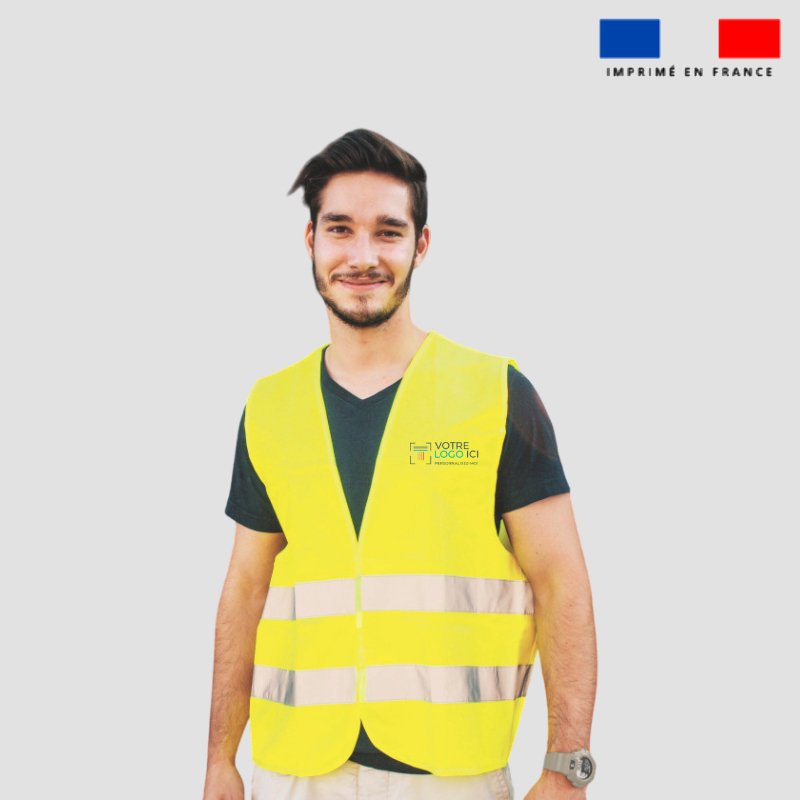
Customizing safety or high-visibility clothing requires prior verification. When a garment constitutes personal protective equipment or is subject to a standard, branding must never compromise its properties or compliance. The supplier or manufacturer must be consulted before application.
Which files should you provide to print a logo on company clothing?
A sharp, correctly sized file, preferably on a transparent background, should be provided in accordance with the brand guidelines. The exact file format required should be confirmed according to the solution ordered. If the file cannot be used directly, a graphic design service can prepare or modify the logo.


0 commentaires