


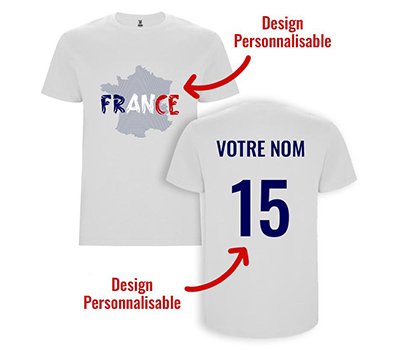

To create a custom textile design without knowing how to draw, simply start with what you already have: a photo, sketch, logo, text, or even a simple idea. These elements can be turned into a print-ready file, either using online tools or with the help of a graphic designer.
You have a precise idea in mind, but your drawing skills don't quite follow? Don't worry, that's not an obstacle. When it comes to custom textile printing, being an illustrator is not what makes the difference. What matters is being able to turn an idea into a usable visual.
The issue is far from insignificant. According to ADEME, 3.48 billion units of clothing, household linen and footwear were placed on the French market in 2024, representing 886,000 tonnes. According to the agency's magazine, more than 50% of our clothes remain unused in wardrobes. A garment designed for a specific purpose, with a meaningful design, can help encourage more considered purchases and reduce the risk of clothing remaining unused.
The good news is that there are several ways to create a custom design. None of them necessarily requires drawing skills.
Contents
- You have an idea but no drawing: is that really a problem?
- Before creating your design, start with what you already have
- 5 ways to create a textile design without knowing how to draw
- How do you turn an idea into a print-ready file?
- Which type of textile design should you choose for your project?
- Mistakes that can ruin an otherwise successful design
- What if you really can't create the file yourself?
- Tissus Print's advice: start with the idea, not the software
- FAQ: creating a textile design without knowing how to draw
You have an idea but no drawing: is that really a problem?
Knowing how to draw and creating a textile design are two different skills
Drawing means creating shapes with lines. Creating a textile design means deciding what should appear on the fabric, at what size, in which colours and for what purpose. The second skill is much more accessible than it may seem.
Most of our customers already have some form of creative material, often without realising it:
- A clear idea of what they want to have printed.
- A personal photo or family memory.
- A hand-drawn picture, even an imperfect one.
- A logo from an association, club or company.
- An image created or purchased with an appropriate licence.
- A colour palette that inspires them.
- A phrase, first name or date.
- Several sources of inspiration that simply need to be brought together.
The creator therefore does not necessarily need to draw everything themselves. Their main role is to know what they want to achieve.
The real obstacle is often the file, not the idea
Two phrases regularly come up in our conversations with customers. They may sound similar, but they describe very different difficulties:
- “I don't know how to draw.”
- “I don't know how to turn my idea into a print-ready file.”
In the vast majority of cases, it is the second issue that creates the problem. And it is precisely the one that can be solved most easily, with a little method or the right support.
Before creating your design, start with what you already have
A blank page is rarely the best starting point. It is better to begin by taking stock of what is already available.
You already have a photo
Family photo, pet portrait, holiday landscape, architectural detail or personal snapshot: a photograph can become a printed visual on a T-shirt, sweatshirt, cushion, tote bag or directly on fabric by the metre. It is often the quickest way to create a meaningful, emotional piece.

You have a hand-drawn picture
Child's drawing, notebook sketch, pencil illustration, watercolour or simple outline. An imperfect line is not a flaw: it is often what gives a design its character. A child's drawing printed on an apron as a gift for a grandmother will always have more sentimental value than a flawless but impersonal illustration.
You have a logo or visual identity
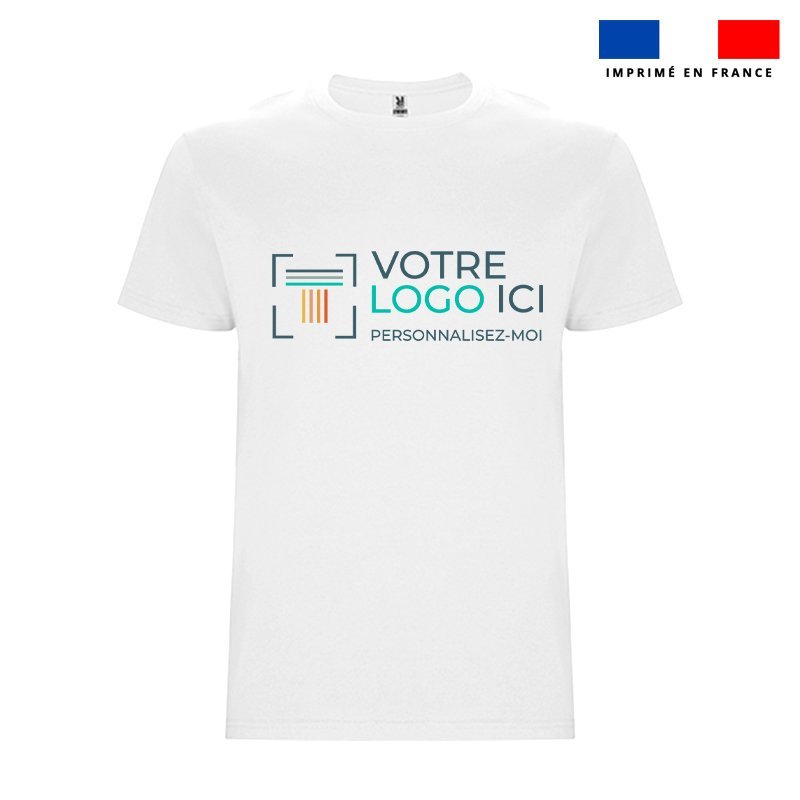
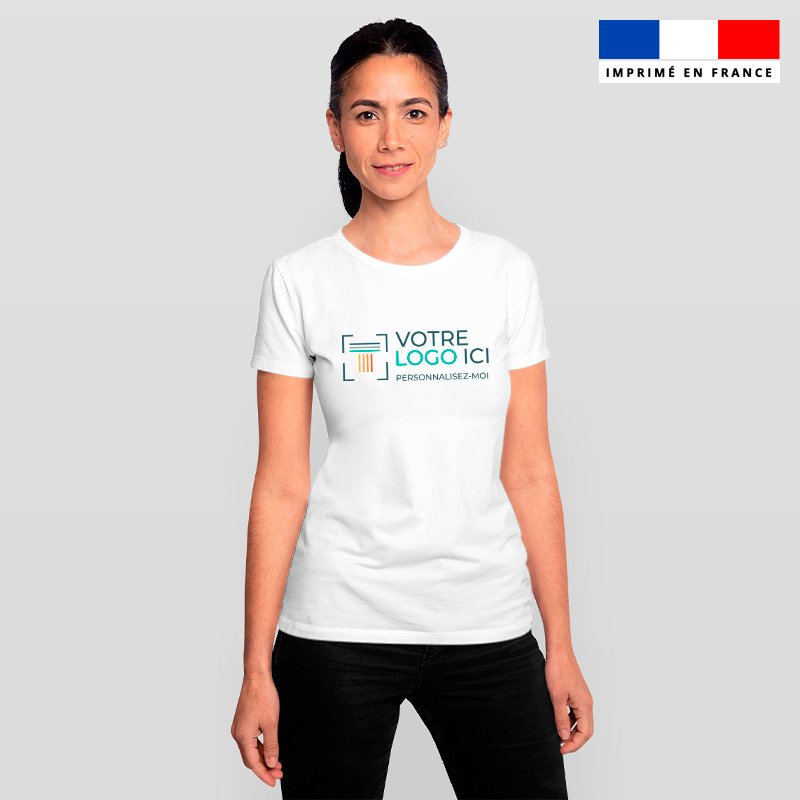
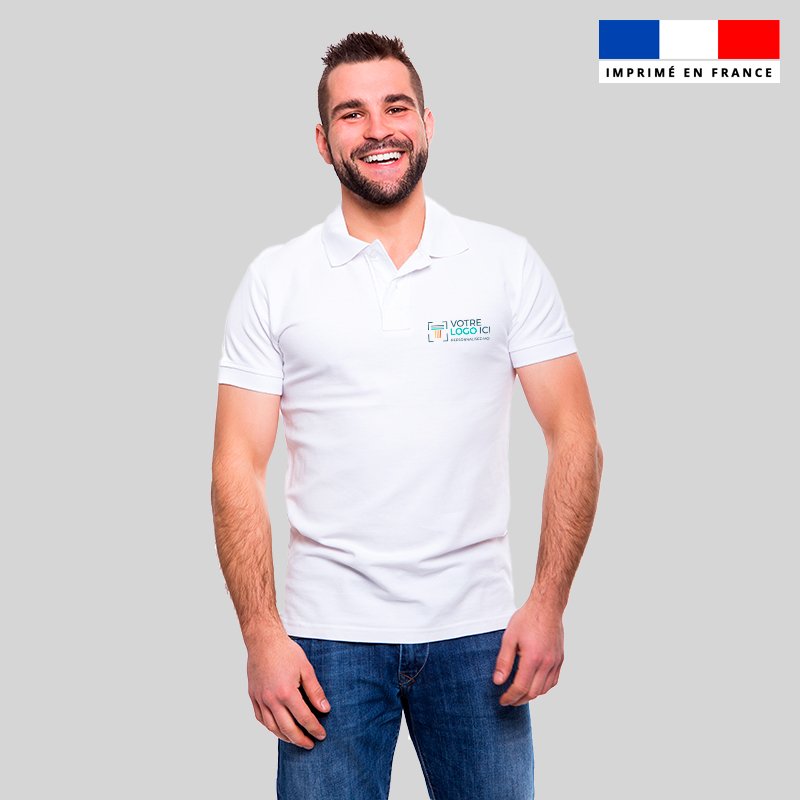
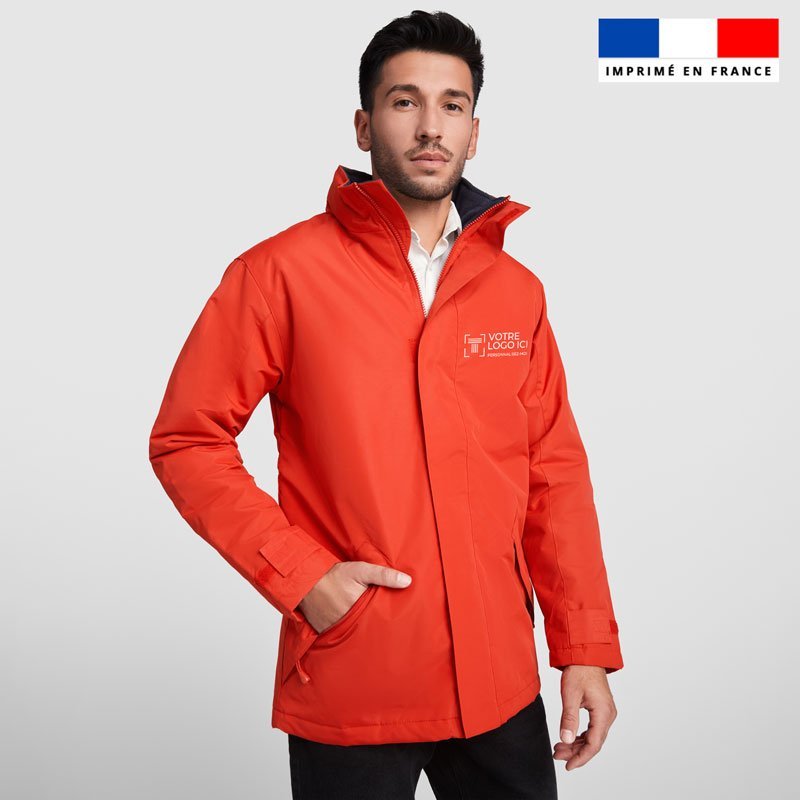
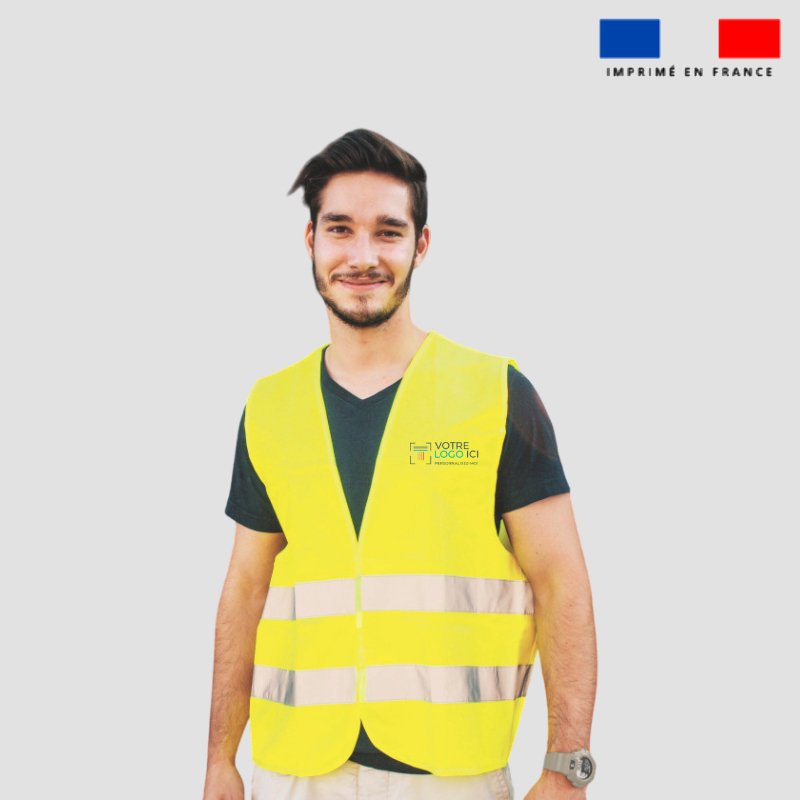
Associations, sports clubs, companies, brands, events and independent creators generally have a logo. It can be adapted to different textile applications: garment printing, repeated printing on fabric, DTF transfer or embroidery.
You only have an idea
Let's take an example:
“I'd like a design with wildflowers, in terracotta and cream tones, to sew a summer dress.”
This sentence already contains a subject, a colour palette, a medium and a purpose. In other words, it is already a genuine creative brief. All that remains is to turn it into an image.
5 ways to create a textile design without knowing how to draw
1. Start with a personal photo
A photo is the most direct route to a personalised textile design. Its advantages are numerous:
- The design is immediately unique and personal.
- A memory can be turned into an everyday object.
- It is an ideal option for a gift or a one-of-a-kind piece.
Two points should nevertheless be checked: the image's resolution and its cropping. A smartphone photo taken in good lighting conditions is generally suitable for a medium-sized placed design. On the other hand, an image retrieved from a messaging app, which is often compressed, may lack sharpness when enlarged.
Concrete example: a dog's portrait, cut out from its background and printed on a sweatshirt, becomes an original birthday gift for a devoted pet owner.
2. Digitise a hand-drawn picture
A drawing on paper can be turned into a digital file in just a few steps:
- Draw the picture on a sheet of paper, preferably white and without lines.
- Scan it or photograph it flat, using even lighting.
- Clean up the background if necessary (shadows, marks, paper grain).
- Check the resolution.
- Adjust the dimensions to the final product.
- Prepare the file for printing.
Even a drawing made on a simple sheet of paper can become the starting point for a genuine textile design.

3. Create a design from text
This is probably the most accessible solution for beginners. A first name, slogan, short quote, date, association name or brand name is enough to create an impactful visual.
A few choices simply need to be made carefully:
- The typeface, which sets the tone of the message.
- The size, adapted to the viewing distance.
- The placement on the garment or fabric.
- The colour of the text.
- The contrast with the colour of the material.
A first name in cursive lettering on a baby sleeping bag, a slogan in capital letters on the T-shirts of a charity running team: the effect is immediate, without drawing a single line.
4. Use an existing visual or graphic base
A design can also be created from elements that are already available: a personal illustration, a simple graphic element, a royalty-free design or a creation made with an online tool. Tissus Print also offers an AI design generator, which is useful for exploring ideas from a few words.
Important: usage rights must be checked before printing. An image found online is not automatically free to use, and commercial use (selling clothing or promotional products) is often subject to specific conditions.
5. Have the design created or prepared by a professional
When you don't have the time, desire or tools, the project can be entrusted to a graphic designer. Three levels of support can be distinguished:
- Editing an existing file to make it print-ready.
- Developing an idea from supplied elements (logo, sketch, photo).
- Creating a complete design from a simple brief.
This is precisely the purpose of Tissus Print's graphic design service for textile printing, described in more detail below.
Have an idea but no file? Our guide I want to customise a textile but I don't have a file: what should I do? will guide you step by step.
How do you turn an idea into a print-ready file?
A design that looks good on screen will not necessarily look good on fabric. Five steps can help ensure a smooth transition from one to the other.
Step 1: define the material
Before finalising the design, the printing medium must be known: fabric by the metre, garment, accessory or DTF film. This choice affects the file format, the placement of the design and sometimes the printing technique used. Polyester will generally be printed using sublimation, cotton or organic cotton using direct printing, while a finished textile garment may receive a DTF transfer.
Step 2: define the dimensions
There are three main layout approaches:
- The placed design, positioned in a specific location (chest, back, centre of a cushion).
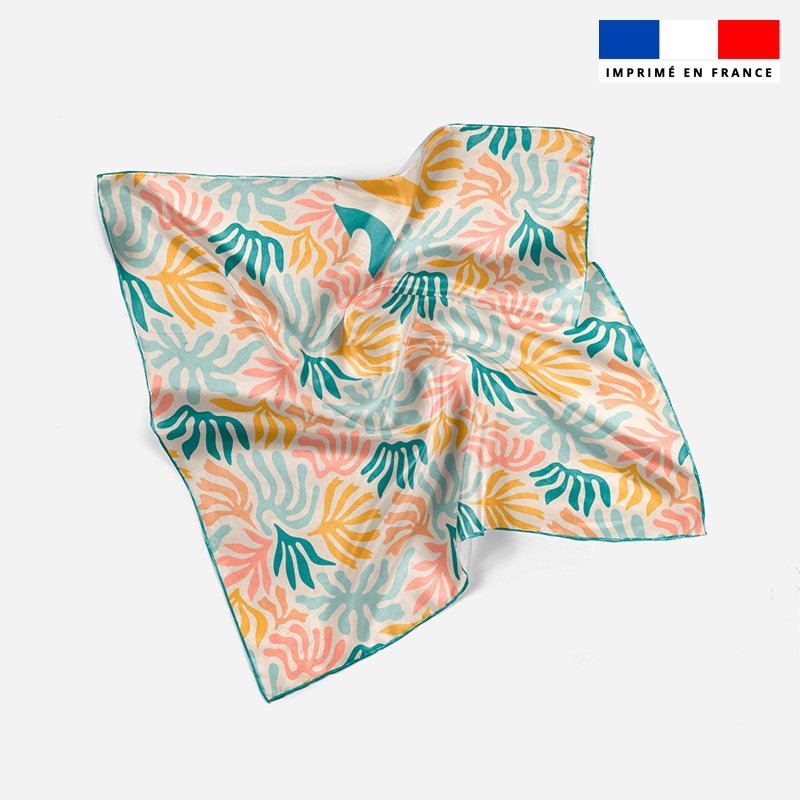
- The repeated design, reproduced continuously across the entire surface.
- All-over printing, covering the entire garment or length of fabric.
Step 3: check image quality
Five essential points should be checked:
- Sufficient resolution.
- Dimensions suited to the final format.
- A sharp image without blur or pixelation.
- Colours consistent with the expected result.
- A controlled background, either transparent or intentionally coloured.
For quality printing, Tissus Print recommends a 300 DPI file at actual size for the relevant products. Detailed specifications are available in our guide to preparing your fabric printing file.
Step 4: check usage rights
The design must be legally usable. The necessary rights must be held for every image submitted: a photograph taken by a third party, a purchased illustration, a brand logo or a protected character.
Step 5: check the result before printing
The online preview and proof are your best allies. They allow you to check the placement, scale and colour balance before production begins. A few seconds of checking can prevent a great deal of disappointment.
Which type of textile design should you choose for your project?
Your starting point naturally influences the type of design. This table makes things clearer.
| Your starting idea | Recommended design type | Example |
|---|---|---|
| Photo | Placed design | Family photo on a T-shirt |
| Drawing | Illustration | Child's drawing on a sweatshirt |
| Logo | Placed design | Association or company clothing |
| Small graphic element | Repeated design | Flowers scattered across fabric |
| Several illustrations | Composition or patchwork | Creative mosaic-style fabric |
| Text | Custom typography | First name or slogan |
| Collection of visuals | Repeated design | Textile collection by a designer |

Placed design: to draw attention to one element
A placed design highlights a single visual. It is particularly suitable for clothing and accessories: a logo over the heart of a polo shirt, a photo in the centre of a tote bag or an illustration on the back of a sweatshirt.
Repeated design: to create a genuine textile print
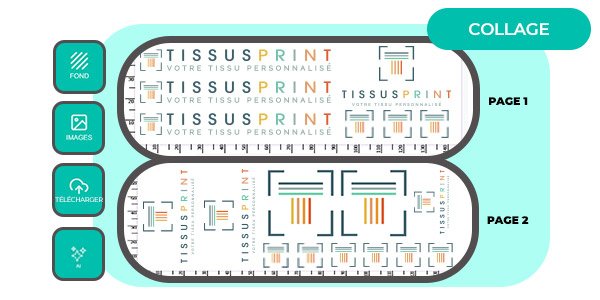
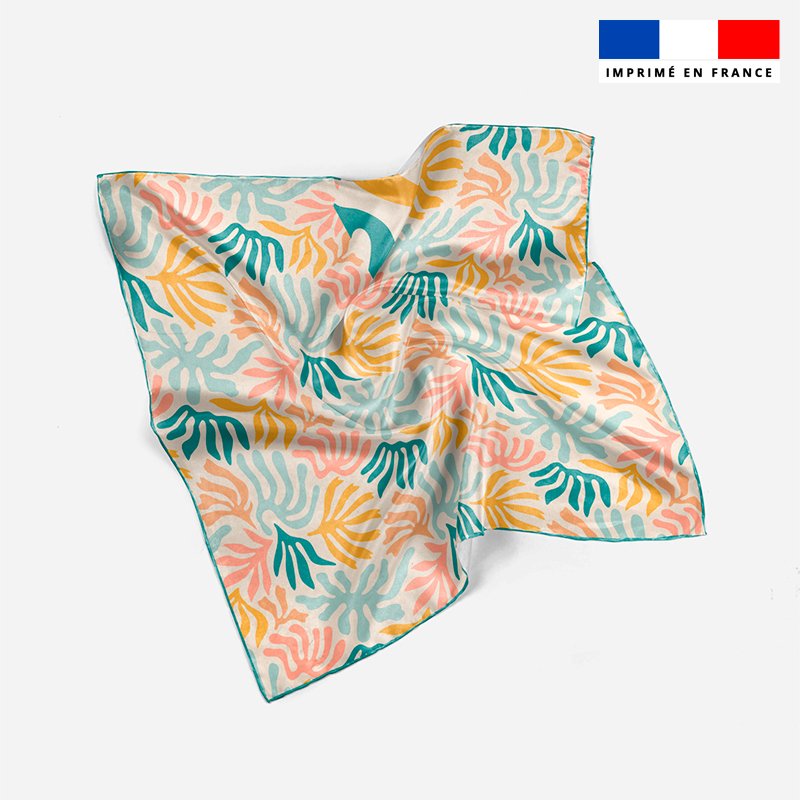
A repeated design turns a small element into a continuous print, ideal for custom fabric by the metre intended for sewing or home furnishings. Tissus Print offers a dedicated tool for creating an all-over repeat by adjusting the size, rotation, spacing and background colour. A single small illustration can therefore become an entire fabric, without any technical skills.
Composition or patchwork: when several images tell a story
Several photos or illustrations can be assembled into a mosaic to create a unique fabric. This is a popular solution for baby blankets, memory cushions or patchwork projects bringing together drawings from an entire class.
Mistakes that can ruin an otherwise successful design
A good idea can lose its impact if certain pitfalls are not anticipated:
- Choosing an image that is too small for the intended format.
- Enlarging a low-resolution image excessively.
- Forgetting to check the final dimensions of the design.
- Neglecting the background, which may appear where it was not expected.
- Adding so many elements that the design becomes difficult to read.
- Failing to consider the colour and material of the printing surface.
- Forgetting to check usage rights.
- Ordering without checking the final preview.
The goal is not to create the most sophisticated design. It is to create a design that will produce the right result once printed.
What if you really can't create the file yourself?
You have the project, Tissus Print can help
Some customers know exactly what they want but do not have the required file. This is a very common situation, and it has been taken into account when designing our graphic design service.
Each design is prepared according to the constraints of the selected printing process: resolution, colour management, dimensions, transparency and repeats. The delivered files can then be reused for future customisation projects.
You don't need to become a graphic designer to have your idea printed on textiles.
When should you ask for help?
| Your situation | Suitable option | What's included |
|---|---|---|
| Your file is almost ready | File editing and preparation | €40 excl. VAT, approximately 5 working days, 1 free revision |
| You have a logo, sketch or photo | Creation from your elements | €80 excl. VAT, approximately 7 working days, 2 free revisions |
| You only have an idea | Complete guided creation | €110 excl. VAT, approximately 10 working days, 2 layout proposals, 2 free revisions |
| Your project is complex or highly specific | 100% bespoke support | Quote on request, with direct contact with Fiona Buding, independent illustrator and designer |
The option is simply chosen according to your starting point. You then fill in the corresponding form so that your project can be handled.
Tissus Print's advice: start with the idea, not the software
A good textile design does not necessarily start in Illustrator or Photoshop. It starts with a clear intention.
In our workshop in Cuers, the most successful projects are not always the ones that arrive with the most technically advanced file. They are the ones whose intention has been clearly defined from the outset. Before trying to master software, five questions should be answered:
- What do you want to represent?
- What material will the design be printed on?
- What size should it appear at?
- Should it be placed or repeated?
- What look are you aiming for: graphic, photographic, soft or high-contrast?
Once these questions have been answered, the file can be prepared accordingly, either by you or by our graphic designers. Our expertise therefore goes beyond printing: we support the project from the initial brief through to the final result on the textile.
FAQ: creating a textile design without knowing how to draw
Can you create a textile design without knowing how to draw?
Yes. A textile design can be created from a photo, an existing drawing, a logo, text or a simple idea given to a graphic designer. Online customisation tools also allow you to create a repeated design or mosaic without any drawing skills.
How do you turn a drawing into a textile design?
The drawing is first scanned or photographed flat, using even lighting. The background is then cleaned up, the resolution checked and the file adapted to the dimensions of the material. It can then be printed as a placed or repeated design on fabric.
Can you use a photo to create a textile design?
Yes, provided that the image is sufficiently sharp and high-resolution, and that you hold the necessary rights. A personal photo taken in good conditions is generally very suitable for a T-shirt, sweatshirt, cushion or fabric by the metre.
What file format do you need to print a design on fabric?
Common formats such as JPEG, PNG or PDF are generally accepted. However, resolution, actual dimensions and colour management remain the most important factors. A file at actual size and 300 DPI is recommended to ensure a sharp result on the relevant products.
Can you print a repeated design?
Yes. A repeated design, also known as all-over printing, reproduces an element continuously across the entire surface of the fabric. It is particularly suitable for fabric by the metre for sewing or home furnishings, and can be created directly using Tissus Print's repeat tool.
What should I do if my image is blurry or pixelated?
Editing can improve an imperfect image: cropping, cleaning, colour adjustments or redrawing certain elements. However, a very low-resolution image cannot always be turned into a perfectly detailed file. In this case, recreating the visual may be considered.
Can Tissus Print create my design if I don't know how to draw?
Yes. Tissus Print's graphic design service offers four levels of support: file editing, creation from your elements, complete guided creation from a brief, and fully bespoke support on request.
Can I have a single design or a small quantity printed?
Yes, in most cases. There is generally no minimum order quantity, and custom fabric by the metre can be ordered from 50 cm. Exact conditions vary depending on the material and are specified on each product page.
Conclusion: your idea doesn't need to be perfect to become a textile design
Knowing how to draw is not a requirement for creating personalised textiles. A photo, sketch, logo, a few words or a clear intention are enough to get started.
The key is knowing where you want to go. The right method can then be chosen to turn that idea into a printable file: online tools if you want to work independently, or graphic design support if you prefer guidance.
Your idea deserves to exist on fabric. Entrust your project to our graphic designers or get started now with our customisation tools: your design will be prepared, checked and printed with care in our workshop.


0 commentaires