





high-visibility workwear helps ensure the safety of exposed teams while strengthening a company’s visual identification in the field.
In construction, landscaping, or public sector environments, visibility should never be left to chance. Yet between mandatory standards, textile selection, and customization, costly mistakes are still frequently observed.
A significant proportion of workplace accidents is linked to a lack of operator visibility, particularly in areas with vehicle traffic. As highlighted by European Agency for Safety and Health at Work, these risks are among the main causes of preventable accidents thanks to suitable and compliant high-visibility equipment.
Contents
- Why high-visibility clothing is essential for on-site safety
- High-visibility standards: what no professional can ignore
- Which high-visibility clothing to choose based on your activity?
- Customization: turning mandatory equipment into a marketing lever
- Common mistakes to avoid
- Choosing the right textile printing with Tissus Print
- Real case: public sector, construction and new uses
- FAQ
Why high-visibility clothing is essential for on-site safety
A regulatory requirement but above all real protection
high-visibility clothing is not only a legal requirement, it represents real protection for teams. The use of compliant equipment significantly reduces the risk of accidents on construction sites and in public spaces. Increased visibility both day and night helps prevent collisions and incidents in high-risk areas. The employer’s responsibility is therefore engaged in the prevention of occupational risks (ILO, 2019).
An often underused opportunity
Beyond safety, team uniformity strengthens professional image and enables free mobile communication with visible logos on site, turning a simple protective garment into a branding tool.
High-visibility standards: what no professional can ignore
Understanding the EN ISO 20471 standard
The EN ISO 20471 standard defines three classes of garments according to the required level of visibility. Fluorescent and retro-reflective surfaces are regulated to ensure optimal protection (European Committee for Standardization, 2013).
Class comparison table
| Class | Risk level | Job examples |
Class 1 | Low | Landscaping, logistics |
Class 2 | Medium | Public sector, roadwork |
Class 3 | High | Construction, roads, night worksites |
Specific obligations by sector
- Construction: maximum visibility required.
- Public sector: compliance + identification.
- Landscaping: comfort + breathability.
Which high-visibility clothing to choose based on your activity?

Field essentials
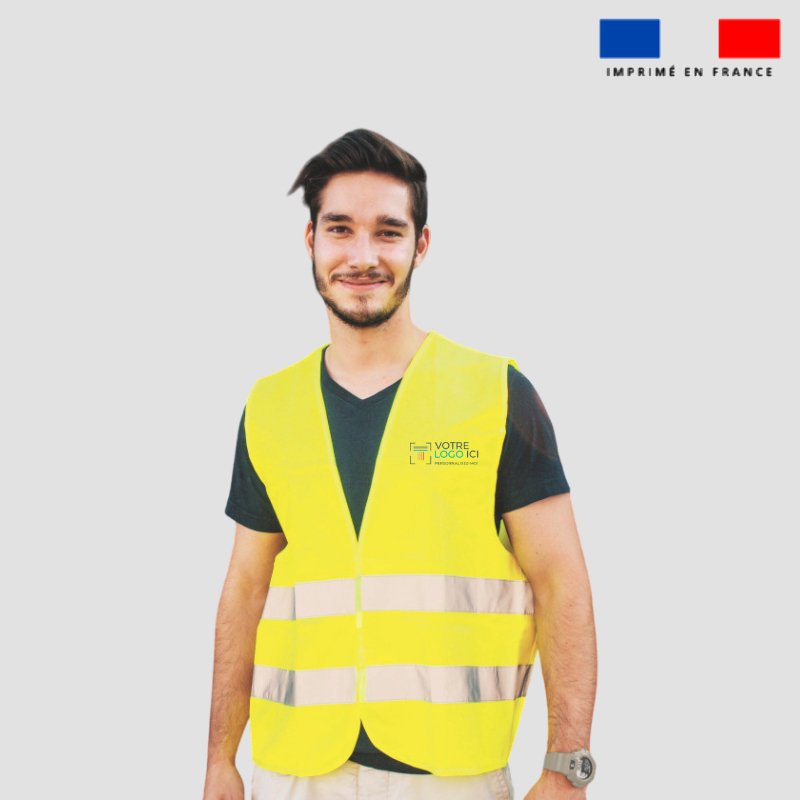
- High-visibility safety vest (entry-level mandatory).
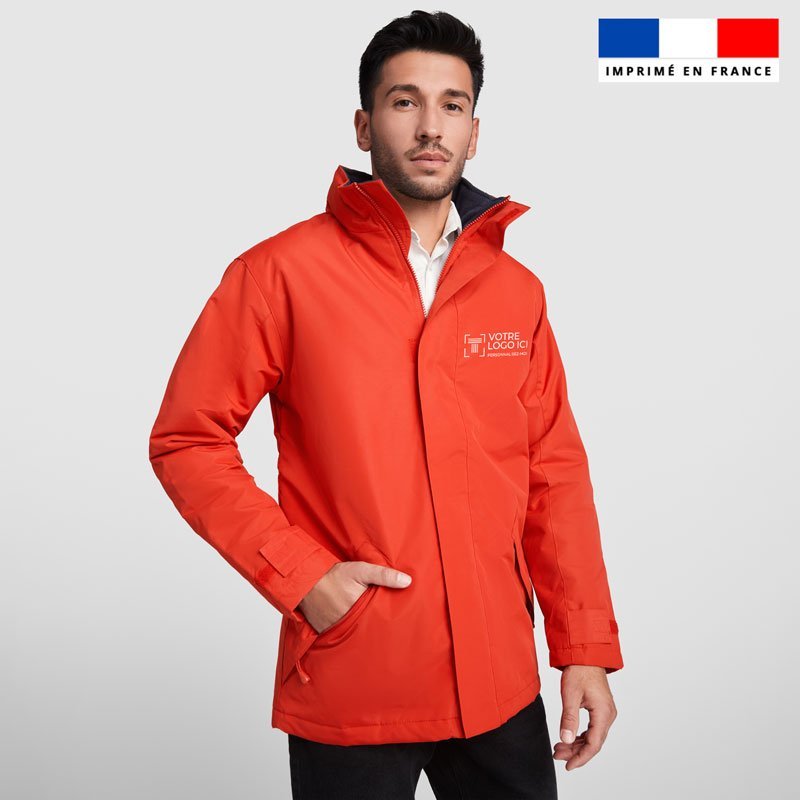
- High-visibility jacket (protection + visibility).
- High-visibility sweatshirt (comfort + daily use).
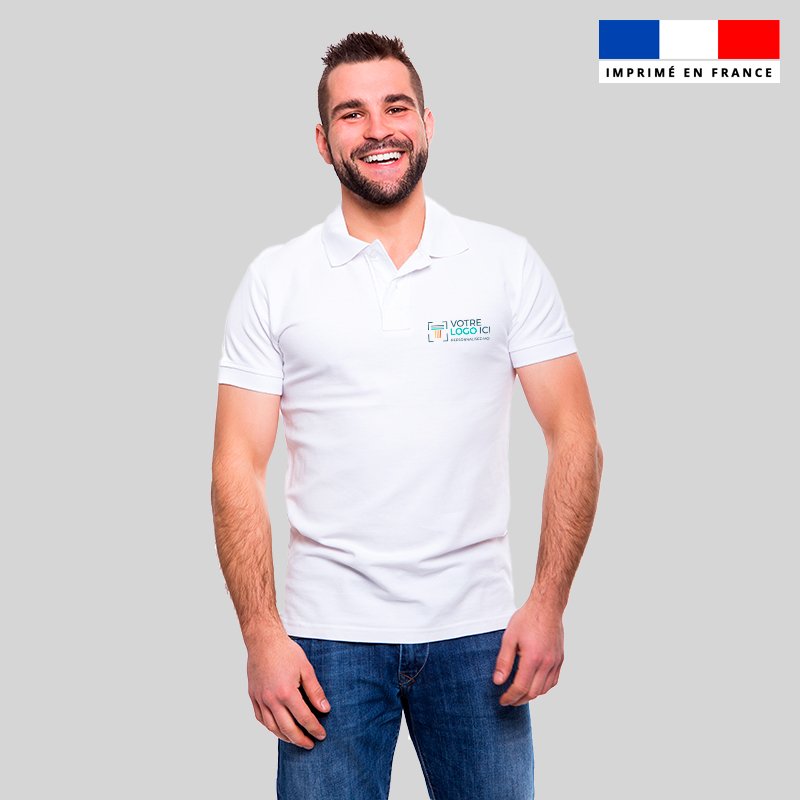
- Long-sleeve high-visibility polo (mid-season).
- High-visibility t-shirt (summer / heat).
- Multi-pocket vest (worksite functionality).
- High-visibility cap (useful addition).
Make the right choice based on your actual use
Not all high-visibility garments meet the same constraints. To avoid costly mistakes, here are practical recommendations from the field:
If you are a public authority or municipality
Prioritize:
- Custom safety vest (quick identification).
- High-visibility polo or t-shirt (daily use).
- Discreet but readable marking (logo + department).
Why: Staff must be immediately identifiable by users while maintaining good comfort over full working days.
If you work in construction or on-site
Choose:
- Class 2 or 3 high-visibility jacket.
- Durable high-visibility sweatshirt.
- Functional multi-pocket vest.
Why: High-risk environments require maximum visibility and abrasion-resistant textiles.
If you work outdoors (landscaping, roadwork)
Prioritize:
- Breathable high-visibility t-shirt.
- Long-sleeve polo for mid-season.
- High-visibility cap.
Why: Thermal comfort and breathability are essential to prevent fatigue and maintain productivity.
If you work in cold or winter conditions
Opt for:
- Lined high-visibility jacket.
- Thick custom sweatshirt.
- Layering (multi-layer strategy).
Why: Visibility must never be sacrificed for warmth: both must be combined effectively.
If your garments are washed very frequently
Avoid:
- Low-quality printing.
- Overly thin textiles.
Prioritize:
- High-resistance DTF printing.
- Durable professional textiles.
Why: A poor choice leads to rapid degradation of marking and loss of professional image.
Adapting textiles to real conditions
Textiles must resist abrasion, ensure good breathability, provide suitable thermal insulation, and maintain durability even after intensive washing (Textile Institute, 2020).
Customization: turning mandatory equipment into a marketing lever
Why customize your high-visibility clothing
Customizing a high-visibility garment must not be improvised. Between textile choice, printing technique, and constraints related to reflective strips, every detail matters to ensure a durable and compliant result.
To go further, consult our complete guide to customizing and printing your workwear: you will find all the best practices to successfully complete your professional textile project.
Real field case
- Municipality: immediate identification of municipal staff.
- Construction company: increased credibility with clients.
- Landscaping provider: increased local visibility.
Specific case: urban mobility

In certain areas such as Alpes-Maritimes, wearing a retro-reflective safety vest has been mandatory since April 2, 2026 for users of electric scooters, self-balancing scooters and other motorized personal mobility devices (Prefectural order, 2026). This represents an opportunity for rental companies: visible branding on each user, mobile advertising in the city, and enhanced customer safety.
Common mistakes to avoid with high-visibility clothing
The choice of high-visibility clothing should never be left to chance. Some mistakes, often linked to a lack of technical guidance, can impact safety, durability, and professional image.
- Focusing only on price: An entry-level garment may seem economical in the short term, but rapid wear, loss of visibility, or poor marking durability often lead to frequent replacements.
- Ignoring the EN ISO 20471 standard: Not all high-visibility garments are equal. A class unsuitable for the level of risk can compromise team safety, especially in construction environments or traffic areas.
- Placing the logo on reflective areas: Marking must respect specific zones. Poor placement can disrupt the effectiveness of retro-reflective strips and affect garment compliance.
At Tissus Print, suitable marking areas are prioritized, particularly on the chest and back, to ensure both visibility and compliance.
- Choosing textiles unsuitable for real conditions: An unsuitable garment (too light, not breathable enough, or insufficiently insulating) directly impacts comfort and team performance in the field.
- Choosing non-durable printing: Some techniques such as traditional flocking can deteriorate quickly with intensive washing.
DTF printing, favored at Tissus Print, offers excellent durability over time, vibrant colors on high-visibility textiles, and better resistance to professional use.
Choosing the right textile printing with Tissus Print
Not all customizations are equal
At Tissus Print, we systematically recommend: printing adapted to job constraints (high-resistance DTF), strict compliance with worksite safety zones, and long-lasting performance even after industrial washing.
Why DTF is particularly suitable
DTF printing offers excellent durability, vibrant colors on fluorescent textiles, and is suitable for small and large runs with optimized tiered pricing.
French manufacturing: a concrete advantage
Local production near Toulon - Var, responsiveness on orders, and strict quality control guarantee a reliable and compliant product.
Real case: public sector, construction and new uses.
Construction and public works
Maximum safety required and durable garments suited to extreme conditions.
Local authorities
Quick identification of staff and consistent institutional image.
Landscaping
Optimized comfort and visibility for outdoor work.
Tissus Print offers a complete range of customized high-visibility professional clothing, printed in-house in Toulon. Online ordering, custom quotes for large quantities, sample available on request.
Secure your teams while strengthening your professional image with compliant and durable textiles, printed in France.
Discover the high-visibility range
Conclusion
high-visibility workwear should no longer be seen as a simple regulatory constraint. When properly selected and customized, it becomes a strategic tool combining safety, compliance, and brand visibility. At Tissus Print, each project is designed to combine technical textile performance, print durability, and on-site visual impact.
FAQ
What high-visibility clothing is mandatory in companies?
Mandatory high-visibility clothing depends on exposure to risk. For low-risk areas, a class 1 safety vest may be sufficient. For activities on worksites, roads, or industrial sites, classes 2 or 3 are required, including vests, jackets, and trousers with retro-reflective strips compliant with EN ISO 20471.
What is the standard for high-visibility safety clothing?
The applicable standard is EN ISO 20471, which defines classes 1, 2, and 3 according to the surface of fluorescent and retro-reflective material required to ensure visibility day and night. Each class corresponds to a level of risk and specific jobs.
Can a safety vest be customized without losing compliance?
Yes, provided the logo or marking does not encroach on mandatory retro-reflective strips. Suitable printing techniques, such as high-resistance DTF, allow garments to be customized while maintaining compliance with safety standards.
Which textile should be chosen for durable high-visibility clothing?
Choose textiles that are abrasion-resistant, breathable, and capable of withstanding frequent washing. Synthetic materials such as polyester or cotton-polyester blends are ideal for maintaining color and visibility over time.
Which printing technique is the most durable?
DTF (Direct to Film) printing is particularly suitable for high-visibility clothing. It ensures long-lasting durability, vibrant colors even on fluorescent textiles, and resistance to industrial washing.
How much does customized high-visibility clothing cost?
The price depends on the garment class, textile type, customization technique, and volumes ordered. At Tissus Print, tiered pricing is offered based on quantities, with the possibility to order single items or small batches to test quality before full production.
Is high-visibility clothing mandatory for public authorities?
Yes, when staff are exposed to traffic risks or work on public roads. High-visibility vests or jackets must comply with EN ISO 20471 to ensure the safety and visibility of municipal workers.
Can small quantities be ordered?
Yes. Modern printing techniques such as DTF allow small customized runs without compromising quality or durability, which is ideal for small teams or marking tests.
What are the production lead times?
Lead times vary depending on volume and customization, but for standard orders with DTF printing, they are generally 5 to 10 working days.


0 commentaires