



Custom fabric for restaurants can be used for much more than tablecloths. Curtains, cushions, table runners, placemats, and professional workwear can all be designed to order to strengthen an establishment's visual identity and enhance the customer experience at every point of contact.
In an industry where atmosphere matters just as much as the menu, decor has become a powerful tool for differentiation. Yet the potential of customized textiles remains underused in many establishments, in favor of furniture or digital communication.
According to several studies conducted in the hospitality and food service industry, atmosphere and decor directly influence the overall perception of an establishment and play a significant role in customer loyalty. A cohesive and well-designed environment encourages customers to spend more time in the dining room and increases the likelihood of return visits.
Which textiles can actually be customized? Which projects offer the best return on investment? How can you avoid mistakes that could harm your brand image? Here are the answers based on the field experience of specialists in custom textile printing.
Why customized textiles have become a powerful branding tool for restaurants
A customer experience that starts before the meal
First impressions are formed within seconds. Before even looking at the menu, a customer takes in the atmosphere: materials, colors, and volumes. Textiles are present at every stage of this experience: on tables, at windows, on benches, and on the shoulders of staff members.
A printed tablecloth, matching curtains, and coordinated aprons: every element contributes to an immediate understanding of the establishment's identity. When these elements are designed together, they create a cohesive decorative environment that customers perceive without necessarily consciously analyzing it.
Creating a memorable atmosphere through customization
A Mediterranean restaurant can incorporate patterns inspired by Provence into its tablecloths and cushions. A contemporary brasserie can choose exclusive geometric graphics for its placemats. A themed restaurant can use custom illustrations to dress its curtains and table linens.
In each of these cases, custom textile printing transforms an ordinary space into an identifiable, cohesive, and memorable environment.
The most relevant decorative textiles to customize
Customized tablecloths: a classic reinvented
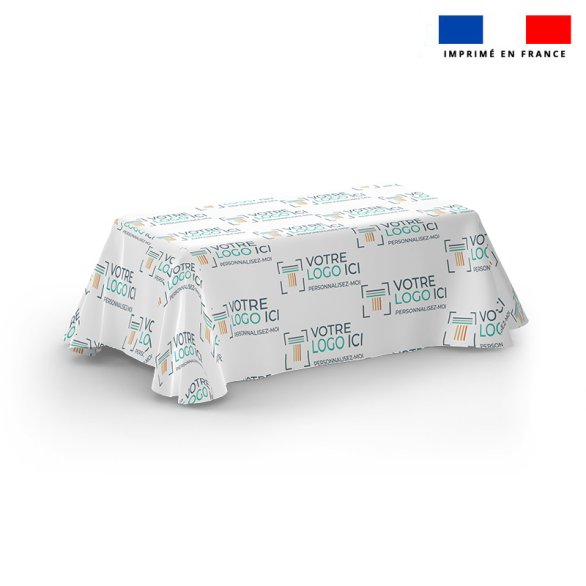
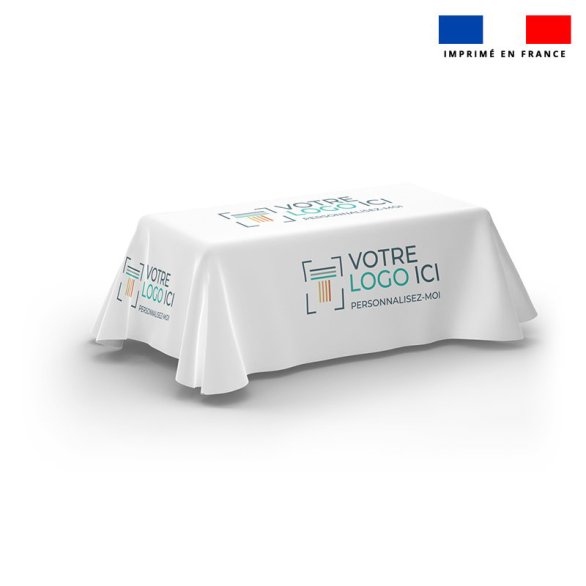
The custom tablecloth remains the go-to textile solution for restaurant projects. It covers a large visible surface and provides the first visual point of contact with the table.
It can feature a discreet logo, exclusive patterns, or simply a color that matches the establishment's visual identity. The result is immediate: a dressed table communicates a more polished and professional image than a bare table.
There are many possible uses:
- Fine-dining restaurants looking for a premium finish on every table.
- Caterers seeking a consistent identity for off-site events.
- Private receptions or corporate events with a specific visual identity.
- Event restaurants changing their table linens according to seasonal themes.
Polyester and polycotton are the most commonly used materials for restaurant tablecloths because of their excellent resistance to repeated professional washing and their ability to retain color over time.
Customized placemats: maximum visibility

A placemat is positioned directly in front of the customer throughout the meal. It is one of the textile supports offering the highest visibility relative to its cost.
It can showcase a strong visual identity, tell the restaurant's story, present a simplified menu, or feature exclusive illustrations related to the establishment's identity. Its compact format makes it easy to update according to seasons or events.
Customized table runners: an elegant alternative

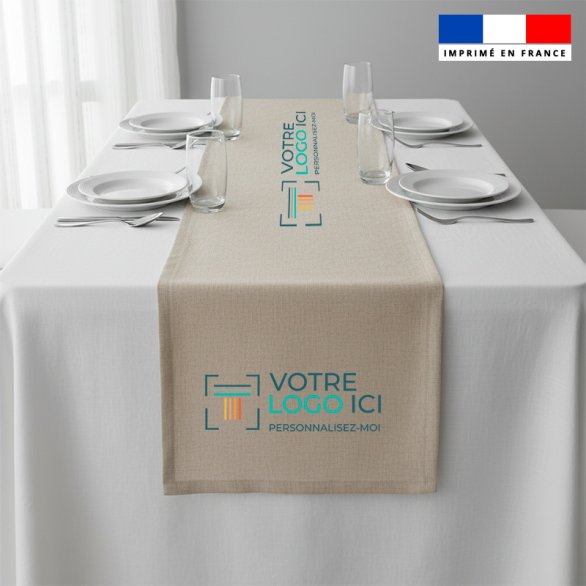
A table runner is an attractive intermediate option. Its cost is controlled, its customization can be targeted, and it is easier to maintain than a full tablecloth.
It is particularly suitable for establishments looking to gradually introduce custom textile printing into their decor, or for those using wooden tables where they want to keep the material visible.
Customized curtains: an often-overlooked element
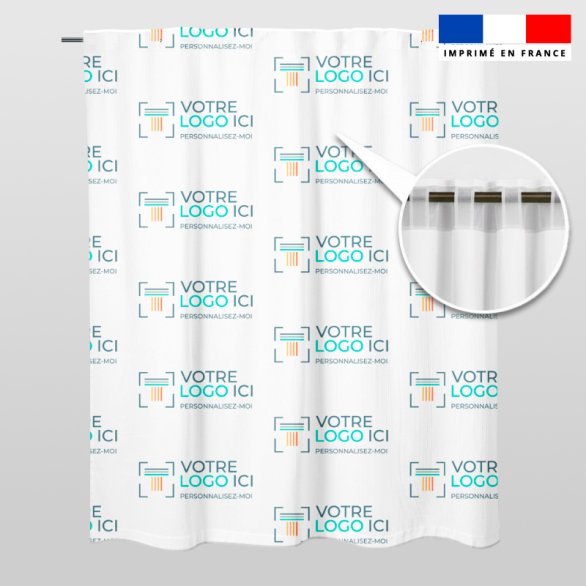
Custom-printed curtains remain one of the most underused elements in restaurant decoration projects. Yet their impact can be considerable.
They cover large surfaces, contribute to improving room acoustics, and help create immersive atmospheres that are difficult to achieve with other materials. They can also define spaces: separating dining rooms, dressing large windows, or creating private areas during service.
Their lifespan is generally longer than that of table linens, making the investment cost-effective over time.
Customized cushions: comfort and visual identity
Printed cushions can dress benches and create lounge areas that are consistent with the establishment's identity. They add a touch of comfort appreciated by customers and can be produced in the colors of the brand guidelines.
Sublimation or DTF printing on velvet or canvas provides a high-quality visual finish that is durable and resistant to everyday use.
| Textile project | Visual impact | Lifespan | Budget | Effect on customer experience |
|---|---|---|---|---|
| Custom tablecloth | Very high | High | Medium | Very strong |
| Custom placemat | High | Medium | Low | Strong |
| Table runner | Medium | High | Low | Medium |
| Custom curtain | Very high | Very high | Higher | Very strong |
| Custom cushion | High | High | Medium | Strong |
Customized workwear to strengthen your brand identity
The custom apron: a powerful branding tool

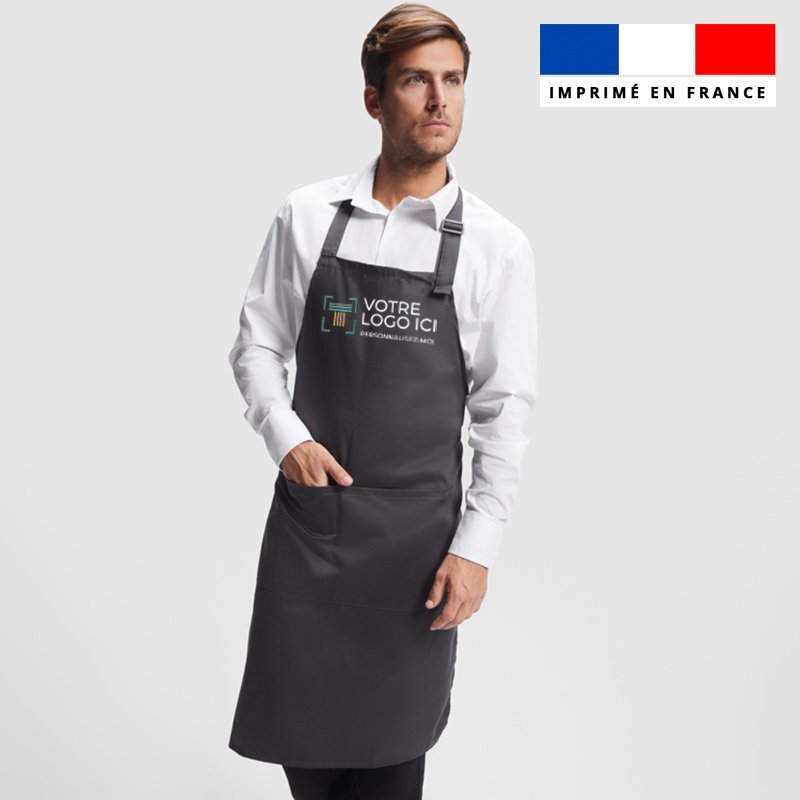
The apron is one of the most visible textile supports in a restaurant. Worn continuously by front-of-house or kitchen staff, it acts as a direct and constant branding tool throughout the service.
An apron printed with the establishment's logo and produced in its brand colors immediately conveys professionalism and consistency. It also makes staff easier for customers to identify, helping the service run more smoothly.
Cotton and polycotton are preferred for this type of garment because they offer comfort and durability for intensive daily use.
Custom polo shirts for front-of-house teams
A printed or embroidered polo shirt is an elegant alternative to the classic uniform. It provides greater comfort during long service days while ensuring that teams have a consistent and polished appearance.
Customization can be understated, with an embroidered logo on the chest, or more distinctive, with a color specific to the establishment. In both cases, it contributes to enhancing the image of the staff and strengthening overall visual consistency.
Customized scarves and textile accessories
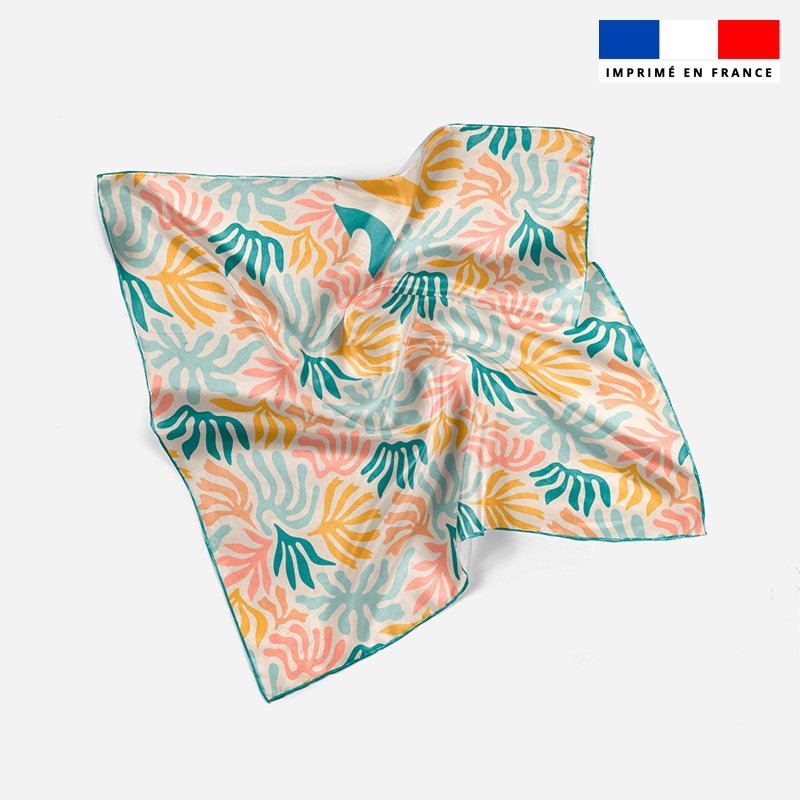
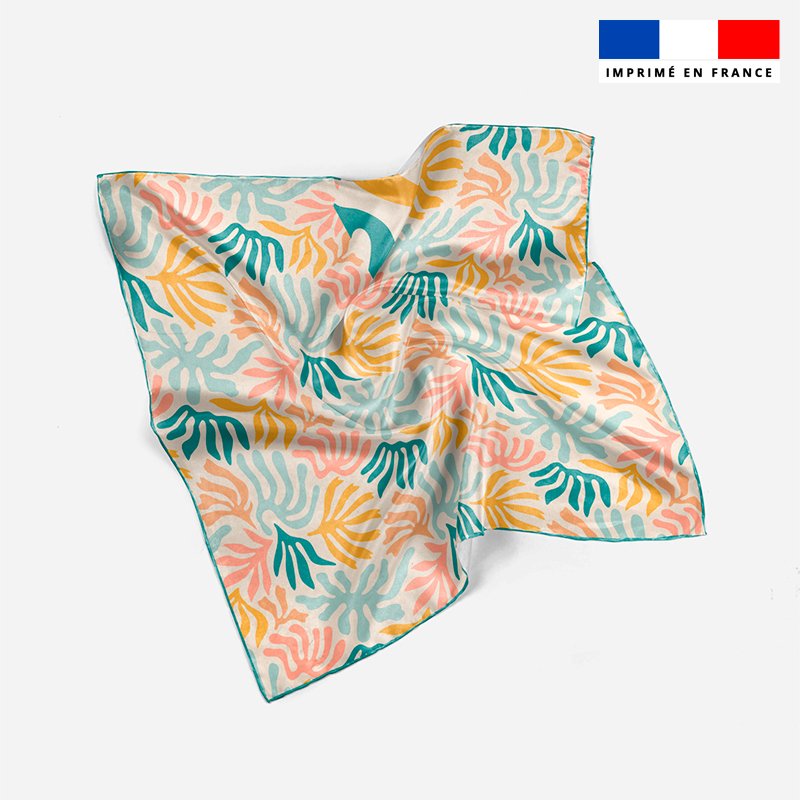
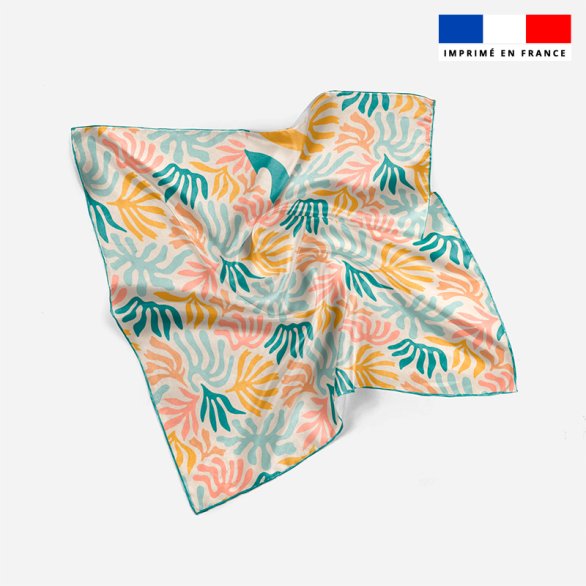
In high-end restaurants, hotel-restaurants, or establishments with a strong brand identity, textile accessories such as scarves or service pouches can play a decisive role in the finishing touches of the brand image.
These details are particularly appreciated during private events or themed evenings, where every element contributes to the desired atmosphere.
How to choose the right fabrics for their intended use
Matching the material to the demands of use
Choosing a fabric cannot be based solely on aesthetic criteria. In food service, every textile support is subject to specific demands: frequent washing, friction, exposure to light, and intensive use.
| Use | Recommended material | Main criteria |
|---|---|---|
| Tablecloth | Polyester or polycotton | Washing resistance, color retention |
| Placemat | Printed polyester fabric | Easy care, precise graphic rendering |
| Curtain | Velvet, blackout, or decorative fabric | Drape, opacity, light resistance |
| Cushion | Velvet, canvas, faux suede | Wear resistance, tactile finish |
| Apron | Cotton or polycotton | Comfort when worn, everyday durability |
Anticipating professional washing requirements
In food service, table linens are washed several times a week, sometimes at high temperatures. High-quality digital printing, carried out on a suitable material, such as 150 to 200 g/m² polyester for tablecloths, for example, withstands these cycles very well when care instructions are followed.
It is advisable to anticipate these requirements when choosing the material rather than discovering them after ordering. A fabric selected solely for its visual appearance may reveal significant weaknesses during use.
Consider the manufacturing process from the graphic design stage
When the decor involves custom manufacturing, such as tablecloths with specific dimensions, curtains with precise widths, or cushions with unusual shapes, it is essential to incorporate these constraints from the graphic design stage.
Pattern matching, repeats, logo placement, and cutting dimensions must be defined before production begins. A poorly positioned design or incorrectly managed pattern repeat can significantly affect the final appearance, even when the printing itself is high quality.
The most common mistakes in restaurant textile projects
Trying to reproduce a logo that is too large
An oversized logo on a tablecloth or cushion often produces the opposite effect to the one intended. Instead of strengthening the brand image, it makes the design feel heavy and gives the impression of overly aggressive branding.
In most successful projects, the logo is integrated discreetly: a reasonable size, thoughtful positioning, and harmonious integration into the overall pattern. The identity is then conveyed by the textile as a whole, rather than through repetition of a single element.
Neglecting consistency between decor and workwear
A dining room with blue tablecloths and green aprons that have no connection to each other sends a fragmented visual message. The overall impact is diluted, even if each individual element is high quality.
Consistency between the different textile supports, room decor and staff uniforms, is what transforms simple customization into a genuine visual identity.
Choosing a fabric based solely on its aesthetic appearance
A visually appealing upholstery velvet may show premature wear on heavily used benches. A delicate fabric may require maintenance that is incompatible with a restaurant's operating schedule.
These mistakes generate significant hidden costs: premature replacement, specialized maintenance, and deterioration of the brand image as the textile ages poorly. The choice of material should always combine aesthetic and functional criteria.
Forgetting manufacturing constraints
Patterns cut off at the edge of a tablecloth, visible repeats on curtains, or a logo positioned across a seam: these mistakes are common when graphic design and manufacturing are not coordinated.
Working with a supplier capable of handling both printing and manufacturing helps avoid these issues and ensures a final result that lives up to the original project. To explore best practices on this topic in greater depth, our guide on custom textile decoration for hospitality and food service professionals covers these points in detail.
Tissus Print expertise serving food service professionals
100% French textile printing
Tissus Print is a custom textile printing workshop based near Toulon, in the Var region. Production is carried out entirely in France, ensuring full control over lead times, high responsiveness, and personalized support at every stage of the project.
Each order is handled by a specialized team that can advise on everything from material selection to pattern design and manufacturing requirements.
Solutions tailored to hospitality and food service projects
Restaurant, hospitality, and catering projects have specific requirements that Tissus Print is equipped to handle: tight deadlines, varying quantities, renewal needs, and multi-site projects.
Several options are available:
- Printed fabric sold by the meter, available for manufacturing by your own teams or suppliers.
- Custom manufacturing by quotation for turnkey projects: tablecloths, curtains, cushions, aprons.
- Short runs for establishments wishing to test a visual identity before rolling it out further.
- Larger runs for restaurant groups or multi-site deployment projects.
- Dedicated support for interior designers and agencies working on hospitality and food service projects.
From fabric to finished product
Tissus Print handles the entire process, from the graphic file to the finished product delivered to you. Custom-sized tablecloths, curtains made with suitable hems and fittings, cushions with carefully finished closures, coordinated table linens, event textiles: every project is handled as a whole.
This integrated approach helps prevent coordination errors between printing and manufacturing and ensures a consistent, professional result.
To discover all our printed fabrics available by the meter or to learn more about our manufacturing capabilities, our team is available to answer every specific request.
Conclusion
Custom fabric for restaurants is no longer limited to simple table linens. Tablecloths, curtains, cushions, table runners, placemats, aprons, and professional workwear: the entire customer experience can be enhanced and made more consistent through custom textile printing.
When designed together, these supports become genuine tools for differentiation. A strong visual identity is built through the details, and textiles are an integral part of it.
For food service professionals, custom textile printing is both a decorative tool, a marketing asset, and a long-term investment in the customer experience.
Would you like to create tablecloths, curtains, cushions, placemats, or professional workwear that reflect your brand? Discover our custom textile printing solutions made in France or request a quote directly for your custom textile project. Fabric samples are available upon request so you can validate your choice before ordering.
FAQ
Which fabric should I choose to make custom restaurant tablecloths?
Polyester and polycotton are generally preferred for restaurant tablecloths. These materials offer excellent resistance to frequent high-temperature washing and ensure good color retention over time, even after numerous cycles in a professional washing machine.
Can custom curtains be made for a restaurant?
Yes. Custom-printed curtains can be made to enhance the decorative atmosphere of a dining room, improve its acoustics, or separate different spaces. Custom manufacturing is available by quotation, with dimensions and finishes adapted to each project.
Which textiles can be customized in a restaurant?
Many textile supports can be customized: tablecloths, placemats, table runners, cushions, curtains, aprons, polo shirts, scarves, and other textile accessories. Each can be printed with an exclusive pattern, logo, or color specific to the establishment.
Does custom textile printing withstand professional washing?
High-quality digital printing, using sublimation or DTF on a suitable material, offers very good durability over time, provided that the care recommendations specific to each fabric are followed. The choice of material is a key factor in this durability.
Can customized textiles be ordered for several establishments?
Yes. Multi-site projects can be managed with a shared visual identity or an identity adapted to each establishment. This makes it possible to maintain visual consistency across locations while taking the specific characteristics of each space into account.
Can finished products be custom-made?
Yes. Custom manufacturing is available by quotation according to the desired dimensions, shapes, and finishes. Tablecloths, curtains, cushions, and aprons can be delivered as finished products, ready to use.
Do I need a graphic file to place an order?
A graphic file is required for production. The Tissus Print team can assist customers in preparing their files and advise them on design best practices, repeats, pattern matching, and graphic element placement to ensure an optimal result during manufacturing.



0 commentaires