


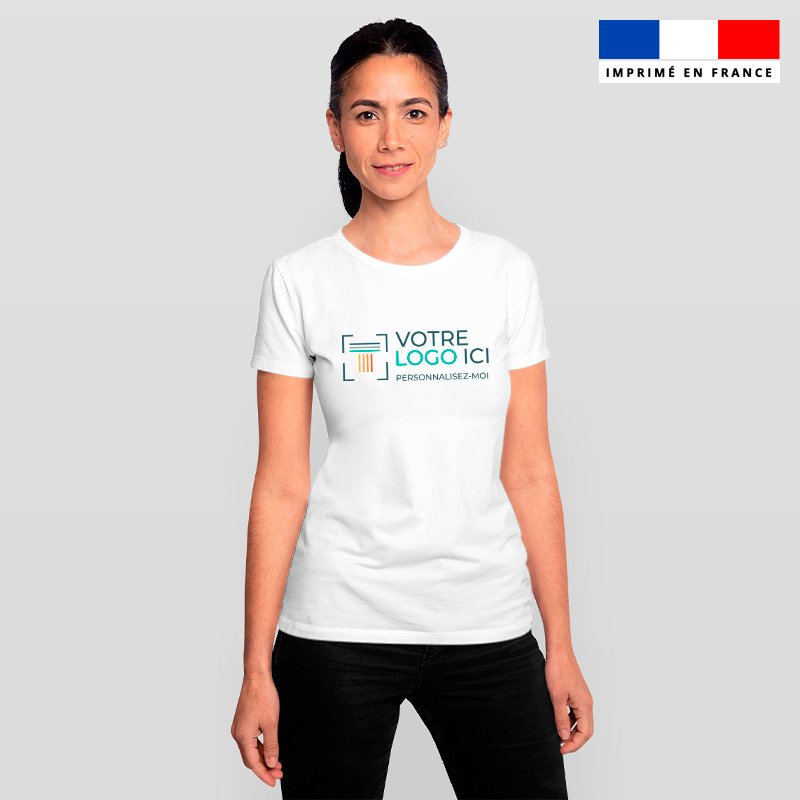
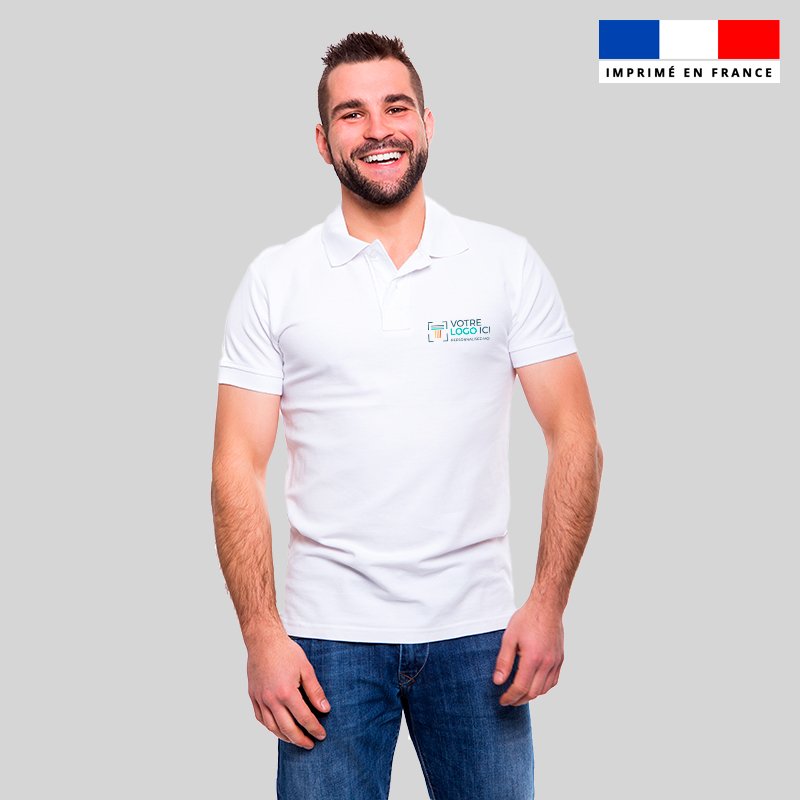
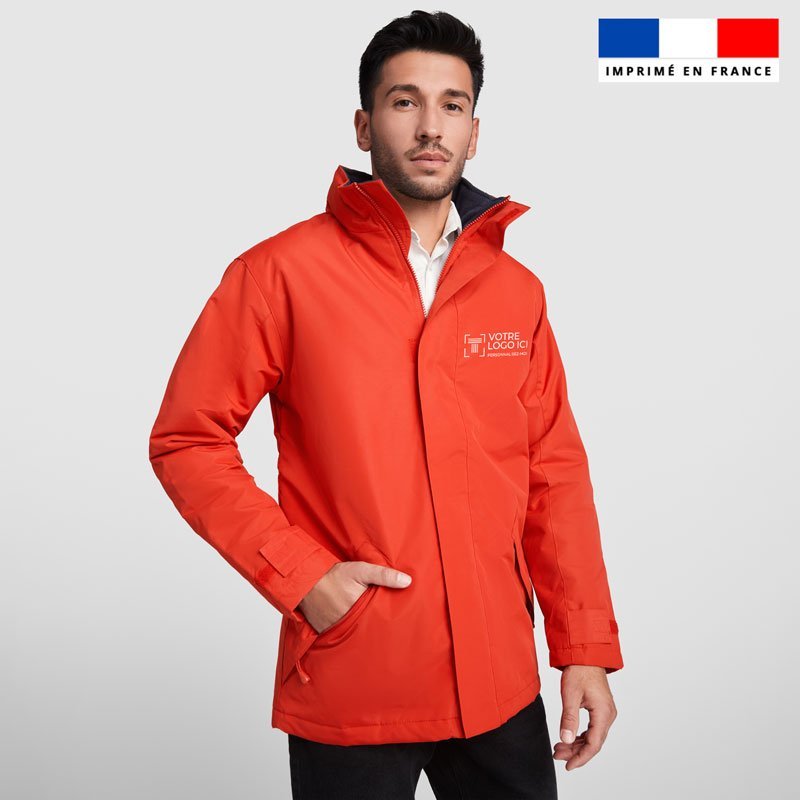

Custom textile embroidery involves applying a design, logo, or text directly into the fibers of a fabric using colored threads, with an embroidery machine controlled by a digital file. Durable, precise, and visually premium, it has become the go-to personalization technique for businesses, sports clubs, and fashion designers.
Its success is no coincidence. Where printing fades over time, embroidery withstands repeated washing cycles without losing either color or texture. A polo embroidered with a company logo sends a strong message: that of a brand that pays attention to detail. This is precisely why professionals consistently turn to it.
This complete guide answers all your questions: how embroidery works, which materials are compatible, how much it costs, which files to prepare, and why you should entrust your project to a specialized workshop like Tissus Print.
What is custom textile embroidery?
Custom textile embroidery is an industrial and artisanal process that consists of reproducing a design on a textile substrate using mechanical stitching. Unlike printing, which deposits ink on the surface, embroidery integrates the design directly into the structure of the fabric.
How does embroidery work?
An industrial embroidery machine is equipped with several heads and dozens of thread spools. It follows a digital program called an embroidery file, which indicates point by point where to place the thread, in which direction, and at what density. This program is created from the customer's artwork during a key step: digitization, also known as "digitizing."
The precision achieved by modern machines makes it possible to reproduce logos, typography, and complex designs with remarkable accuracy, whether the substrate is thick cotton or fine knit fabric.
The different production stages
- Receipt and analysis of the customer's file (logo, text, design).
- Design digitization: conversion into a stitch-by-stitch embroidery file.
- Program validation on a test substrate.
- Mounting the textile in the embroidery hoop.
- Starting the machine embroidery process.
- Quality control, trimming excess threads, and finishing.
Why embroidery is considered a premium finish
The raised texture created by the accumulation of threads gives embroidery a tactile dimension that printing cannot reproduce. An embroidered logo on a polo or jacket can be perceived as much by touch as by sight. This material quality is precisely what gives embroidery its premium status in professional textiles and fashion.
According to data from the workwear industry, more than 70% of companies that customize their professional uniforms choose embroidery for their main logo, particularly because of its longevity and the serious image it projects.
What are the benefits of custom embroidery?
Choosing embroidery to personalize a textile means investing in a solution built to last. Here is why this technique remains the industry standard.
Excellent durability
Embroidery threads are stitched into the structure of the substrate itself. They do not peel, flake, or fade away. An embroidered garment retains its original appearance after hundreds of washes, whereas a transfer or screen print may begin to deteriorate after the first few dozen machine washes.
A premium look with raised texture
The volume created by the embroidery stitches produces a unique visual and tactile effect. On a polo, cap, or jacket, an embroidered logo catches the eye and immediately conveys a sense of superior quality. This is a strong differentiating factor for brands looking to stand out.
Professional personalization
Embroidery is perceived as a sign of care and investment. It is equally suitable for an SME looking to outfit its teams and for a ready-to-wear brand that uses distinctive details to develop its collection.
Excellent wash resistance
Unlike heat-transfer or direct-to-garment printing techniques, embroidery is not easily affected by heat, spin cycles, or strong detergents. It is suitable for professional uniforms that undergo regular and intensive care, particularly in the restaurant, construction, and healthcare industries.
Enhancing brand image
Wearing a garment embroidered with a company logo is a way of communicating without saying a word. In business settings, trade shows, or customer events, embroidered clothing strengthens a team's visual cohesion and helps keep the brand in people's minds.
Which textiles can be embroidered?
Embroidery is compatible with a very wide range of textile substrates. Here are the most common ones.
Polos
The polo remains the most widely used embroidery substrate in the professional sector. Its medium weight (between 180 and 220 g/m²) provides a stable base that is ideal for company logos. Whether made of cotton, polyester, or a blend of both, it can be embroidered without deformation.
Sweatshirts
Fleece-lined sweatshirts, made of cotton or fleece, are perfectly suited to embroidery. The logo is generally positioned on the left chest, back, or sleeve. Their thickness provides excellent stability during embroidery.
Jackets
Softshell jackets, windbreakers, work jackets, or blazers can all be embroidered. Technical materials such as softshell or nylon require specific expertise to avoid distortion, but the result is particularly premium.
Caps
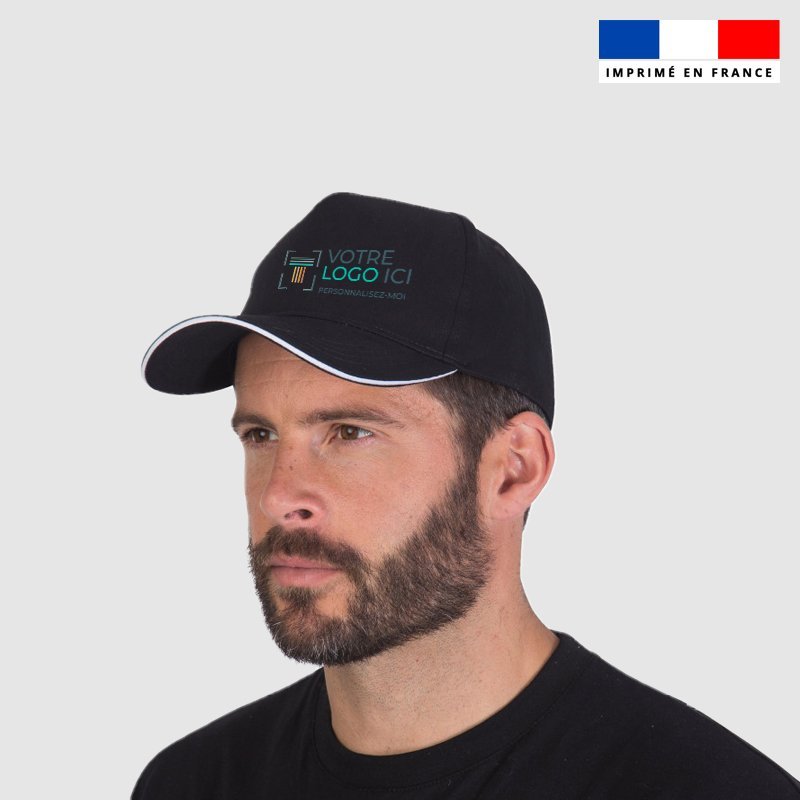
Embroidered caps are among the most popular substrates for sports clubs, streetwear brands, and businesses. Front embroidery on a structured cap provides a clean, professional finish. Using an embroidery template adapted to the curve of the visor is essential.
Tote bags
Tote bags made of cotton canvas or jute fabric are very well suited to embroidery. The result is elegant and durable. It is a premium alternative to printing for corporate gifts or promotional products.
Bags and accessories
Backpacks, pouches, toiletry bags, aprons, or towels: embroidery adapts to a wide variety of textile accessories. Each substrate requires a preliminary analysis of the material and the possible tension during machine embroidery.
Embroidery or textile printing: what are the differences?
Embroidery and textile printing are two complementary techniques. Each meets specific needs. Understanding their differences helps you make the right choice for your project.
The benefits of embroidery
- Exceptional long-term durability, including resistance to intensive washing.
- Premium appearance thanks to the raised texture of the threads.
- Ideal for simple logos, text, and geometric shapes.
- Perceived as a sign of quality and professionalism.
- Suitable for small and medium quantities without compromising quality.
The benefits of textile printing
- Accurate reproduction of gradients, photographs, and complex artwork.
- Virtually unlimited color palette.
- Lower unit cost for large quantities.
- Various techniques: direct-to-garment digital printing, sublimation, DTF (Direct to Film) transfer.
- Lightweight feel on thin substrates.
When to choose each technique
For a company logo on a polo or jacket, embroidery is almost always the best option. For photographic artwork, all-over designs, or printing on polyester with gradients, sublimation or DTF printing is more suitable. For some projects, the two techniques can be combined: embroidery for the main logo and printing for secondary details.
| Criteria | Embroidery | Textile printing |
|---|---|---|
| Cost for small quantities | Accessible (one-time digitization fee) | Varies depending on the technique |
| Visual appearance | Raised texture, volume, premium look | Flat, suitable for gradients and photos |
| Detail precision | Limited below 5 mm | Very fine (pixel by pixel) |
| Number of colors | Up to 15 threads simultaneously | Unlimited (four-color process printing) |
| Wash durability | Excellent – several hundred washes | Good to very good depending on the technique |
| Recommended uses | Logos, monograms, text, uniforms | Complex designs, all-over prints, sports jerseys |
Which files should you provide to have a logo embroidered?
The quality of the file you provide directly affects the quality of the final embroidery. Here is what you need to know before sending your artwork.
Recommended formats
Vector formats are strongly recommended: AI (Adobe Illustrator), EPS, vector PDF, or SVG. These formats ensure lossless scaling during digitization. A high-resolution JPEG or PNG file (minimum 300 dpi) may also be accepted, provided the outlines are sharp and the colors are clearly defined.
Minimum element size
Elements that are too small can create technical difficulties in embroidery. As a general rule, embroidered text should have a minimum height of 5 to 7 mm to remain legible once the design has been stitched. Below this threshold, letters can become distorted or close up during stitching. It may sometimes be preferable to simplify very fine details to achieve a clean result.
Text management
If your logo contains text, make sure to convert fonts to outlines or paths before exporting your file. This prevents any issues caused by the font not being available on the workshop's computer. Fonts with very fine serifs or script connections may sometimes need to be adapted to ensure readability in embroidery.
Color management
Indicate the Pantone color code for your threads if your brand guidelines allow it. If no Pantone reference is available, the colors will be matched to the available thread color chart. Embroidery uses physical threads: a gradient cannot be reproduced exactly as it appears digitally, but it can be interpreted using stitch-by-stitch dithering techniques. See our file preparation guide for step-by-step assistance.
What projects can embroidery be used for?
Custom textile embroidery is suitable for a wide variety of projects. Here are the main use cases encountered by Tissus Print customers.
Professional clothing
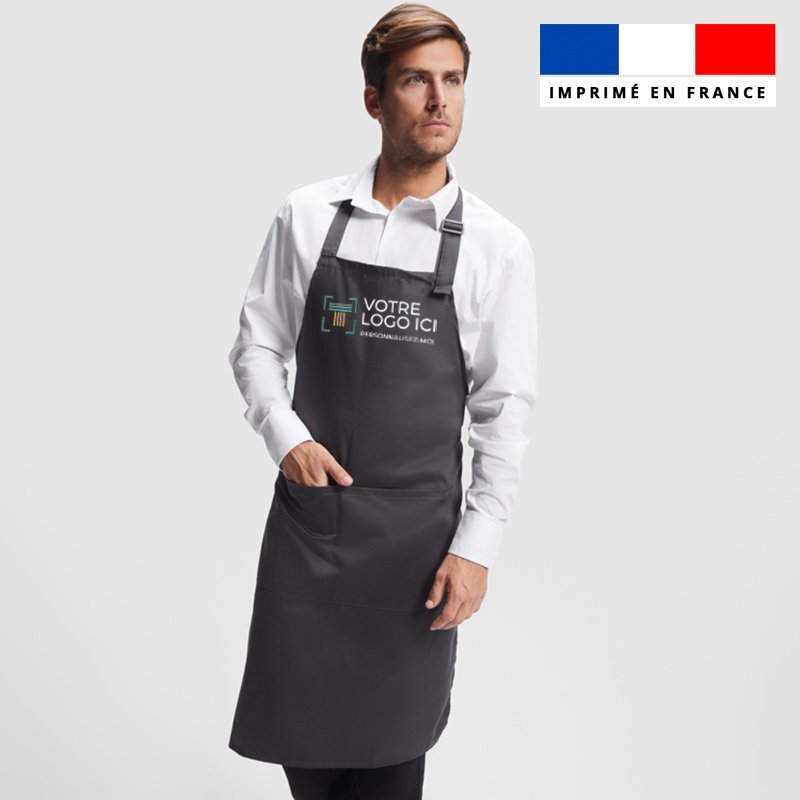
This is the most common use. A construction company, medical practice, or restaurant chain outfits its teams with polos, jackets, or aprons embroidered with its logo. The goal is twofold: strengthen the company's visual identity and make employees easier to identify in the field or in-store.
Clothing brands
Designers and ready-to-wear brands use embroidery as a signature element of their collections. An embroidered logo on a hoodie or an embroidered label on a garment pocket helps distinguish a brand from standard ready-to-wear products and supports a premium positioning.
Sports clubs
Football, rugby, tennis, and martial arts clubs regularly have their crests embroidered on jackets, tracksuits, or caps. Embroidery reinforces a sense of belonging to the club and strengthens members' pride.
Associations
French nonprofit associations frequently customize their clothing for events, outings, or field activities. Embroidery provides a durable solution, even for small quantities.
Events
Corporate seminars, product launches, trade shows: events are an ideal opportunity to distribute embroidered clothing to participants or the organizing team. A polo embroidered with the event name becomes a memorable keepsake.
Personalized gifts
Giving someone a garment or accessory embroidered with their first name or initials means offering a gift that is both unique and durable. This approach is popular for corporate gifts, baby gift sets, or high-end promotional products. Request a personalized quote for your gift project.
How much does custom embroidery cost?
The cost of custom embroidery depends on several technical factors. There is no single price: each project is evaluated according to its specific requirements. Here are the main criteria that influence the quote.
Factors that influence the price
Embroidery size
The larger the embroidered area, the higher the stitch count and the longer the machine time. A 5 cm-wide embroidery will be significantly less expensive than a 20 cm design covering a large part of the back of a garment.
Number of colors
Each thread change requires additional handling. A two-color logo will be quicker to produce than a seven-color logo. That said, modern machines can handle up to 15 different colored threads simultaneously, making multi-color logos entirely accessible.
Quantities
Digitization fees (creation of the embroidery file) are fixed and spread across the entire order. The larger the quantity ordered, the lower the unit cost. An order of 50 embroidered polos will therefore be proportionally less expensive than an order of 5 pieces, even though Tissus Print has no minimum order quantity.
Type of substrate
Embroidering a cap requires specific equipment (an embroidery template). Embroidering a flexible item such as a tote bag requires temporary reinforcement. These technical constraints may slightly affect the price, but they are systematically included in the quote.
What are the production lead times?
Production lead times for custom embroidery vary depending on the complexity of the project, the quantities ordered, and the workshop's workload. As a general rule, allow between 1 and 7 business days after approval of the embroidery proof.
- For a simple order (known logo, limited quantity), the lead time can be as short as one business day.
- For a first order requiring digitization and validation on a test substrate, allow 3 to 5 business days.
- For large orders or complex projects (back embroidery, multiple positions, various substrates), the lead time may reach 7 business days.
- Rush production may be possible depending on workshop availability: feel free to mention this when submitting your request.
A free, no-obligation quote is prepared for every project. It specifies the estimated lead times, details of the services, and any digitization fees. Order a prototype to validate the appearance before full production.
Why choose Tissus Print for your embroidery project?
Tissus Print is a textile customization workshop based in the Var region, specializing in professional embroidery and fabric printing. Here is what sets our approach apart.
French workshop
All embroidery is produced in France at our workshop in Cuers. This ensures strict quality control at every stage of production, from design digitization through to final inspection before shipping.
Personalized support
Each project is handled by a dedicated contact. Whether you are a small business ordering your first polos or an established company renewing its uniforms, you receive the same level of attention and technical advice.
Quote-based service
No hidden fees. Each quote is prepared to order, with a complete breakdown of the services provided. You know exactly what you are paying for before approving your order.
No minimum quantity
Tissus Print accepts orders by the piece. Would you like to have a single garment embroidered as a gift or for testing? This is entirely possible. This flexibility is particularly appreciated by individuals, associations, and small organizations.
Textile and customization expertise
Our team has expertise in embroidery as well as digital printing, sublimation, and DTF transfer. If your project requires a combination of techniques, we can advise you on the best approach based on your substrates, artwork, and budget.
Workshop in Cuers near Toulon and Hyères
Our workshop is located in Cuers, in the Var region, just a few minutes from Toulon and Hyères. You can come directly to drop off your garments, approve a sample, or discuss your project with our team. In-person service is part of our commitment to providing local support.
Conclusion
Custom textile embroidery is much more than a personalization technique: it is a strong editorial choice, one that delivers a durable, premium, and immediately recognizable finish. Whether you want to outfit your teams, enhance your brand, or create a memorable gift, embroidery offers a finish that printing cannot match in terms of texture and longevity.
Choosing a specialized workshop like Tissus Print means ensuring support from file preparation through delivery of the finished item, with no minimum quantity requirement and a dedicated contact available at every stage.
Your project deserves embroidery that reflects the quality of your brand. Request your free quote today and receive a personalized estimate within 24 business hours.
FAQ - Custom textile embroidery
Can I have just one garment embroidered?
Yes. Tissus Print has no minimum order quantity. It is entirely possible to have a single item embroidered, whether for a gift, prototype, or test before placing a larger order. The digitization fee is simply allocated to the single item, which may slightly increase the unit cost compared with a larger production run.
What file do I need to provide for embroidery?
A vector file (AI, EPS, vector PDF, or SVG) is ideal. A high-resolution bitmap file (JPEG, PNG) of at least 300 dpi may also be accepted if the outlines are sharp. Remember to convert your fonts to outlines and provide your Pantone color references if available.
Does embroidery withstand washing?
Yes, this is one of its main advantages. Embroidery threads are stitched into the structure of the fabric. They do not peel off during washing, unlike certain heat-transfer printing techniques. An embroidered garment can be washed hundreds of times without the design deteriorating, provided the care instructions for the textile substrate are followed.
Can a complex logo be embroidered?
Complex logos with many fine details may require some adaptations. Elements smaller than 5 mm, gradients, and very small text are technically difficult to reproduce accurately in embroidery. The Tissus Print workshop analyzes each logo and proposes the necessary adjustments to achieve an optimal result while remaining faithful to the customer's visual identity.
How much does custom embroidery cost?
The price depends on the design size, number of colors, quantity ordered, and type of substrate. Digitization fees, which are one-time costs shared across the order, represent the most significant variable portion for small quantities. A free, detailed quote is prepared for each project. Contact Tissus Print for a quick estimate.
How long does embroidery take?
The standard lead time is 1 to 7 business days after approval of the embroidery proof. For a first order including digitization and a test on the substrate, allow 3 to 5 business days. Rush production may be possible depending on workshop availability.
Can I visit the workshop directly?
Yes. The Tissus Print workshop is located in Cuers, in the Var region, near Toulon and Hyères. You can visit to drop off your garments, approve a sample, or discuss your project directly with the team. It is recommended to contact us in advance to arrange an appointment.
Which garments can be embroidered?
The vast majority of textile substrates can be embroidered: polos, sweatshirts, jackets, caps, tote bags, aprons, bags, softshell jackets, heavyweight T-shirts, and many others. Technical materials such as nylon or softshell require particular care during setup, but can be embroidered perfectly well by an experienced workshop.


0 commentaires