











Table of Contents
- I. The Traditional Roots of Textile Printing
- II. The Rise of Digital Printing: A Technological Revolution
- III. Tissus Print: At the Heart of Textile Printing Innovation
Introduction
The world of textile customization has undergone an unprecedented transformation thanks to the rise of digital printing. At Tissus Print, we are proud to position ourselves as specialists in this field, offering a wide range of customizable fabrics and intuitive online design tools. This article takes you through the fascinating history of textile printing, from its traditional origins to the emergence of digital technologies that have radically changed how we design and produce unique, made-to-measure fabrics.
I. The Traditional Roots of Textile Printing
1. Early Textile Printing Methods
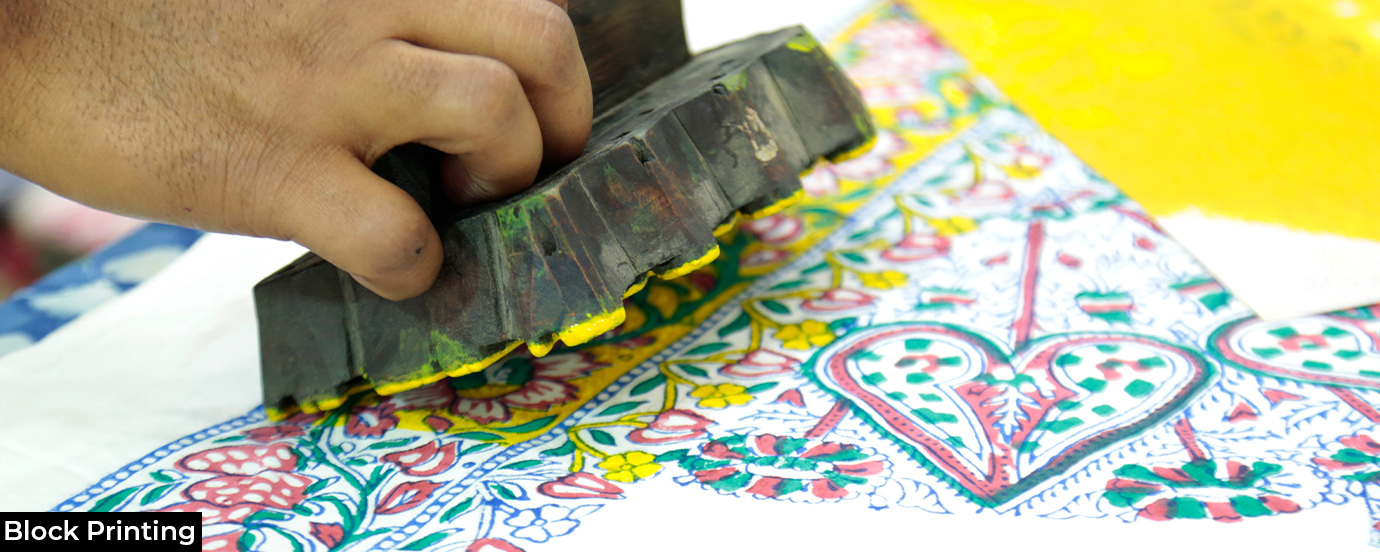
Textile printing is an ancient practice dating back several millennia. Early techniques such as block printing, dyeing, and embroidery were primarily carried out by hand. These craft-based methods already allowed for a degree of customization, although limited by the tools and techniques available at the time.
In India, for example, the art of block printing flourished as early as the 12th century. This method involved carving patterns into wooden blocks, which were then coated with natural dyes and pressed onto fabric to create repeating designs. Meanwhile, in China, batik—a wax-resist dyeing technique—was used to produce intricate and elaborate patterns. These techniques were not only decorative but also played a key role in transmitting cultural and religious symbols through generations.
2. Evolution of Traditional Methods in Europe
Europe discovered textile printing techniques through trade routes with the East. In the 17th century, England introduced cotton printing, marking the beginning of more industrialized textile production. During this period, Toile de Jouy fabrics, known for their romantic and scenic patterns, gained popularity in France. These textiles were printed using engraved copper plates, offering finer detail and improved reproducibility compared to wooden blocks.
The impact of the Industrial Revolutions of the 18th and 19th centuries on textile printing was substantial. Manual techniques were gradually replaced by mechanized processes, increasing production speed and making customized textiles more accessible. However, despite these advancements, personalization options remained limited due to the constraints of traditional methods.
II. The Rise of Digital Printing: A Technological Revolution
1. The Beginnings of Digital Textile Printing
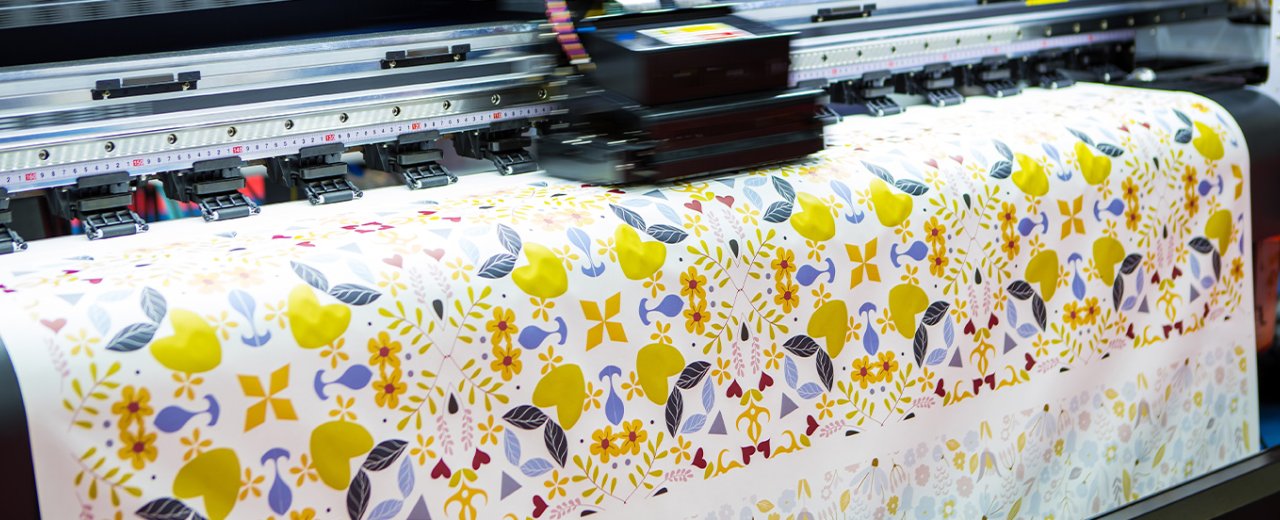
The introduction of digital textile printing in the 1980s marked a major turning point in the industry. Unlike traditional methods, digital printing enabled the direct reproduction of complex designs from digital files, eliminating the need for plates or blocks. This technology offered unprecedented flexibility, allowing designers and businesses to produce small batches or one-off pieces with exceptional speed and precision.
Digital printing revolutionized textile customization by enabling the creation of designs with virtually unlimited color palettes and outstanding accuracy. Where traditional methods were limited to a few colors and required labor-intensive adjustments, digital printing opened up new creative possibilities, making each project truly unique.
To learn more about the different stages of digital printing, check out our article Everything You Need to Know About Textile Printing.
2. Modern Digital Technologies in Textile Printing
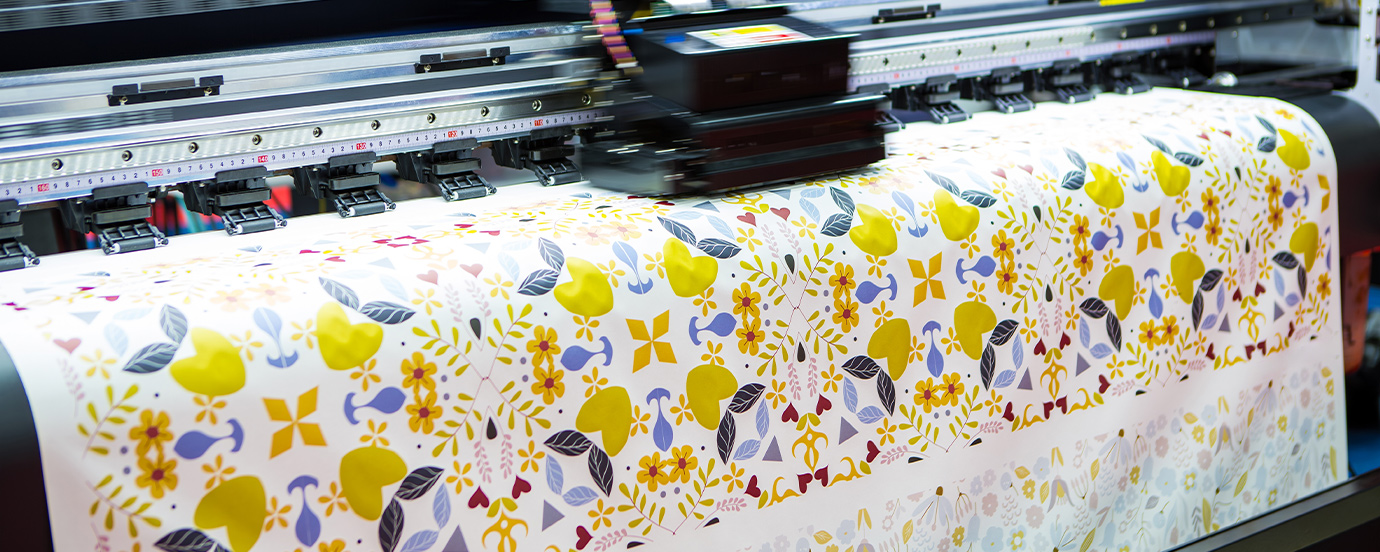
Today, several digital technologies make it possible to customize fabrics with exceptional quality. At Tissus Print, we use three main printing technologies, each offering specific advantages and applications.
Sublimation Printing
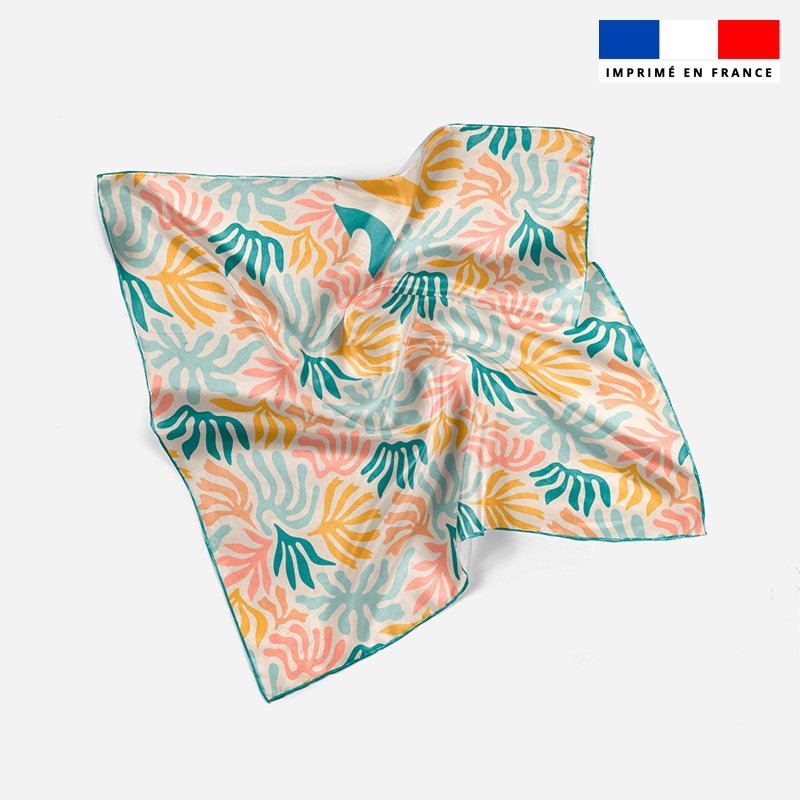
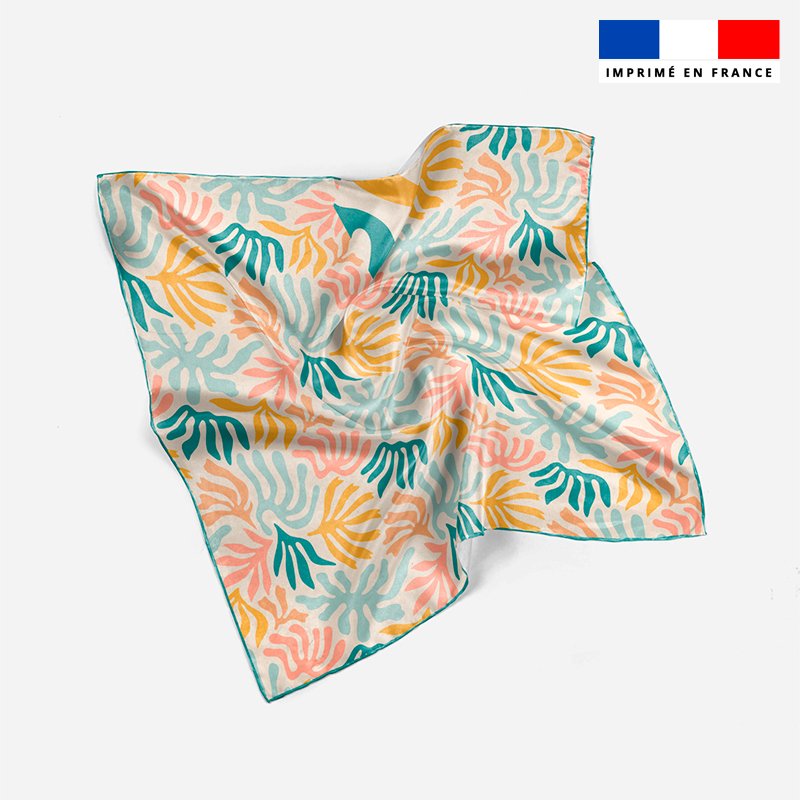
Sublimation printing is a technique that allows designs to be transferred onto polyester fabrics using heat and pressure. Special inks transition from solid to gas without becoming liquid, bonding directly with the fabric fibers.
- Advantages: Sublimation offers exceptional durability, with designs that do not fade or crack over time. Colors remain vibrant and wash-resistant, making this method ideal for sportswear, home décor, and accessories.
- Common applications: Widely used for technical and sports garments where print quality and fabric performance are essential.
For a deeper understanding of this technique, see our article Detailed Steps of Sublimation Printing.
Direct-to-Garment (DTG) Printing
Direct-to-garment printing (DTG) is another advanced technology used to print directly onto cotton fabrics. This method uses water-based inks applied directly to the fabric and then heat-fixed.
- Advantages: DTG delivers high-resolution prints with precise detail. It is also environmentally friendly due to the use of non-toxic inks and is ideal for small runs or one-off creations.
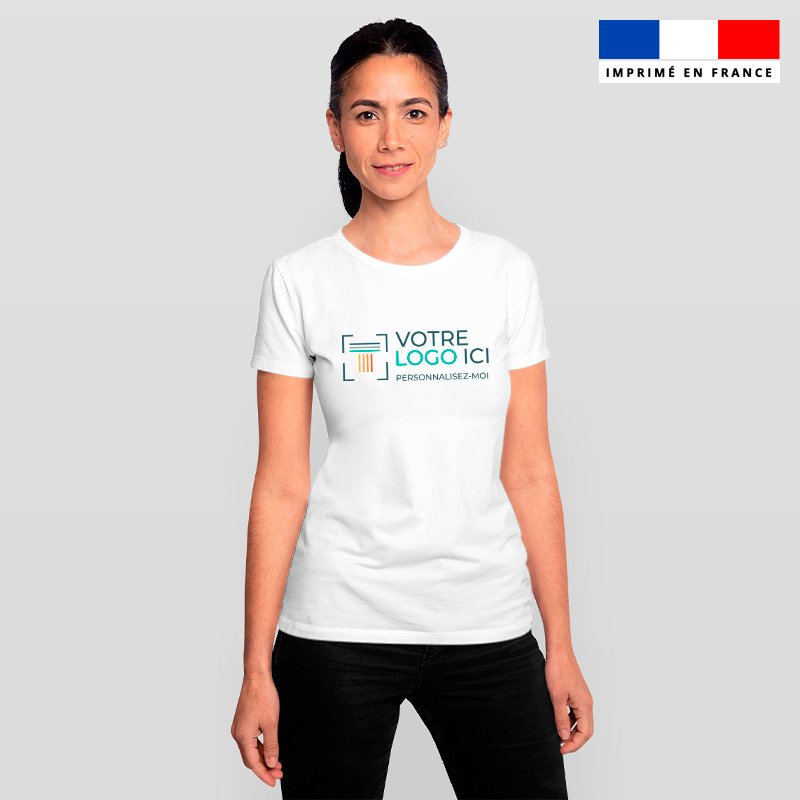
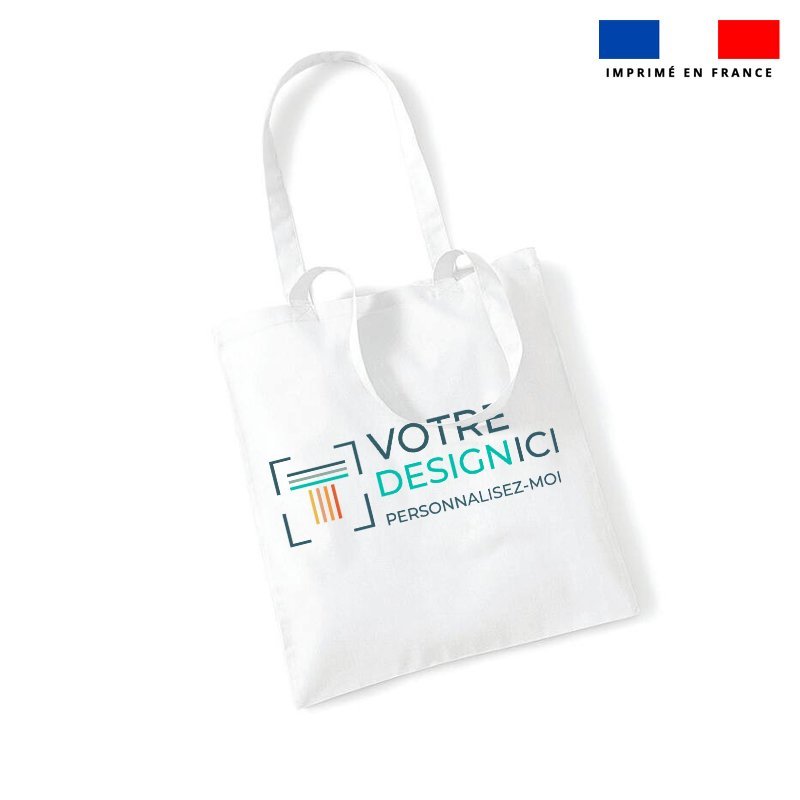
- Common applications: Frequently used for cotton textiles such as custom t-shirts, tote bags, and other natural fabric products.
DTF Printing (Direct-to-Film)
DTF printing is an innovative technique that allows designs to be printed onto a film, which is then transferred onto the desired textile. This method offers great flexibility, as it can be applied to a wide range of fabrics, including cotton, polyester, and blends.
- Advantages: Ideal for complex and colorful designs, DTF also supports special effects such as flocking or metallic finishes. It is particularly suited for small batches and detailed logos.
- Common applications: Widely used for custom apparel, accessories (such as bags or shoes), and promotional products requiring precise and durable prints.
To explore this technology further, read our article DTF Printer: Printing on Transparent Film.
3. Advantages of Digital Printing for Customization
Digital printing has transformed textile customization by enabling on-demand production, reducing waste, and offering endless creative possibilities. Unlike traditional methods, it requires no minimum order quantities, making it accessible to designers, creators, and small businesses.
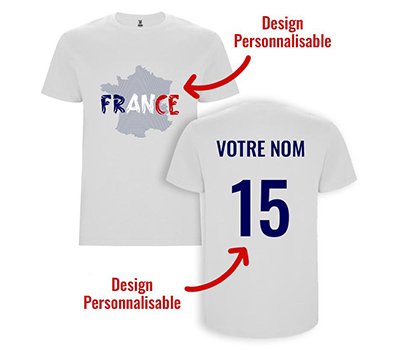
Online design tools, like those offered by Tissus Print, allow users to easily create their own designs and visualize them instantly on products. This accessibility has democratized textile customization, allowing anyone to bring their ideas to life without constraints.
To go further, discover how artificial intelligence can enhance textile customization in our article Creating Textile Customization with AI.
III. Tissus Print: At the Heart of Textile Printing Innovation
1. Overview of Tissus Print and Its Technologies
At Tissus Print, innovation is at the core of everything we do. Our company specializes in digital textile printing, offering customers the ability to create custom fabrics for both personal and professional projects.
We provide three cutting-edge printing technologies: sublimation for polyester fabrics, direct-to-garment printing for cotton, and DTF printing for maximum versatility across all types of textiles. Each technology is selected to ensure optimal color rendering, durability, and material respect.
To learn more about our commitment to innovation and quality, read our article Tissus Print: Textile Printing Made in France.
2. Tissus Print Online Customization Tools
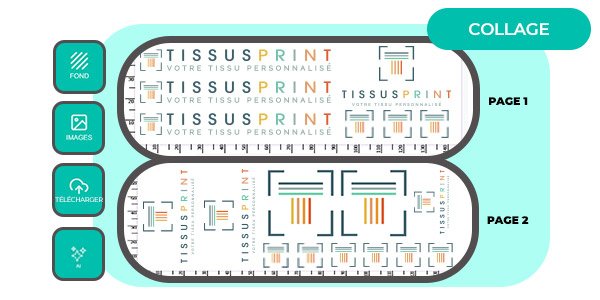
We have developed intuitive online design tools to simplify the textile customization process. These tools allow users to upload designs, adjust colors, select patterns, and preview the final result in real time. Whether you want to create a unique t-shirt, design fabrics for a fashion collection, or develop branded accessories, our tools offer a seamless and creative experience.
With our printing technologies, we guarantee results that meet your expectations, with high-quality prints that stand the test of time.
3. Commitment to Quality and Innovation
At Tissus Print, we are committed to delivering premium-quality products using innovative and environmentally responsible printing technologies. We continuously invest in new techniques to improve our services and meet the evolving needs of our customers.
The future of digital textile printing is promising, and we are determined to remain at the forefront of this transformation. Whether through the development of eco-friendly inks, improved print precision, or expanded customization options, we are dedicated to offering the best possible solutions.
Conclusion
The history of textile printing, from its traditional roots to its digital evolution, is a story of innovation and creativity. Digital printing has democratized textile customization, making it possible to create unique pieces with a level of quality and precision once unattainable.
At Tissus Print, we are proud to contribute to this revolution by offering advanced printing technologies and accessible online customization tools. Whether you are an individual looking to express your creativity or a business seeking tailored solutions, we are here to support you every step of the way.
We invite you to explore our services and discover how we can bring your textile ideas to life with high-quality printing.
Try it now! Discover our online customization tools and start creating your own custom fabrics.
Contact us for any questions or custom projects—our experts are here to help.
Subscribe to our newsletter to stay updated on the latest trends and innovations in textile printing.


0 commentaires