






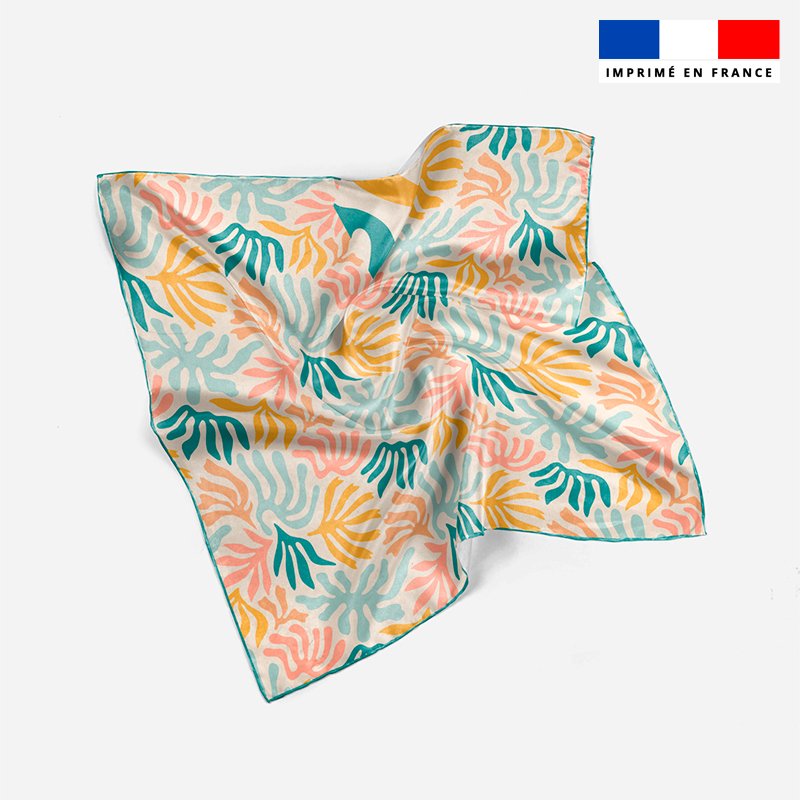




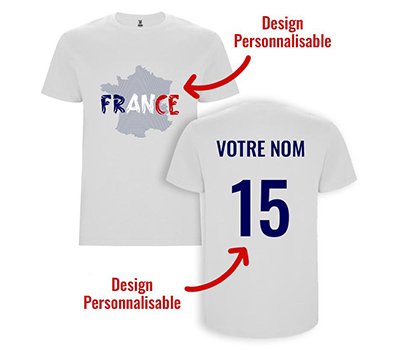






The textile industry is often criticized for its significant environmental impact: excessive water consumption, use of harmful chemicals, and high CO2 emissions. Unlike large polluting corporations in the sector, Tissus Print stands out for its strong commitment to eco-friendly printing. Specializing in fabric printing, we offer customized solutions such as printed fabrics and garments made in France, using environmentally responsible technologies. This article explores the environmental challenges of textile printing and how Tissus Print actively works to reduce its impact on the planet while supporting the local economy.
Environmental Challenges of Textile Printing
Environmental Impact of the Textile Industry
The textile industry has a considerable impact on the environment. It consumes vast amounts of water and energy and generates significant CO2 emissions. Textile printing, in particular, can contribute to pollution through the use of chemical inks and energy-intensive processes. Eco-friendly printing aims to reduce this impact by adopting more sustainable practices and technologies.
Types of Inks and Their Impact
The use of inks is a key factor in the environmental impact of textile printing. Traditional solvent-based inks are known for their toxicity and negative effects on both the environment and human health. In contrast, eco-friendly inks, such as water-based inks, significantly reduce these harmful effects. They are not only less polluting but also more respectful of both textiles and the environment.
Energy and Resource Consumption
Energy and natural resource consumption is another critical aspect of textile printing. Traditional processes are often energy-intensive and require large amounts of water, particularly for washing and fabric treatment. Eco-friendly printing, by using innovative technologies, helps reduce energy and water consumption while maintaining high print quality.
Printing Technologies Used by Tissus Print and Their Environmental Impact
Direct Inkjet Printing for Cotton
At Tissus Print, we use direct inkjet printing technology for cotton, which stands out for its efficiency and environmental friendliness. This process uses water-based pigment inks, significantly reducing the need for harmful chemicals. It is also designed to minimize waste through optimized ink management and efficient resource use. This method ensures high-quality fabric printing while aligning with eco-friendly principles.
Sublimation Printing for Synthetic Fabrics
Sublimation printing is another technology we use for synthetic fabrics. This process involves printing special inks onto transfer paper, which is then heat-pressed onto the fabric. The ink turns into gas and penetrates the fibers, creating a durable and long-lasting print. Sublimation printing is known for its very low water consumption and absence of solvents, making it an ideal eco-friendly solution for synthetic textiles.
DTF Printing (Direct-to-Film)
DTF (Direct-to-Film) printing is a modern technology that allows complex and detailed designs to be printed on a wide range of fabrics. This process uses inks with a low environmental impact and optimizes resource usage by reducing waste and energy consumption. DTF printing represents an innovative and sustainable solution for high-quality textile printing.
How Tissus Print Adapts to Environmental Challenges
Tissus Print’s Commitment to Greener Printing
At Tissus Print, we are committed to reducing our environmental impact at every stage of the printing process. We prioritize sustainable materials and eco-friendly inks, and we invest in technologies that minimize emissions and waste. In addition, Tissus Print is proud to be a French company producing in France, which helps reduce the carbon footprint associated with international transport and supports the local economy. This local approach significantly contributes to eco-friendly printing and reinforces our commitment to responsible and sustainable practices.
Innovation and Research in Sustainability
We strongly believe in innovation to continuously improve our processes and reduce our environmental footprint. Tissus Print invests in research and development of new printing technologies that meet the highest environmental standards. Our goal is to offer increasingly eco-friendly solutions without compromising product quality.
Customer Awareness and Transparency
We are also committed to raising customer awareness about eco-friendly printing and guiding them toward responsible choices. Tissus Print promotes transparency by clearly communicating about the materials used and the processes implemented to minimize environmental impact. We encourage our customers to choose eco-friendly options for their custom fabrics, clothing, and accessories.
Conclusion
Textile printing faces major environmental challenges, but more responsible choices are possible to reduce its impact on the environment. Tissus Print is committed to adopting eco-friendly printing practices and using innovative technologies to meet customer expectations while respecting the planet. By choosing Tissus Print, you contribute to a more sustainable future and support environmentally responsible printing methods.
Join us in our commitment to eco-friendly printing by choosing custom fabrics at Tissus Print. Subscribe to our newsletter and follow us on social media to learn more about our environmental initiatives and discover our latest fabric printing solutions.


0 commentaires