



How to successfully execute a custom textile project? Success requires selecting the right fabric, defining suitable finishes, and relying on an expert partner in printing and manufacturing.
Every textile project is unique. Whether you are a fashion brand, an event agency, or an interior designer, your creations deserve to be transformed into professional, durable products that reflect your identity. At Tissus Print, we support every step, from the initial idea to the final production.
74% of companies believe that personalized textile materials strengthen their brand image (Source: Visual Communication Study 2023).
Why choose custom textiles?
Unique and distinguishing creations
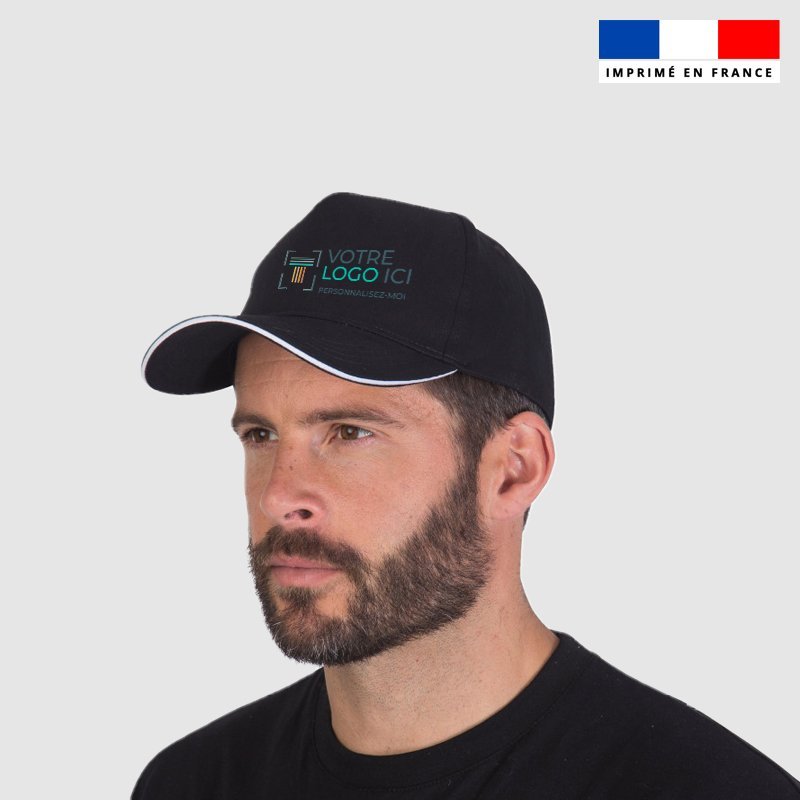
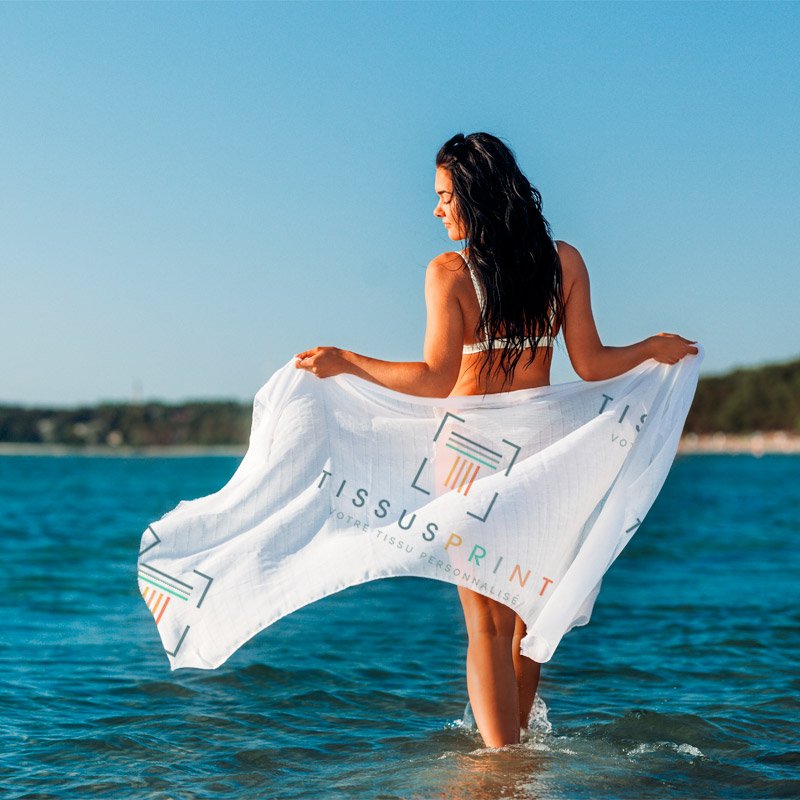
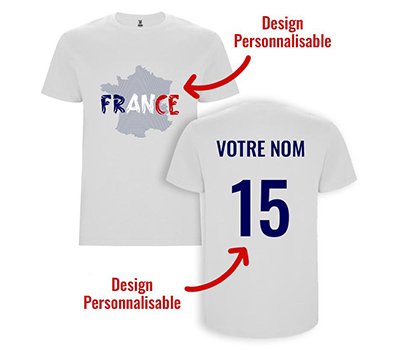
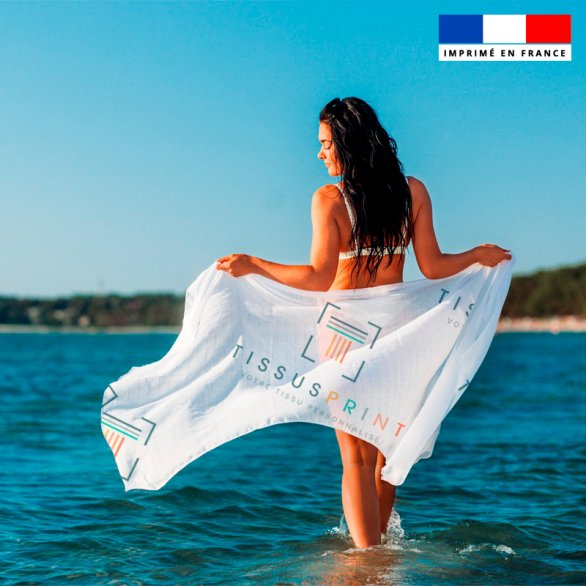
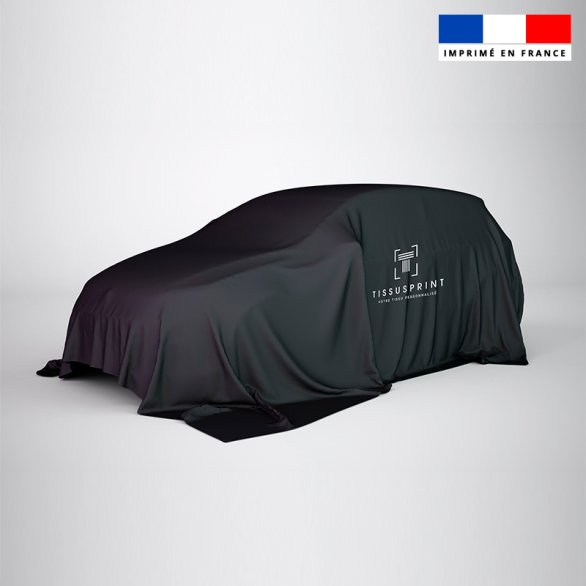
Custom textiles offer a valuable opportunity to stand out from the competition. Unlike standardized products, each creation becomes a distinctive element of your visual identity. A branded scarf in corporate colors, a decorative cushion in exact dimensions, or a perfectly fitted event car cover are examples that demonstrate this adaptability.
Flexibility and complete freedom
Custom textile manufacturing bypasses traditional industrial constraints. Sizes, quantities, designs, and finishes are chosen according to your exact requirements. This creative freedom allows each product to be perfectly tailored to its intended use without compromise.
Production suitable for professionals and individuals
Our flexible approach allows the creation of a single piece or a limited series without restrictive minimum order requirements. On-demand production avoids overstock issues while ensuring feasibility for specific projects. Whether it is a prototype for validation or a capsule collection, each project has a solution.
Key steps for a successful project

Step 1 – Define your precise needs
The success of a custom textile project starts with a thorough analysis of requirements. Intended use, target audience, required quantities, and technical constraints form the foundation of this planning. This framing phase guides effective technical and aesthetic choices.
Step 2 – Choose your fabric and finish
The choice of textile largely determines the final product quality. Each material has specific characteristics affecting appearance and durability:
| Fabric type | Recommended use | Advantage | Limitation |
|---|---|---|---|
| Polyester | Events, décor | Lightweight, economical | Less natural |
| Cotton | Fashion, accessories | Natural, soft, breathable | Less suitable for large formats |
| Knit/Lycra | Sports, covers | Stretchable, durable | Higher cost |
Step 3 – Prepare visuals (design, logo, pattern)
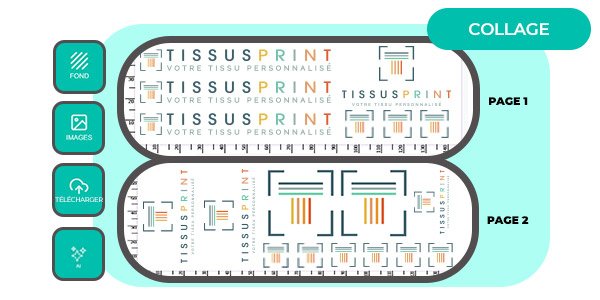
Visual preparation is a critical step. High-resolution or vector files ensure print quality, while proper safety margins prevent cutting errors. Our technical team reviews your files and provides a proof for validation before printing. This control document verifies format, dimensions, color, and defects. While we do not modify your original files, we flag any technical adjustments needed for optimal results.
Step 4 – Printing & manufacturing in our French workshop
Production is carried out entirely at our workshop in Cuers, Var. This made in France approach ensures consistent quality, controlled timelines, and personalized oversight for each project. Local expertise allows real-time adjustments to production parameters based on the specific requirements of each order.
Step 5 – Quality control and delivery
- Color matching & strict adherence to the original file are checked.
- Finishes, seams, and dimensions are verified.
- Protective packaging is used for secure delivery.
- Fast and secure shipping is organized for France and Europe.
Custom textile printing: which techniques to choose?
The printing technique depends on the type of fabric chosen. Contrary to common belief, the method is dictated by the material. Note that color rendering varies by fabric: the same color appears differently on velvet and cotton, even with the same reference.
- Sublimation: exclusive for synthetic fabrics (polyester, microfiber), transferring ink from paper to fabric.
- DTF (Direct to Film): method for printing on transfer film, suitable for compatible specific supports.
- Direct inkjet: reserved for natural fibers like cotton, allowing direct printing on the fiber.
Our printing guide details each process to help you choose.
Custom manufacturing: finishes that make a difference
Finishes transform a printed fabric into a professional, ready-to-use product. Our custom manufacturing expertise includes a wide range of techniques:
- Reinforced hems for increased durability.
- Technical seams adapted to usage constraints.
- Special attachment systems (eyelets, Velcro, snaps).
- High-quality zippers.
- Piping and straps for premium finishes.
These technical details ensure a professional product that withstands intensive use.
Common mistakes to avoid
Experience has taught us the most frequent pitfalls in custom textile projects:
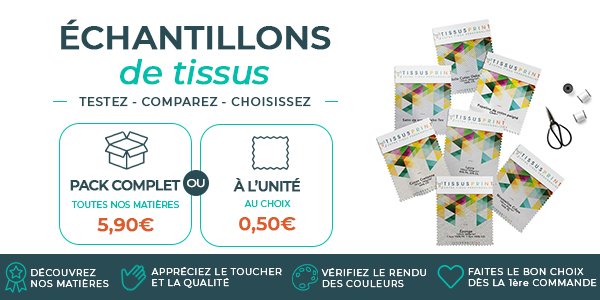
- Ordering without requesting a sample or prototype first.
- Selecting a fabric unsuitable for its intended use (e.g., cotton for extended outdoor use).
- Underestimating production timelines required for quality work.
Concrete examples of successful projects
Our expertise is demonstrated through a variety of projects showcasing the possibilities of custom textiles:
Events: printed car covers
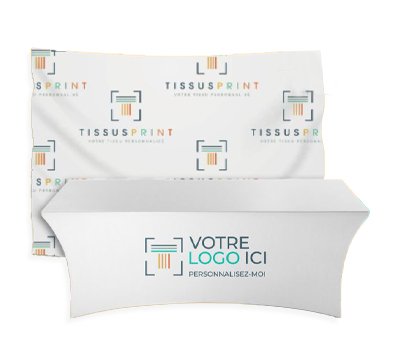
For a car dealership, we designed protective covers in agency colors. Technical polyester provided lightness and durability, while specific finishes allowed quick installation and removal.
Fashion: custom scarves
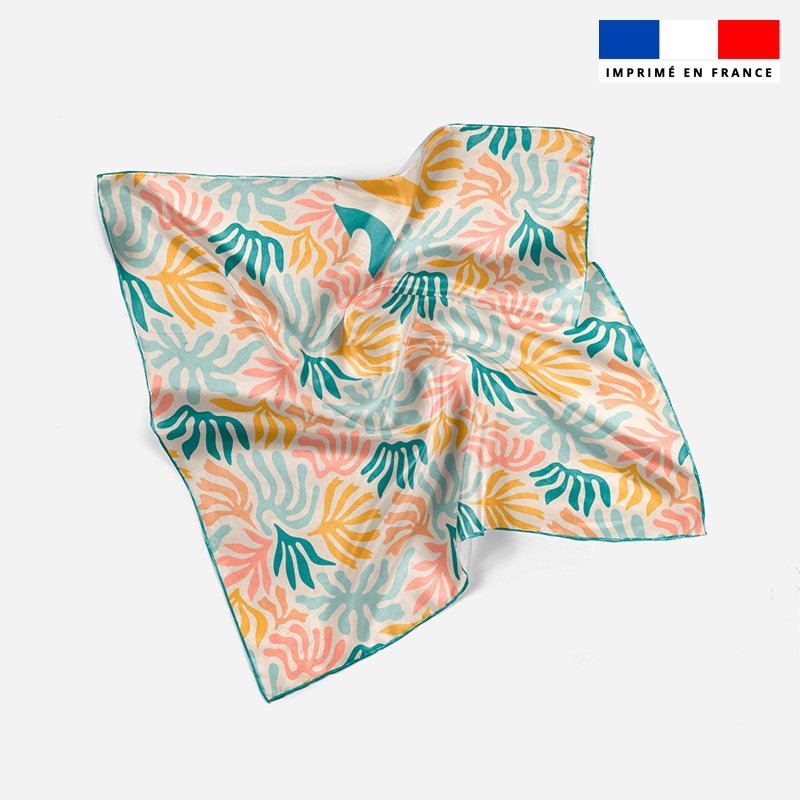
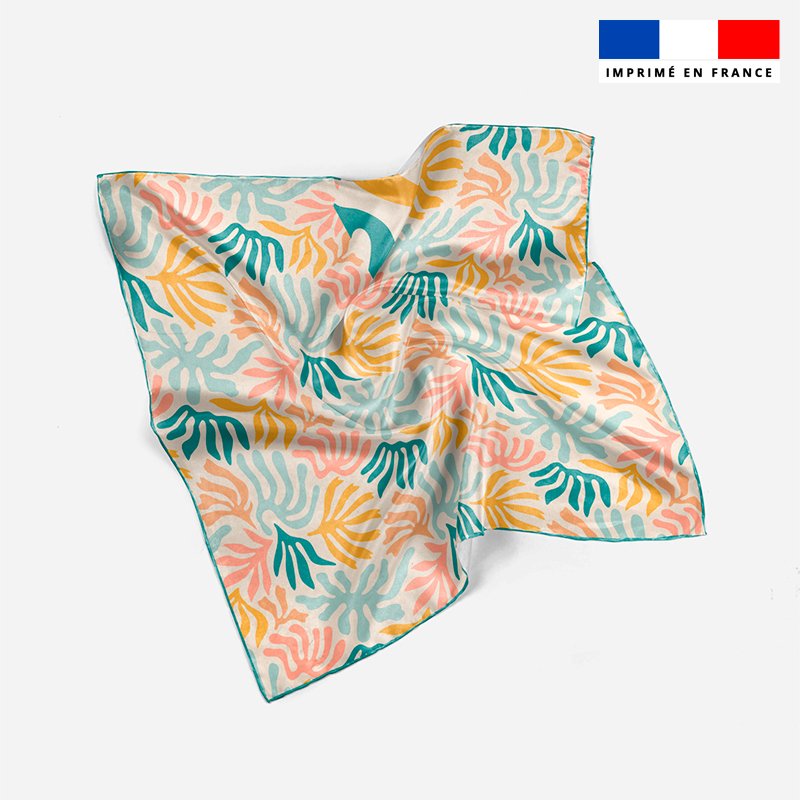
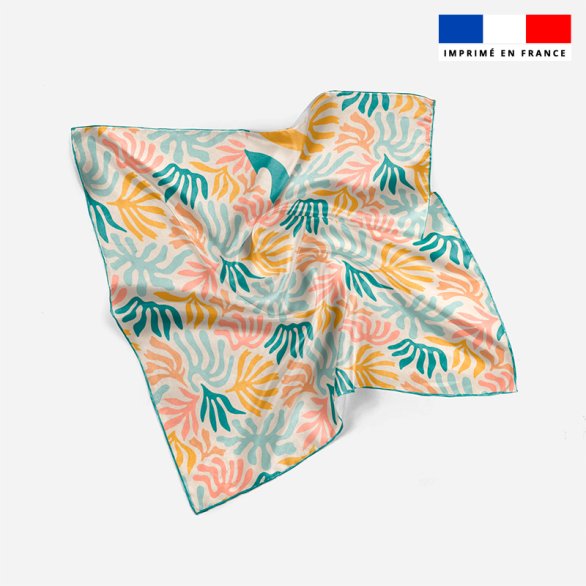
A French brand commissioned us to create a collection of printed scarves. Sublimation accurately reproduced the subtle shades of the original designs, with traditional hem finishes.
Décor: textile posters for hotels
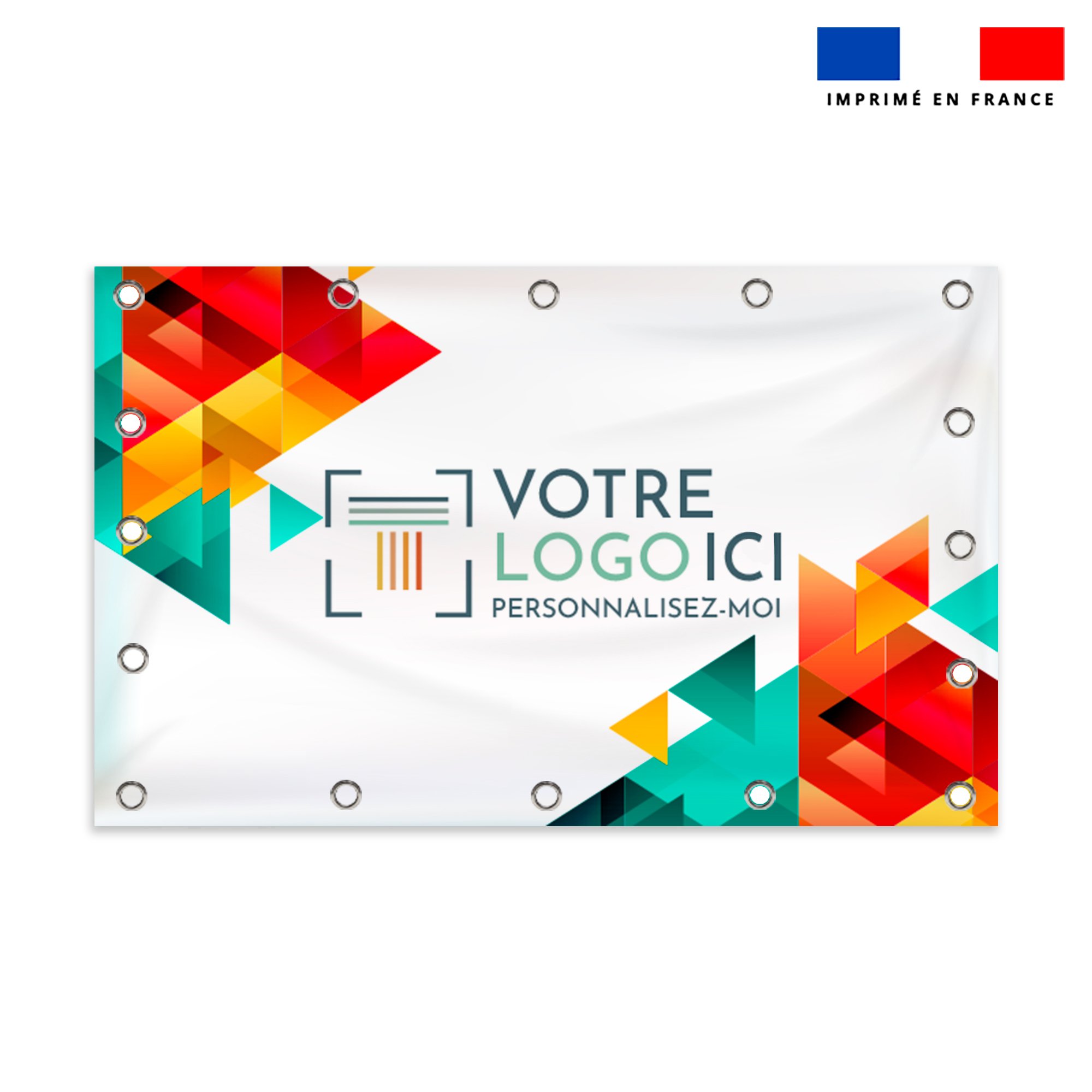
A hotel group chose textiles to decorate communal areas. The technical properties of treated fabrics ensured perfect durability and easy maintenance.
Conclusion
Custom textile printing and manufacturing combine creative freedom, professional quality, and expert local support. This comprehensive approach allows you to realize ambitious projects while controlling technical and budgetary constraints.
Our Cuers-based team supports you from the initial idea to final delivery, providing the expertise of a true textile partner. Textile sourcing, personalized printing, and custom manufacturing form a coherent package to meet your goals.
Bring your project to life today:
- Request your free quote for a personalized study.
- Contact our technical team to discuss your project specifics.
- Discover our complete range of personalized textile solutions.
FAQ
What types of products can I create custom?
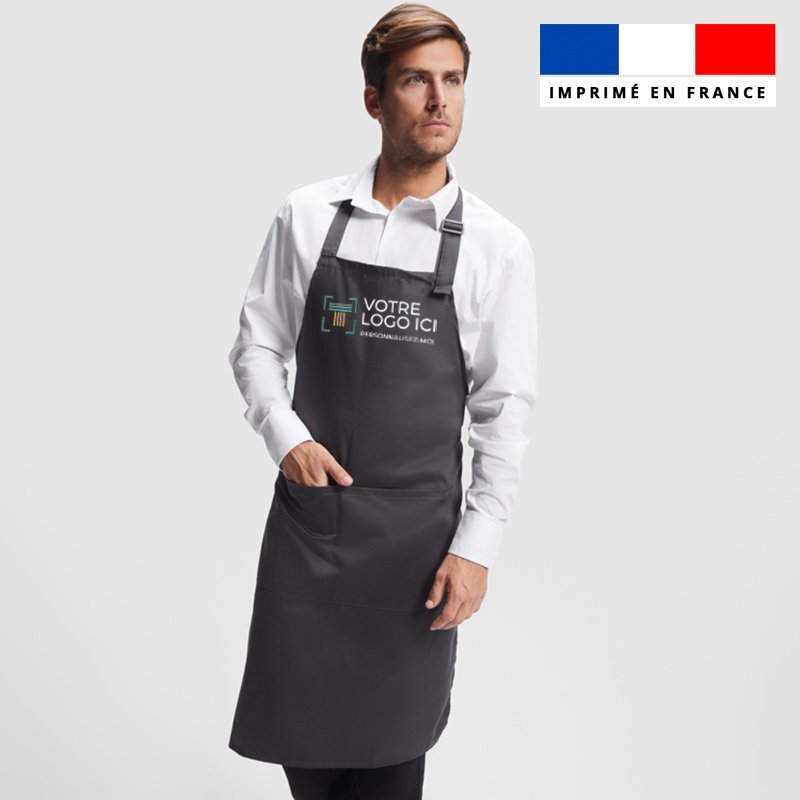
Our custom textile manufacturing capabilities cover a wide range: personalized clothing, fashion accessories, décor items, event supports, technical covers, and more. Each project is studied according to its technical and aesthetic requirements.
Do you provide guidance for fabric selection?
Our textile expertise allows precise advice on material choice. We analyze intended use, technical constraints, and aesthetic preferences to recommend the optimal solution. Samples can be provided for validation before production.
What are the average production timelines?
Timelines vary depending on project complexity and order quantities. On average, standard production takes 10–15 business days, with rush options available depending on our schedule.
Can I order a single piece?
Absolutely. Our custom approach allows production of unique items without a minimum order. This flexibility enables prototypes, special pieces, or very limited series according to your specific needs.
Where are your custom products made?
All production takes place in our workshop in Cuers, Var (83), France. This made in France choice ensures consistent quality control, reliable timelines, and personalized oversight. Our local expertise is based on over 15 years of textile industry experience.


0 commentaires